Trump Tells Iran: Take the Deal or Face the Bombs
The Trump administration has laid out a stark binary for Tehran: agree to permanent nuclear restrictions or face renewed American military strikes. The messaging is simultaneous carrot and stick — and the diplomatic window may be narrower than the public posture suggests.
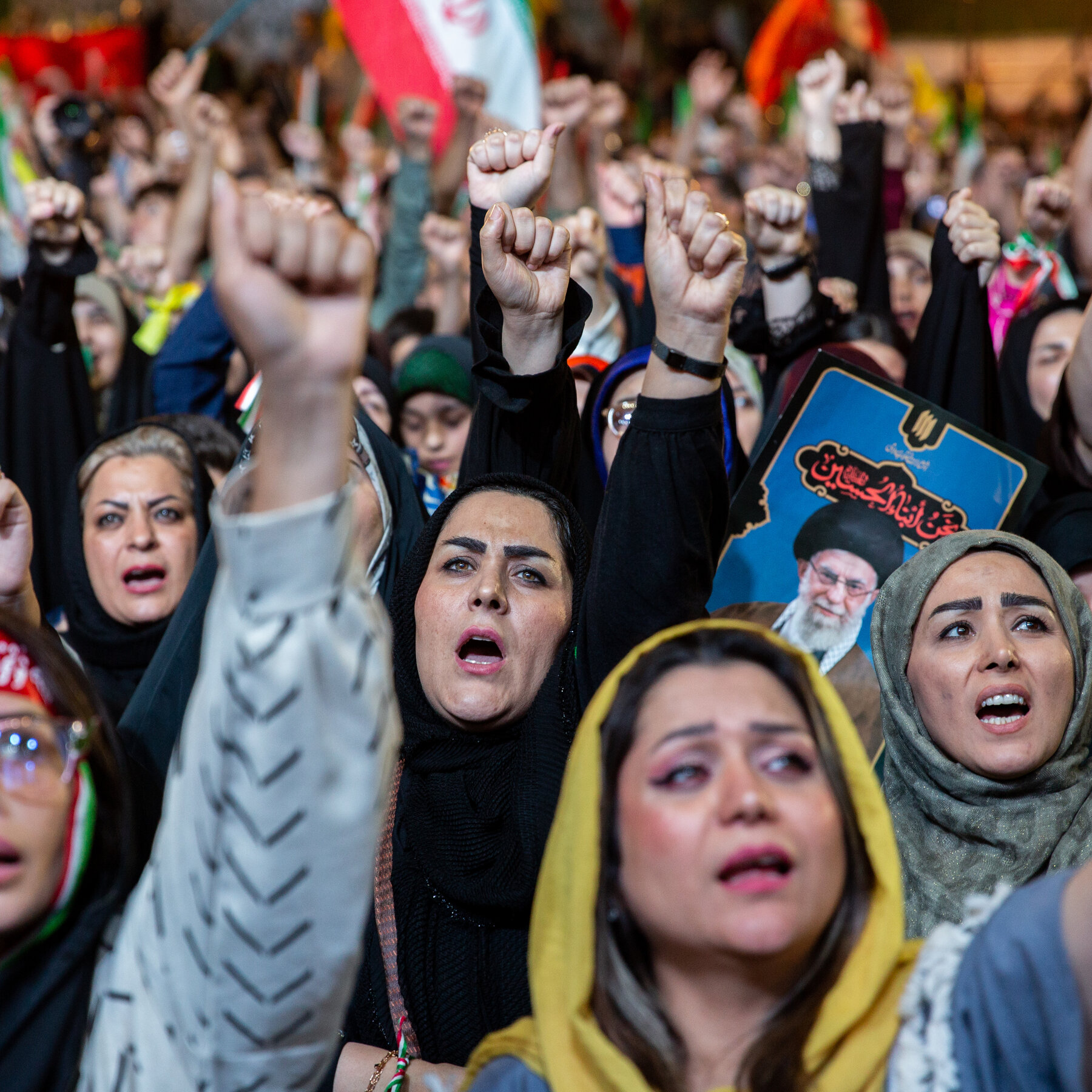
The Trump administration delivered a sharply calibrated message to Tehran on 30 May 2026: a deal that permanently forecloses Iran's path to a nuclear weapon is within reach, but the alternative — military strikes — remains on the table and is ready to be executed. Defense Secretary Pete Hegseth, speaking at the Pentagon, said the United States was in a "good place" to reach an agreement with Iran, while simultaneously making clear that the administration had not ruled out the use of force. The remarks, delivered the same day as reporting by BRICS News citing the Secretary of War's assessment, constituted the most direct articulation yet of the administration's dual-track posture toward the Islamic Republic.
President Trump added a cabinet-level reinforcement to that message, telling associates at a recent meeting that he believed a deal was achievable and that Iran had been presented with terms that were, in his framing, favorable. The President's office, however, made clear that the offer carried an explicit condition: Iran must accept restrictions that permanently prevent it from acquiring nuclear weapons. The message was not framed as a negotiating position subject to revision — it was presented as a final offer.
The Diplomatic Window and Its Conditions
The public framing from Washington suggests genuine movement toward a negotiated outcome. Hegseth's characterization of the talks as progressing puts the administration on record as viewing a deal as plausible, not merely as a diplomatic exercise to buy time. That language matters: it signals to Tehran that the United States is not bluffing about wanting an agreement, which is a meaningful departure from the maximalist rhetoric that preceded it.
But the conditions attached to that progress are exacting. The demand for permanent, verifiable, and irreversible nuclear restrictions goes beyond what Iran accepted under the 2015 Joint Comprehensive Plan of Action — a deal the Trump administration revoked in 2018. Tehran has historically resisted constraints framed as permanent rather than time-limited, viewing them as a mechanism for permanent sanctions rather than a pathway to their lifting. The gap between what Washington is demanding and what Tehran has historically been willing to accept remains the central obstacle, and the sources reviewed do not indicate that either side has moved measurably toward closing it.
The administration has not publicly disclosed the specific terms on the table. What is known is that the President's cabinet-level framing treats the current offer as both generous and conclusive — a combination that, if genuine, either reflects a significant Iranian concession already made in private negotiations or a miscalculation about Tehran's willingness to accept terms it has previously rejected.
The Military Backstop
Lurking behind the diplomatic language is a credible threat of force. Hegseth's statement that the United States is ready to restart strikes on Iran if no deal is reached is not boilerplate. It is a specific commitment — made on the record, at the Pentagon, and carried by wire services — that the military option has been maintained and updated in the period since the last round of strikes. That is a meaningfully different signal than vague allusions to "maximum pressure." It suggests operational planning has continued even as talks have proceeded, and that the military timeline is not indefinitely deferred.
The sources do not specify what triggers would activate that strike option, nor do they detail the scope of targets or the authorization chain required. What is clear is that the administration is using the threat of force not as a negotiating tactic but as a structural condition — a timer attached to the diplomatic process rather than an idle warning.
What Remains Unresolved
The central question the sources do not answer is whether Iran has made any substantive movement toward accepting the permanent restrictions Washington is demanding. The talks are described as progressing, but progress toward a deal and progress toward an agreement on the specific core issue — the permanent prohibition on nuclear weapons capability — are not the same thing. Negotiations can advance on procedural terms, side agreements, or preliminary confidence-building measures while the fundamental gap on the core demand remains unchanged.
There is also no public indication from Iranian sources in the reviewed material about how Tehran is responding to the specific terms conveyed by Washington. Iranian state media, diplomatic channels, or statements from officials in Tehran are not reflected in the current wire reporting, which means the other side of this equation is, for now, largely silent in the public record. The sources reviewed carry only the American framing.
The duration of the diplomatic window is likewise unspecified. Hegseth's statement does not set a deadline, but the pairing of a "good place" assessment with a readiness-to-strike commitment suggests the administration is not willing to let the talks extend indefinitely without a concrete outcome.
The Stakes
If the United States and Iran reach a deal on the terms Washington is describing, it would represent one of the most significant diplomatic reversals in recent Middle Eastern history — a de facto normalization of Iran's regional standing in exchange for a permanent nuclear surrender. If the talks fail and strikes resume, the region faces the prospect of a new cycle of military escalation at a moment when Gulf states, Israel, and European powers are all watching closely for signals about the reliability of American security commitments.
The calculus for Tehran is stark: accept terms that its leadership has historically characterized as a capitulation, or face the prospect of American military action without the sanctions relief or regional legitimacy that a deal would provide. The calculus for Washington is equally binary: a diplomatic win with lasting strategic consequences, or a strike campaign that destroys nuclear infrastructure but does not resolve the underlying structural competition — and may deepen it.
The next several weeks will determine which path this takes. The sources reviewed do not indicate that either outcome is predetermined.
This publication's coverage prioritizes the Pentagon's on-record commitments and the President's cabinet-level framing. Wire reporting from Western services has been consistent in its sourcing of the American position; Iranian-state-adjacent responses, where they emerge, will be reported with equivalent specificity and with appropriate sourcing caveats.
Wire provenance
This editorial synthesis draws on the following public wire/social posts:
- https://t.me/BRICSNews/28461
- https://x.com/sprinterpress/status/1958734294029582336
- https://t.me/ourwarstoday/19258