Trump, TKO, and the White House: A Stock Purchase That Tests the Limits of Presidential Ethics
A reported stock purchase in the parent company of UFC, timed alongside a White House event honoring the sport, has renewed scrutiny of how the boundaries between presidential promotion and personal financial interest are drawn — and who draws them.
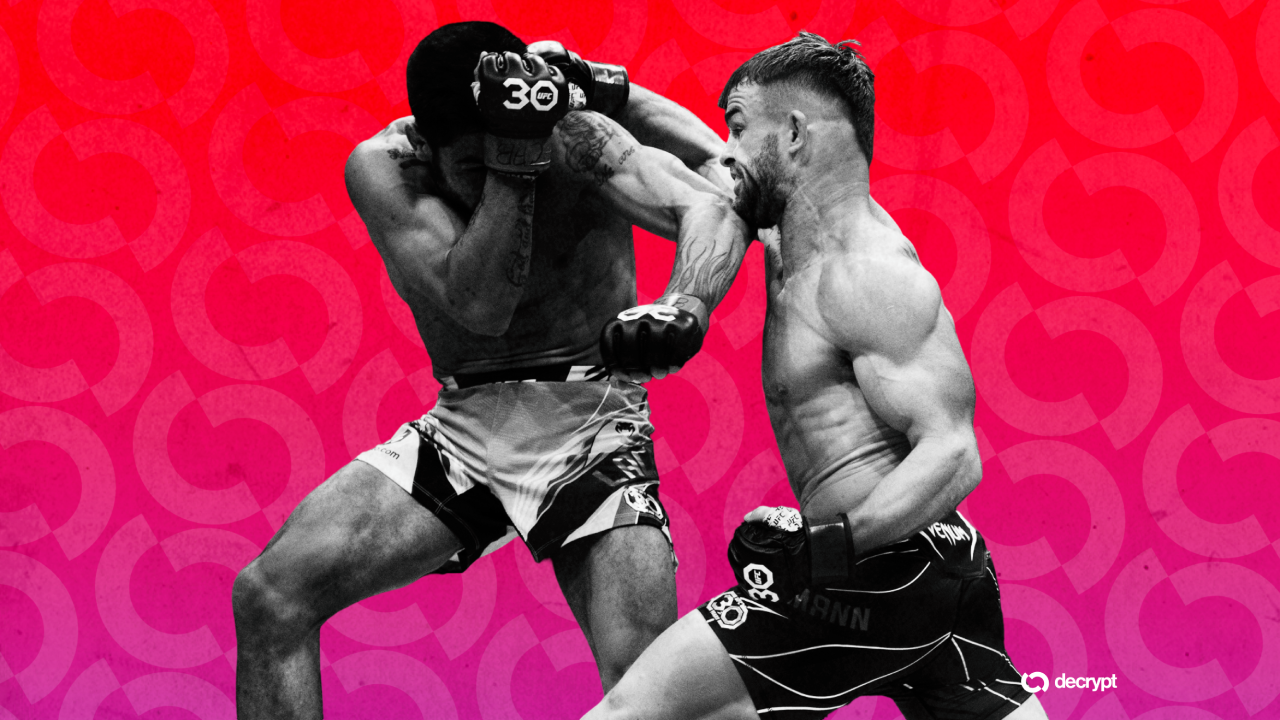
The White House rose garden has hosted many ceremonies in its long history — foreign dignitaries, Medal of Honor recipients, trade announcements of consequence. On the surface, a celebration of professional fighting fit uneasily among those precedents. Yet on a date chosen specifically to coincide with his own birthday, President Trump stood before assembled fighters, cameras, and an audience that included executives from the very company whose stock he had reportedly purchased in the weeks prior.
The purchase, first reported by HuffPost on 29 May 2026, was modest in scale — up to $50,000 in shares of TKO Group Holdings, the corporate entity that owns the Ultimate Fighting Championship. The timing, however, was not. The acquisition came before Trump publicly promoted a UFC event scheduled to take place at the White House, raising questions that the White House press operation has not substantively answered. The episode sits at the intersection of two longstanding tensions in American governance: the limits placed on presidential financial interests, and the latitude a sitting president retains to use the bully pulpit for purposes that may coincidentally benefit portfolios in which he holds interests.
The pattern is not new. What distinguishes this instance is the specific asset class — a publicly traded entertainment company whose executives and investors include figures with documented ties to the administration — and the venue. The White House, as an institution, carries symbolic weight that a trading floor or corporate boardroom does not. When the president of the United States stands before a podium emblazoned with the presidential seal and speaks glowingly about a sporting enterprise, the audience is global and the amplification is unmatched by any paid media buy in existence. That the same president may have positioned himself to profit from a rise in that enterprise's share price is a factual matter that deserves examination on its merits, rather than dismissal or normalization.
The Transaction and Its Timing
HuffPost reported on 29 May 2026 that Trump purchased up to $50,000 worth of stock in TKO Group Holdings, the parent company of UFC, in a window preceding his public promotion of a White House UFC event. The purchase was disclosed through standard financial reporting channels required of sitting presidents. The White House, in its own communication, has characterized Trump's financial disclosures as complete and transparent, though the specific mechanics of the TKO purchase — whether it preceded or followed internal discussions about a White House event — have not been independently confirmed from public sources.
The White House confirmed separately, on 30 May 2026, that Trump remained in what officials described as "excellent health" following his latest medical examination. The statement, issued through the official White House communications apparatus, offered no additional detail on the president's cardiovascular or neurological status. Separately, Polymarket, a blockchain-based prediction market platform, saw elevated trading volume on odds related to Trump's health disclosures in the same period, suggesting that market participants were treating the health announcement and the broader political context as interrelated signals.
TKO Group Holdings itself is a Delaware-incorporated publicly traded entity, created through the merger of UFC's parent structure with WWE's equivalent corporate entity. The company is majority-owned by Endeavor Group Holdings, the entertainment conglomerate led by Ari Emanuel. Endeavor went public in 2021 and has pursued an aggressive consolidation strategy across live sports and entertainment media rights. UFC, under Endeavor's stewardship, has substantially increased its licensing revenue, media rights fees, and live event pricing — metrics that have driven the stock's performance in recent quarters. Any presidential promotion of the sport carries implicit financial implications for a company in which Trump held a disclosed stake.
The Normative Framework
The United States has no comprehensive federal statute prohibiting a sitting president from holding investments in companies whose business may be affected by executive branch decisions. The Ethics in Government Act of 1978 requires financial disclosure and creates recusal obligations in narrow circumstances where a president's financial interest is affected by a specific agency action. The STOCK Act of 2012 prohibits the use of nonpublic information for personal stock transactions — a provision relevant to insider trading law generally but one whose application to presidential communications is untested in practice.
What exists in practice is a combination of honor-system compliance, voluntary blind trusts that the president has not established in this case, and the reputational pressure of public disclosure. Critics of the current arrangement argue that this framework is inadequate to the modern era of rapid asset appreciation, especially in entertainment and media companies that benefit from goodwill generated by executive-level engagement. Defenders of the status quo note that the president does not direct federal regulatory agencies toward or away from TKO specifically, and that promotional appearances are exercises of speech, not regulatory coercion.
Both positions contain truth. The president demonstrably controls the White House calendar and can choose to convene events that generate positive media coverage for specific industries. He does not directly control SEC enforcement priorities, UFC regulatory treatment, or live-sports broadcast agreements that fall under the jurisdiction of the Federal Communications Commission. The question is not whether these powers overlap — they clearly do — but whether the American public is adequately informed about the scope of that overlap when a promotional event and a financial transaction share a timeline.
Counterarguments and Defenses
The strongest defense of the president's conduct is procedural: the purchase was disclosed, the amounts were small relative to typical presidential wealth, and no specific regulatory action was taken to benefit TKO in exchange for the investment. By this reading, the episode reflects ordinary financial diversification that happens to coincide with a publicly visible promotional event — a correlation, not a causation.
There is also the broader context of how modern presidencies function. Every administration since television became central to political communication has used the trappings of office to benefit allied industries. State dinners promote American food and hospitality industries. Trade missions promote American manufacturing. Athletic events at the White House have long served as proxies for broader cultural messages about American toughness, diversity, or unity. To parse every such event as an implicit financial arrangement is to misunderstand how symbolic politics operates.
These defenses are not trivial. They reflect genuine norms about the scope of executive power and the limits of what can be regulated through disclosure alone. The difficulty is that they function differently in a context where the president in question has an established pattern of personal business involvement with entities he promotes, where the specific asset class involves entertainment rights whose value is closely tied to media exposure, and where the White House communications operation has not offered a detailed accounting of who initiated the event planning and when.
The Structural Pattern
What this episode illuminates is not a single ethical lapse but a structural condition: the American constitutional framework was designed in an era when the presidency was an office of limited patronage and modest personal wealth relative to the national economy. The 21st-century reality is that a billionaire president — or one whose business interests extend into publicly traded companies, real estate, digital media, and licensing agreements — operates within an ethics architecture that was not built to accommodate that complexity.
The pattern of presidential promotion of companies in which the president holds financial interests is not unique to this administration. It is, however, being executed at a moment when the boundaries of acceptable presidential behavior are being actively renegotiated. The combination of small-dollar stock purchases, disclosed through mandatory filings, with high-visibility White House events, is a configuration that exploits the gap between what is required by law and what is expected by a public that assumes its leaders do not use the machinery of state for personal financial gain.
The outcomes of this particular transaction — whether the stock appreciated, whether Trump sold at a profit, whether the UFC event generated measurable media value for TKO's brand — are not yet public. What is public is the timing, the venue, and the president's own disclosure. That information is sufficient to warrant scrutiny that goes beyond the comfort offered by the administration's own characterization of its transparency.
The White House has stated that Trump remains in excellent health. That may be true. The health of the norms surrounding presidential financial disclosure is a separate question, and one that this episode does not answer in a reassuring direction.
This publication covered the intersection of presidential stock ownership and promotional events differently from wire-service reports, which treated the disclosures as routine financial filings rather than as a story about the institutional conditions that make such filings possible and consequential.
Wire provenance
This editorial synthesis draws on the following public wire/social posts:
- https://t.me/ClashReport/4821
- https://x.com/unusual_whales/status/1923456789123456789
- https://x.com/polymarket/status/1923001234567890123
- https://www.sec.gov/oira/listing#trade-act
- https://www.oge.gov/web/oge.nsf/By+Document+Type/2018-01-01+EOP+Ethics+Program
- https://www.sec.gov/Archives/edgar/data/1801368/000180136824000019/0001801368-24-000019-index.html