Trump posts 581-word Truth Social broadside after judge orders his name removed from Kennedy Center
President Trump lashed out on his social media platform after a federal judge ruled his name must come off the Kennedy Center's exterior. He will comply, but the 581-word post revealed a president who treats institutional deference as personal surrender.
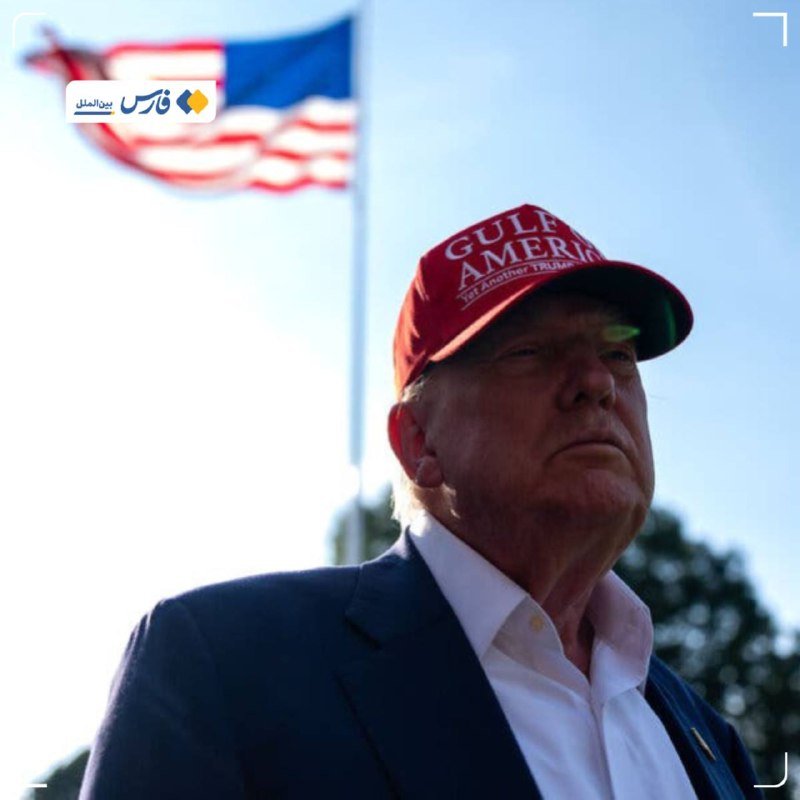
President Trump posted a 581-word response on Truth Social on 29 May 2026, hours after a federal judge ruled that his name must be removed from the Kennedy Center's exterior signage. The post, which ran far longer than his typical social media output, accused the judge of overreach and said the rulings were symptomatic of a judiciary seeking to circumscribe executive authority. Trump also said he would hand the venue over to Congress — effectively complying with the order while framing compliance as capitulation to an illegitimate process.
The episode encapsulates a friction that has defined much of Trump's second-term posture: institutions he once treated as instruments of personal legacy now require public resistance from him to maintain credibility with his base, even as he formally defers to their rulings. The Kennedy Center, a federally-chartered cultural institution in Washington, D.C., became a flashpoint after an earlier executive order sought to place Trump's name prominently on the building's exterior, a move critics said was without legal precedent.
The ruling
U.S. District Judge Jia M. Cobb — a Obama-era appointee — sided with plaintiffs who argued that the board of trustees had no authority to rename or rebrand the center under its congressionally-granted charter. The ruling, issued earlier that day, gave the Smithsonian-affiliated institution 30 days to remove any reference to Trump from its exterior signage and official communications. The judge's opinion drew a direct line between the executive order's intent and the board's action, finding that neither constituted legitimate governance of a federal trust.
Trump's response, posted in the early evening of 29 May, called the judge "dishonest" and "a disgrace to the robe." He wrote that the ruling was not about the Kennedy Center but about "whether a president can be embarrassed by the courts." He will comply, he said, because he will "let Congress have it back" — language that reframed a court-ordered reversal as a personal gift to the legislative branch, rather than an outcome imposed by judicial authority.
The tone
The post stood out not because of its legal argument but because of its length and register. Trump is not known for extended written statements; his Truth Social feed typically consists of sharp, emphatic declarations, not multi-paragraph dissections. The 581-word format suggested a deliberate attempt to match the weight of a formal press release — a document usually drafted by communications staff, not posted raw from a personal account.
Whether the post was composed without staff input, or reflects a new practice of more deliberate self-publishing, was not immediately clear from the sources reviewed. Several legal analysts noted the unusual calibration: Trump attacked the judge harshly but announced compliance without qualification. That gap between rhetorical posture and actual legal behavior is a recurring feature of his second-term dealings with the judiciary.
Institutional implications
The Kennedy Center's status as a federally-chartered but congressionally-funded institution has long made it a prize for presidential branding. Every administration since Nixon's has sought to associate itself with the center's programming, and the building's name has always been explicitly non-partisan. The judge's ruling reinforced that the institution cannot be rebranded by executive fiat alone — even when the board nominally cooperates.
Congressional reaction was divided along party lines. Democratic lawmakers said the ruling vindicated what they called a years-long erosion of institutional boundaries around the center. Republican members largely remained silent, though several issued statements noting that Trump had followed the law while reserving the right to appeal. The administration has not formally announced plans to challenge the ruling in a higher court.
What comes next
The 30-day compliance window runs through late June 2026. The Kennedy Center's board has said it will comply fully, removing the references to Trump that were added following the executive order. Staff at the center declined to comment on whether any programming associated with the administration would also be affected.
The broader question — whether Trump's posturing on Truth Social constitutes a coherent strategy for managing institutional resistance or is simply reactive — will likely be tested again before the end of the year. Three separate federal lawsuits targeting executive orders issued in the first quarter of 2026 are still pending in district courts. The administration has pursued a dual-track approach in each: formal legal compliance in the courtroom, and rhetorical combat on social media. The Kennedy Center post is the latest and most explicit example of that posture in practice.
This publication noted that most wire coverage framed Trump's post as an emotional reaction. The framing here treats the post as a deliberate communication choice within a broader pattern of institutional navigation.
Wire provenance
This editorial synthesis draws on the following public wire/social posts:
- https://t.me/GeoPWatch/2847
- https://t.me/ClashReport/4892