The Claw, the Contract, and the President: Trump Turns the White House Into an Arena
A 90-foot steel structure dubbed 'The Claw' has replaced the Rose Garden on the White House lawn. Inside it, the president who organized the event holds a financial stake in the enterprise being celebrated — raising familiar questions about the mixing of office and opportunity.
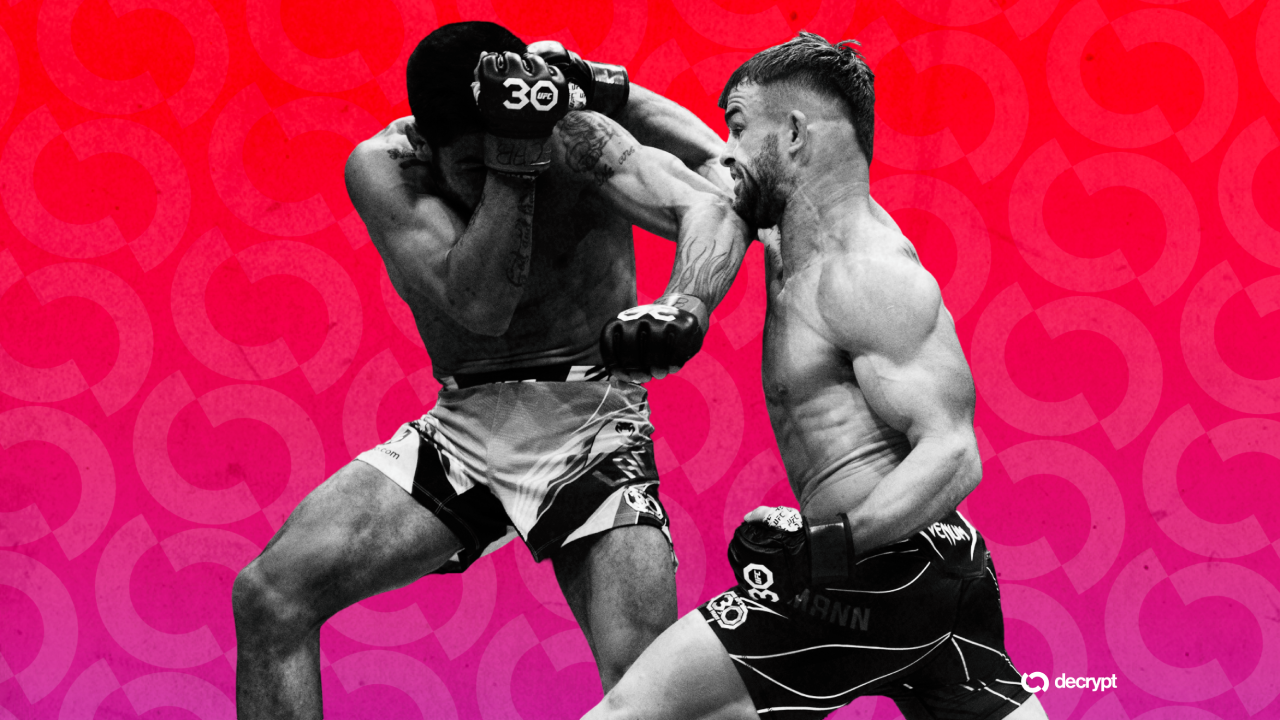
A 90-foot steel archway — nicknamed "The Claw" — now dominates the south lawn of 1600 Pennsylvania Avenue. Inside the temporary arena it frames, mixed martial arts fighters collide under lights installed for the occasion. The structure, by most assessments, dwarfs the building it sits beside. The president who commissioned it also holds a financial stake in the enterprise whose spectacle it hosts. The overlap is not incidental.
Donald Trump's purchase of UFC shares was disclosed ahead of the White House-hosted tournament, an event he personally promoted. The timing is precise and self-referential: the investor announced the investment in proximity to the event he organized inside the building where he serves as president. No disclosure protocol appears to have been violated, in the narrow technical sense. The broader optics have prompted a different set of questions.
The Arena and the Office
The event draws on a tradition of White House hospitality extended to sporting figures — ceremonial boxing matches, championship visits, photo opportunities that serve both political and cultural functions. What distinguishes this iteration is the structural scale and the financial layered quality. The building is being used to promote an enterprise in which its occupant holds equity. The Rose Garden has been temporarily excavated for a stage that serves interests beyond the ceremonial.
The White House physician's public summary, released in the week preceding the event, noted no health concerns in the president's recent examination — a disclosure timed to preempt speculation about capacity, in a political context where such questions carry weight. Whether the disclosure was routine or strategic, its release cadence reflected the calendar of a public-relations operation as much as a medical one.
Investment and Proximity
The UFC share purchase adds to a portfolio that has included other sporting assets managed under licensing arrangements while Trump occupied the Oval Office. The pattern — personal business interests positioned near the levers of public influence — is not new. It has, however, been rendered more visible by the physical spectacle now on the White House lawn.
Critics have framed the arrangement as the most literal expression yet of using the presidency as a commercial platform. Defenders counter that sitting presidents routinely maintain investment portfolios, that the UFC stake predates any specific policy decision, and that the event itself falls within established precedents for honoring American sport at the executive residence. Both framings contain partial truth. The tension between them is the actual story.
The Spectacle and the Structure
The France 24 dispatch covering the event carried the subheadline "Gaudy or great?" — a framing that treats the question as aesthetic and personal. That framing is comfortable. It misses what is structurally at stake. A president who controls the scheduling and framing of his own promotion — who can summon a temporary arena onto the physical seat of American executive power — is operating at an information environment advantage that media coverage can only partially offset.
Coverage of the event has been extensive but fragmented: cable networks broadcast the fights, wire outlets report the financials, opinion columns weigh in on the propriety. What the coverage rarely does is treat the structural dynamic as the lead. The president-as-investor-as-host configuration is treated as a colour element rather than a structural fact with political consequence.
Who Wins, Who Doesn't
The financial benefit flows to Trump as shareholder. The political benefit flows to Trump as promoter — a version of himself that cable media finds endlessly watchable. The losers are the norms around which this kind of overlap has historically been managed: the expectation that the office of the presidency creates at least the appearance of separation between the occupant's commercial interests and the occupant's public stage. That expectation is eroding in plain sight.
What remains uncertain — and what the current cycle of coverage does not resolve — is whether any institutional check exists that could constrain the configuration. Congress has not moved. The relevant ethics frameworks were designed for a less theatrical occupant. The question of whether the appearance constitutes the substance may be one that only courts, elections, or subsequent crises will answer.