UFC at the White House and the Dimming of an Iran Deal
Fox News publish renderings for a planned 2026 UFC fight at the White House South Lawn on the same morning a separate thread signals the administration's Iran nuclear stance has hardened — raising questions about the coherence of competing diplomatic signals.
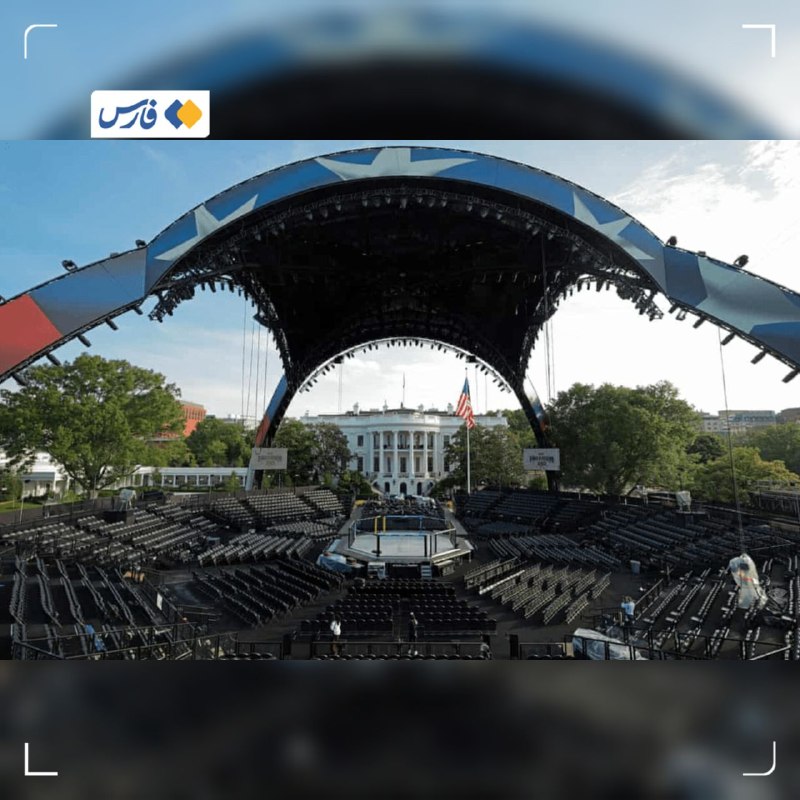
On the morning of 30 May 2026, two Telegram threads arrived in quick succession carrying markedly different freight. The first carried renderings, released by Fox News, of an arena being constructed on the White House South Lawn for a scheduled UFC fight in 2026. The second reported that the White House posture on a potential US-Iran nuclear agreement had hardened, dimming prospects for any deal before the June 30 deadline negotiators have repeatedly cited as the outer limit of patience. The timing is almost certainly coincidental. The juxtaposition is not without consequence.
The administration has long maintained that diplomatic and strategic pressure operate on parallel tracks — that sanctions and military deterrence do not preclude back-channel engagement. That argument is coherent in theory. In practice, when the same week brings a high-visibility event staged on the most politically symbolic piece of federal ground in the country and a closing of the window on a nuclear agreement, the signal transmitted is harder to parse than the theory suggests. Whether that ambiguity is deliberate or the result of internal incoherence matters to the parties in the room in Muscat, and to the regional states watching from Riyadh, Tehran, Ankara, and Jerusalem.
What the Iran Talks Look Like in May 2026
Reporting from CryptoBriefing on 30 May 2026 describes a White House stance that has moved away from the flexibility the administration signaled earlier in the year. The core points of disagreement with Iran remain those that have defined this negotiation from its outset: the depth of uranium enrichment restrictions Iran would accept, the scope of International Atomic Energy Agency inspections, the sequencing of sanctions relief, and the mechanism for verifying Iranian compliance over a sustained period. Sources familiar with the Omani-mediated process describe the distance between the two positions as significant and say the deadline pressure is now structural rather than rhetorical.
The Biden administration's earlier approach had involved a degree of ambiguity about how much enrichment capacity it would tolerate in exchange for a verified cap. That ambiguity appears to have been resolved — in the direction of the harderline position — as domestic political constraints have tightened and as assessments of Iranian compliance capacity have grown more skeptical within the State Department and among allied intelligence services. The Iran side, meanwhile, has publicly maintained that it will not accept constraints on its peaceful nuclear program that exceed what the Non-Proliferation Treaty requires. That position has internal consistency; its compatibility with what Washington and its partners will accept is another matter.
The indirect nature of the talks — conducted through Omani intermediaries since the formal rupture in 2018 — has always introduced friction. There is no direct American embassy in Tehran and no Iranian embassy in Washington. Messages travel through third parties, and the latency between positions and counter-positions creates space for misunderstanding. Oman's role as mediator has been consistent, but its influence is facilitative rather than transformative; it cannot bridge a fundamental gap in interests.
The Counter-Read: Dealspace Has Not Closed
There is a plausible alternative reading of the same facts. An administration that had genuinely abandoned the talks would have less reason to maintain the Omani channel at the level it currently does. The continued engagement through Muscat — even if stalled — suggests the diplomatic door is not sealed. It may be that the hardened public posture is a negotiating tactic: signaling to Congress, to Gulf allies, and to domestic constituencies that the administration will not be stampeded into a bad deal, while privately maintaining the conditions for a last-minute accommodation.
That reading has historical support. American administrations of both parties have used public hardball to extract concessions at the table, and the transcript of such negotiations is rarely visible to observers. The June 30 date functions as a deadline in the way such dates often do in diplomacy — as a pressure mechanism that focuses minds but is frequently extended, reinterpreted, or reframed as a staging post rather than an endpoint. Whether the current White House posture reflects a genuine change in red lines or a tactical adjustment remains genuinely unclear from outside the process.
The UFC Event as Diplomatic Infrastructure
The 2026 UFC fight at the White House occupies a different register but is not politically inert. An event staged on the South Lawn of the executive mansion — the most scrutinized public space in American political life — carries implicit messaging regardless of its organizers' intentions. It positions the administration at the intersection of entertainment culture and presidential symbolism, projecting a certain kind of strength, energy, and relationship with a demographic base that has political as well as recreational significance.
In the context of a week that also produced harder signals on Iran, the event functions as what diplomatic communicators call a supplementary channel — a form of signaling through action rather than statement. The White House does not need to say that its Iran posture is tough; an event that projects cultural confidence and physical authority at the seat of government says something along those lines without requiring articulation. Whether that is the intended message or an incidental reading is unknowable from outside the decision-making circle. The effect, in the region, is what it is.
Stakes and the Road Ahead
If the current trajectory holds — a hardline posture maintained, no deal struck by June 30 — the consequences are distributed unevenly. Iran continues to operate under maximum pressure, with oil revenues constrained and financial channels restricted. The sanctions architecture remains intact. Regional tensions, which have shown modest signs of de-escalation in areas where Iranian and American interests do not directly collide, are liable to reharden. The Gulf states that have tentatively engaged with Tehran in recent months will recalibrate, leaning back toward Washington.
For Iran, the nuclear program advances in the absence of a binding agreement. Uranium enrichment at the 60 percent level — already achieved — approaches weapons-grade territory without further processing, and the institutional knowledge involved in getting to that level is not reversible. The negotiating window closing does not stop the program; it removes the principal international mechanism for constraining it.
For American partners in the region, particularly those with intelligence-sharing arrangements that depend on a functioning diplomatic relationship with Washington, the trajectory raises questions about reliability. The administration has consistently argued that the alliance architecture and the nuclear file are separable. The partners are not entirely convinced.
What remains genuinely open is whether the June 30 language is a floor or a ceiling. If talks extend into July, or if a narrower interim arrangement emerges that preserves some constraints while leaving the larger architecture unresolved, the situation will have defused without being resolved. That outcome has become more likely than a comprehensive deal in recent weeks, but it remains a political outcome — dependent on decisions not yet made in Washington and Tehran. The UFC arena going up on the South Lawn tells us about the optics of this administration. It tells us nothing about the red lines inside the room.
This desk combined two Telegram-sourced threads published within 64 minutes of each other on 30 May 2026 — one on the planned UFC event, one on Iran deal prospects — into a single geopolitical frame. The wire focused on each as a discrete story; Monexus asks what it means when both arrive in the same news cycle.
Wire provenance
This editorial synthesis draws on the following public wire/social posts:
- https://t.me/wfwitness
- https://t.me/CryptoBriefing