US Forces Disable Gambia-Flagged Bulk Carrier in Gulf of Oman
US Central Command forces disabled a Gambia-flagged bulk carrier in the Gulf of Oman on 29 May 2026, marking a significant escalation in naval interdiction operations against vessels suspected of carrying cargo toward Iran in defiance of American sanctions.
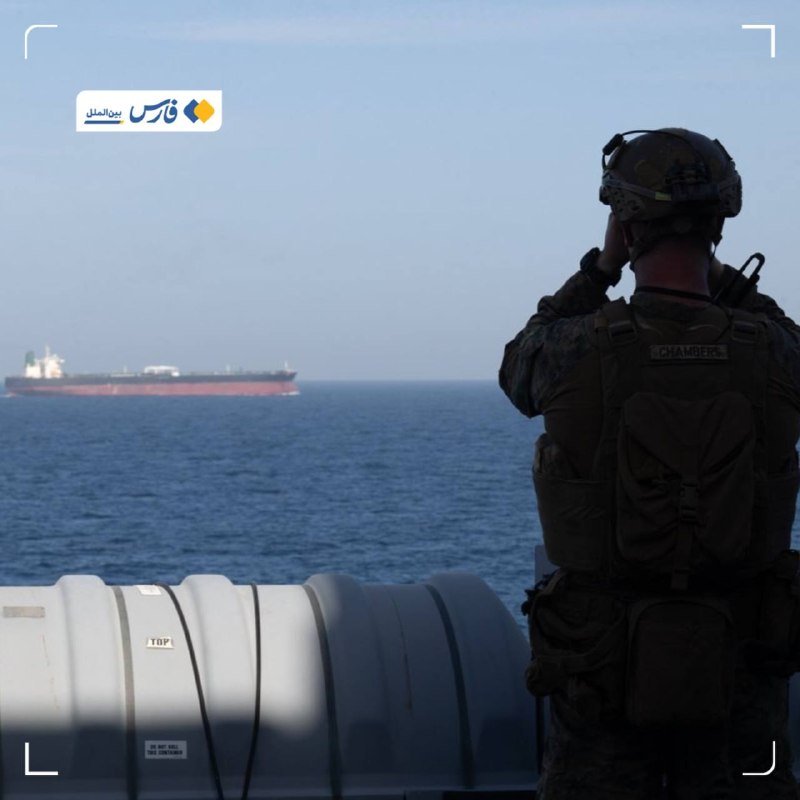
U.S. Central Command forces operating in the Gulf of Oman disabled a Gambia-flagged bulk carrier on 29 May 2026, according to statements and reporting confirmed across multiple regional and international outlets. The vessel, identified as the Lian Star, was sailing under Gambian registry toward Iran when it was fired upon and disabled. CENTCOM described the operation as enforcement of blockade measures against Tehran. The vessel reportedly ignored repeated warnings before the engagement.
The incident represents one of the more direct manifestations of the US naval interdiction posture that has defined American sanctions enforcement against Iran since the reimposition of sweeping economic restrictions in 2018. While prior operations have resulted in seizures and redirections of suspected sanctions-busting cargo, the disabling of a vessel in transit—rather than its seizure and boarding—marks a higher threshold of force. CENTCOM's announcement did not specify the cargo aboard the Lian Star, nor did it address the status of the vessel's crew. Those gaps in the official account leave material questions about the proportionality and legal basis for the engagement unanswered.
What We Verified / What We Could Not
The following represents this publication's independent assessment of the factual record as it stands on 30 May 2026.
Verified: US Central Command announced on 30 May 2026 that its forces operating in the Gulf of Oman disabled a Gambia-flagged bulk carrier on 29 May 2026. The operation was conducted as part of blockade enforcement measures against Iran.
Verified: The targeted vessel was the Lian Star, sailing under the flag of Gambia and bound for Iran, according to reporting carried by Mehr News and Fars News International, both citing the Associated Press dispatch.
Verified: The vessel ignored repeated warnings before the engagement, per CENTCOM's account as reported by OSINTdefender.
Not Verified: The cargo aboard the Lian Star. CENTCOM's announcement did not specify what materials the vessel was carrying, leaving open whether it was transporting petroleum products, weapons components, or humanitarian goods.
Not Verified: The status of the crew. No official statement addressed whether any crew members were injured or killed during the engagement. Maritime rescue coordination, if initiated, has not been reported.
Not Verified: The legal instrument under which the blockade was declared. Naval blockades in international law carry specific requirements under the UN Charter and the law of naval warfare; the sources reviewed do not confirm whether the US has declared a formal blockade or is operating under a different legal framework such as sanctions enforcement under UN Security Council resolutions or unilateral executive action.
The Operational Context: Interdiction as Policy Tool
The Gulf of Oman has become the primary theatre for US sanctions enforcement against Iran since the withdrawal from the Joint Comprehensive Plan of Action in 2018. American officials have repeatedly pledged to reduce Iranian oil exports to zero—a goal that has driven increasingly aggressive interdiction operations. Iranian shipping networks have adapted: phantom shipping registries, AIS manipulation, ship-to-ship transfers at sea, and routing through third-country ports have all been documented as methods Tehran and its intermediaries use to sustain crude exports despite American secondary sanctions.
A vessel flying the flag of Gambia, a West African state with a modest maritime registry, fits a pattern the US has flagged before: the use of flag-of-convenience arrangements to obscure the ultimate destination of Iranian-bound cargo. Gambia maintains an open registry system, and vessels registered there have surfaced in sanctions-related enforcement actions before. The choice of flag matters because it determines the legal standing of the vessel under international maritime law. A ship sailing under Gambian registry is, in principle, entitled to the protections afforded to all flagged vessels under the United Nations Convention on the Law of the Sea. Interdicting such a vessel requires either the consent of the flag state, credible evidence of prohibited cargo, or a legal basis that supersedes the ordinary protections of innocent passage.
The disabling—rather than seizure—of the Lian Star suggests that boarding was not feasible or was deemed too risky given the vessel's trajectory and the warnings it ignored. Force used to disable a vessel can constitute a use of force under international law that must be proportionate to the military objective. If the vessel was carrying purely commercial cargo and posed no immediate threat, the decision to fire and disable it would face scrutiny from maritime law experts and international bodies.
The Counter-Narrative and Its Weight
Iranian state media framed the incident as an act of aggression against neutral shipping. Fars News International and Mehr News both carried the AP reporting but framed it within a narrative of American militarism and violations of international waters. That framing finds an audience beyond Tehran: in parts of the Global South, American economic pressure on Iran is viewed with skepticism, particularly when it involves disruptions to humanitarian trade or civilian shipping.
The counter-narrative is not without structural weight. The US has not consistently applied interdiction logic across all sanctions regimes—vessels bound for allied states or trading partners have historically received different treatment. The blockade framing, if accurate, implies a legal justification that requires scrutiny. A formal naval blockade must be declared, notified to neutral states, and conducted in accordance with the laws of armed conflict. If the US is operating under a different legal theory—unilateral sanctions enforcement under domestic statute—the justification for using force against a neutral-flagged vessel in international waters becomes more contestable.
The tension between enforcement credibility and legal legitimacy is not abstract. If the US cannot articulate a clear legal basis for disabling a Gambia-flagged vessel, it risks setting a precedent that erodes the very norms of maritime order it purports to uphold. Neutral shipping nations, particularly in Africa and Southeast Asia, have a direct interest in ensuring that their registries do not become a liability that exposes vessels to geopolitical targeting.
Structural Stakes: Who Wins, Who Loses
The immediate calculation favors Washington in terms of enforcement credibility. Each successful interdiction signals resolve to Gulf allies—Saudi Arabia, the UAE, and others—who have supported the sanctions pressure campaign, and reinforces the message that American naval power remains the decisive instrument in the effort to strangle Iranian oil revenues.
But the structural costs are not trivial. The Lian Star incident, if it involved civilian cargo, adds to a growing ledger of enforcement actions that Iran and its allies will cite as evidence that American sanctions constitute a form of economic warfare that violates the sovereignty of neutral trading nations. That framing has gained traction in multilateral forums where the US-Iran dispute is increasingly contested.
For Iran, the disablement of a vessel bound for its ports is a concrete loss—another shipment interrupted, another pressure point applied to an economy already strained by years of escalating restrictions. But Iranian resilience in the face of sanctions enforcement is well-documented. Tehran has demonstrated the capacity to adapt shipping routes, develop alternative financial channels, and sustain export volumes despite American pressure. Each interdiction reinforces Iranian incentives to invest in more resilient smuggling infrastructure and deepens the perception that the only path to security lies in accelerating nuclear program activities if economic strangulation appears total.
The crew of the Lian Star remains the human variable in this equation. If casualties resulted from the engagement, the incident takes on a humanitarian dimension that complicates the legal and diplomatic calculus for Washington regardless of the cargo's status. Maritime law places obligations on the intercepting power to ensure the safety of crew and passengers. The silence from CENTCOM on this point is notable.
Unresolved Questions and Forward View
The factual record as of 30 May 2026 contains more gaps than certainty. The cargo aboard the Lian Star is unknown. The legal basis for the engagement has not been articulated beyond the generic framing of blockade enforcement. The fate of the crew remains unaddressed. These are not peripheral details—they are the substance around which the incident's significance will be determined.
What is clear is that the US intends to maintain its naval interdiction posture in the Gulf of Oman and that Iran will continue to seek workarounds. The disabling of the Lian Star is not an isolated event; it is a data point in an ongoing confrontation that has no diplomatic off-ramp visible at present. The incident will likely surface in upcoming UN Security Council discussions, where Iran's allies have previously challenged American sanctions enforcement as unilateral overreach. It will also feature in maritime insurance calculations, as shipping companies factor the increased risk of interdiction into routing decisions for vessels bound for Iranian ports or carrying Iranian-origin cargo.
This publication reported the disabling based on CENTCOM's announcement and the AP dispatch as carried by regional outlets. Iranian state media framed the same facts as an act of aggression against neutral shipping. Western wire services emphasized the enforcement dimension and the vessel's trajectory toward Iran. The vessel's name appeared with minor variation across sources—Mehr News used Lian Star; Fars News International carried Lean Star—though both clearly referenced the same incident. CENTCOM's statement was spare on operational detail, and the cargo manifest and crew status remain unverified as of publication.
Wire provenance
This editorial synthesis draws on the following public wire/social posts:
- https://t.me/osintlive
- https://t.me/mehrnews
- https://t.me/FarsNewsInt