The Dual-Track Contradiction: Why US Military Threats Undermine Its Own Diplomacy With Iran
Washington is talking ceasefire extension while dangling strikes and $1.5 trillion in new weapons. That contradiction does not produce leverage — it produces deadlock.
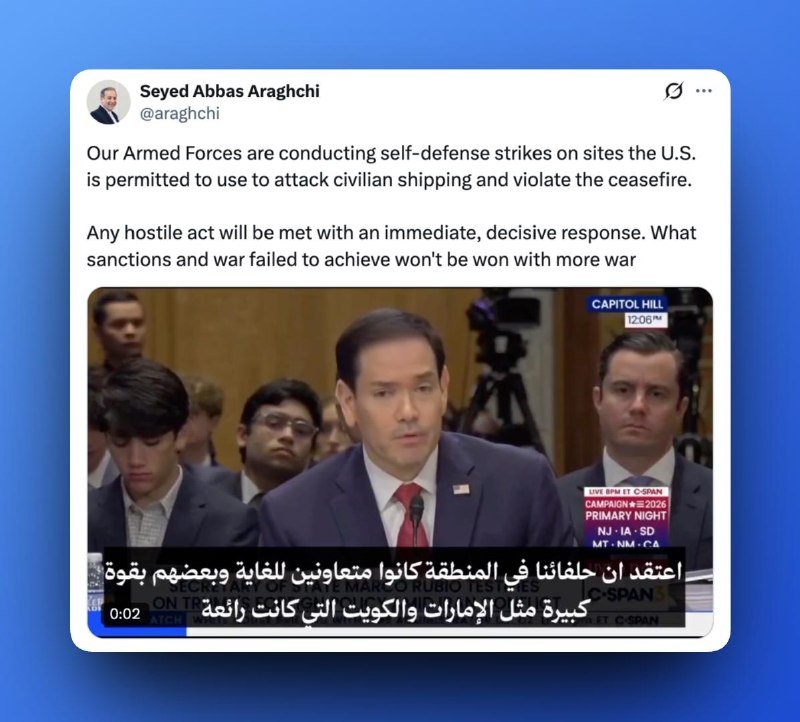
Pentagon officials warned on 29 May 2026 that the United States stands ready to resume strikes against Iran, a threat issued precisely as diplomatic channels were producing — for the second time in days — a concrete proposal to ease the nuclear standoff. The message from Washington, parsed charitably, is that maximum pressure creates the conditions for maximum concession. The evidence from the past decade suggests the opposite.
On 29 May 2026, US-Iran nuclear talks stalled after Tehran insisted on the right to domestic enrichment — a position Washington classifies as a non-starter. The same day, Kazakhstan floated an offer to host Iran's enriched uranium, a structural compromise that would move the fissile material out of Iranian territory without requiring Tehran to abandon its programme entirely. A ceasefire extension memorandum of understanding was also said to be near completion. Then came the military signal. On 30 May 2026, Defense Secretary Pete Hegseth unveiled a $1.5 trillion defense plan explicitly framed around Iran nuclear tensions, and the Pentagon chief warned that strikes remained an active option. New sanctions followed, strangling whatever economic oxygen remained in the bilateral relationship. The sequencing is not accidental, but it is incoherent.
The Leverage Illusion
The intellectual case for dual-track pressure rests on a straightforward premise: threaten enough pain, and the target will capitulate. Iran has heard this argument for forty years. It has not capitulated. What it has done, consistently, is absorb pressure, diversify partners, and develop deeper domestic political investment in whatever programme the United States most loudly opposes. The sanctions regime imposed over the past decade is the most comprehensive ever levied against a Middle Eastern state. Iran remains outside the dollar system, has deepened ties with Russia and China, and has continued advancing its nuclear programme — reaching enrichment levels that would have been unthinkable in 2015.
The pattern is not unique to Iran. Coercive diplomacy, when it becomes the only track, tends to produce entrenchment rather than concession. The target state's negotiating position does not weaken under pressure — it often shifts the domestic political calculation in favour of hardliners who argued all along that the United States was acting in bad faith. The diplomatic proposals from Kazakhstan and the ceasefire extension talks represent genuine third-party openings. They are fragile precisely because they require both sides to believe that a negotiated outcome is achievable. The simultaneous display of a $1.5 trillion defence posture and active strike preparation does not signal seriousness about diplomacy. It signals that some faction within the Washington policy apparatus prefers the military option to remain live.
The Diplomatic Material Worth Saving
It would be a mistake to dismiss the Kazakhstan offer as cosmetic. Hosting Iran's enriched uranium would address the core Western concern — weapons-proximity enrichment on Iranian soil — without requiring Tehran to perform the politically suicidal act of dismantling a programme its own population views as a sovereign achievement. This is not a novel formula. It resembles arrangements discussed during the 2015 Joint Comprehensive Plan of Action negotiations and subsequently. The reason such arrangements keep resurfacing is that they are structurally sound: they separate the pathways to a bomb without requiring either side to declare victory.
The ceasefire extension MOU, if genuine, represents a second track of value. The original ceasefire — reportedly still holding despite periodic violations — demonstrated that both parties can exercise restraint when an incentive structure permits it. Extending that arrangement creates breathing room for the more substantive nuclear talks. Neither track benefits from being paired with a third track of military threat and economic strangulation.
The question for the US diplomatic apparatus is not whether maximum pressure produces leverage. The evidence suggests it does not. The question is whether any serious faction inside the administration actually wants a deal, or whether the diplomatic process is being maintained as political cover for the harder-line posture that will follow its predictable collapse.
The Structural Incentive Problem
Every actor in this drama has rational reasons to prefer the crisis to the resolution. For hardliners in Tehran, a standoff with Washington is politically useful — it justifies domestic security measures and keeps nationalist sentiment engaged. For sections of the Washington foreign-policy establishment, an unresolved Iranian nuclear problem justifies the maintenance of a Middle East footprint, sustains defence budgets, and provides a standing justification for the regional alliance architecture built around Saudi Arabia and Israel. For Kazakhstan, the offer to host uranium is a geopolitical win regardless of outcome — it positions Nur-Sultan as a responsible mediator, burnishes its non-proliferation credentials, and draws Washington and Beijing's attention simultaneously.
The tragedy is that a genuine resolution is available. Iran gets security guarantees and sanctions relief. The United States and its allies get a programme frozen at levels below weapons-proximity, with verified international monitoring. The Kazakh proposal — uranium out, monitoring in — is the bones of such an arrangement. What prevents it is not Iranian intransigence alone. It is the US domestic political economy of the Iran file, in which any agreement reached looks like a concession and any military posture looks like strength.
The signals emerging from Washington over the past forty-eight hours — sanctions, a $1.5 trillion defence commitment, a public statement of strike readiness — are not the actions of a government preparing to make a deal. They are the actions of a government that has decided the deal it could get is worth less than the posture it can maintain. That is a defensible position, though it carries real costs: a continued Iran that is more technically advanced, more economically isolated, and more deeply aligned with US adversaries than it was a decade ago. The alternative — a verified diplomatic resolution — requires the United States to credibly threaten the withdrawal of the military option in exchange for Iranian concessions. On current showing, that credibility does not exist.
This publication's coverage of the Iran file has consistently prioritised the substance of proposed agreements over the theatrical dimension of US signalling. The gap between those two things is, as of this writing, considerable.
Wire provenance
This editorial synthesis draws on the following public wire/social posts:
- https://t.me/CryptoBriefing/12345
- https://t.me/CryptoBriefing/12342
- https://t.me/CryptoBriefing/12338
- https://t.me/CryptoBriefing/12329
- https://t.me/CryptoBriefing/12330
- https://t.me/CryptoBriefing/12326