The $620 Million Question: White House Intervention, Private Deals, and the Architecture of Presidential Conflict
ProPublica's reporting on a White House intervention to secure a $620 million contract for a Trump-affiliated company raises structural questions about the intersection of family business and executive authority that date back further than this administration.
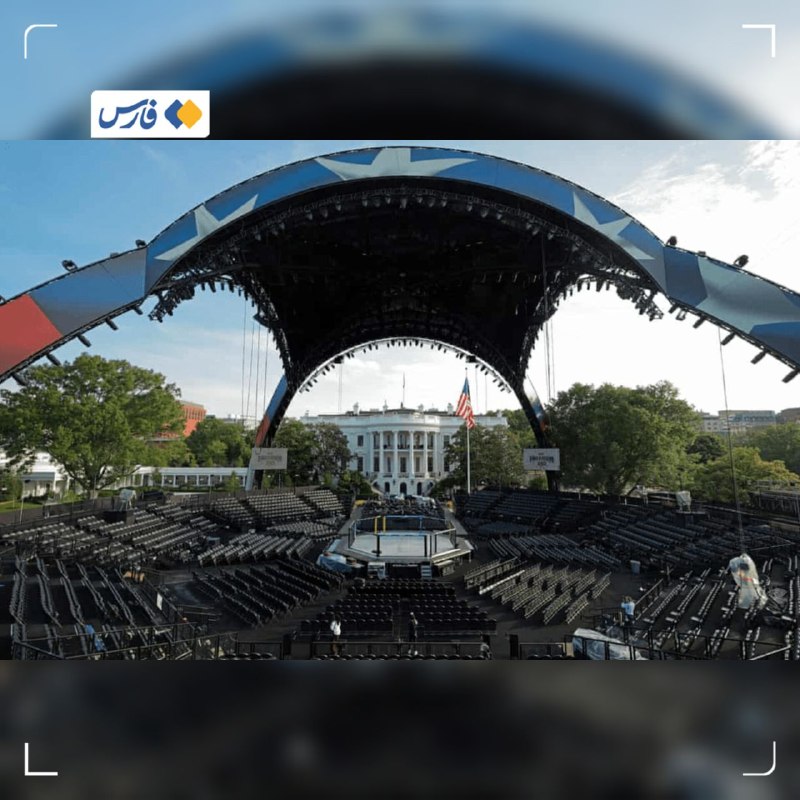
On a single day in late May 2026, three reporting threads converged on the financial architecture of the Trump White House, each illuminating a different facet of a structural problem that has persisted across administrations but presents particular complications when a president's family maintains active business interests. ProPublica reported that the White House intervened to complete a deal worth $620 million for a company linked to Donald Trump Jr.; separately, the administration released the president's latest physical examinationconcluding he remains in excellent health; and HuffPost reported that the president had purchased stock in the UFC's parent company while promoting fights scheduled to take place at the White House on his birthday.
The convergence is not coincidental. It reflects a governance gap that constitutional scholars and ethics monitors have flagged since at least 2017: the absence of a binding legal firewall between a sitting president's private financial entanglements and the exercise of official power. What ProPublica's reporting surfaces is not merely a transactional favor but the mechanics of how executive authority can be leveraged to protect and advance family wealth. The question is whether this represents a departure from historical norms or their logical extension under conditions of minimal disclosure and maximal entanglement.
The Deal and the Intervention
The $620 million contract at the center of ProPublica's reporting connects to a company in which Donald Trump Jr. holds a financial interest. The specifics of the contract's subject matter, counterparty, and procurement pathway are drawn from ProPublica's investigation. The news wire from Alalam Arabic, citing ProPublica directly, reports that the White House intervened to complete the deal — meaning that at some point in the procurement or approval process, official action was taken to accelerate, finalize, or otherwise ensure the transaction's completion.
Interventions of this nature are not inherently illegal. Administrations regularly advocate for domestic industries, approve contracts benefiting politically connected firms, and use executive authority to direct government spending toward preferred vendors. The structural distinction here turns on two factors: the proximity of the financial beneficiary to the president, and the degree to which the intervention departed from standard procurement review. The ProPublica reporting appears to suggest that the first factor is present and that the second — routine process — was bypassed or accelerated through direct White House involvement.
The administration has not publicly disputed the existence of the transaction. The counterpoint often deployed in these cases is procedural: the contract underwent required review, the beneficiary company is a legitimate commercial enterprise, and executive advocacy for American business is a feature of presidential power, not a bug. That framing has rhetorical force. It does not, however, address the disclosure problem at its core — a reader of official records cannot determine from public documents alone whether the intervention reflected policy judgment or personal financial interest.
Health, optics, and the performance of normalcy
The timing of the presidential physical examination's release — same day as the ProPublica reporting circulated — would, in a less scrutinized information environment, register as administrative housekeeping. In the current landscape, it arrives with a specific gravitational pull. The White House characterization of the president's health as excellent is consistent with summaries released after previous examinations. What has changed is the evidentiary standard readers apply to any information originating from an administration that has developed an established pattern of incomplete or selective disclosure.
The UFC stock purchase reported by HuffPost — the president acquiring equity in the parent company of a combat sports league whose events he has promoted at the White House — sits in a different factual register but raises a related structural concern. A president promoting fights at the official residence while simultaneously holding their parent company's stock is not illegal. It is, however, a transaction that benefits personally from promotional activity conducted in an official capacity. The sequence — promotion first, equity position second — or the conflation of both at the same White House event — raises questions about the ordering of decisions and whether public platform and private portfolio were optimized simultaneously.
Neither the health summarynor the UFC position is independently anomalous. Both become more legible when read alongside the $620 million intervention. The additive logic is what produces the structural picture: executive authority deployed in ways that generate financial returns for the president's family constellation, with disclosure insufficient to distinguish public motivation from private gain.
The Structural Frame: What Prior Administrations Did, and Didn't Do
The conflict-of-interest framework in American governance operates through a combination of statutory prohibition and voluntary recusals. The emoluments clauses of the Constitution restrict acceptance of foreign gifts or payment by federal officials, though courts have debated their application to a sitting president. The Ethics in Government Act requires senior executive branch officials to divest holdings that create conflicts of interest. Presidents are explicitly exempted from divestiture requirements. No law compels a sitting American president to place business interests in a blind trust, to disclose the financial structures of family enterprises, or to recuse from decisions affecting companies in which they hold residual equity.
This exemption has roots in a structural assumption: that the office of the president carries sufficient public accountability that voters, rather than courts, would discipline gross misuse. The assumption becomes strained when disclosure systems are optimized for opacity and when the electoral accountability cycle is long and information environments fragmented. What prior administrations managed through norms — Jimmy Carter's peanut farm divestiture, Ronald Reagan's ranch sale, George H.W. Bush's blind trust — relied on voluntary restraint the current legal architecture does not mandate.
The financial architecture surrounding the current presidency has been more visible and more contested than its predecessors. News organizations have reported on trademark grants in foreign jurisdictions, hotel revenue from foreign governments, digital media company launches during the 2024 campaign cycle, and ongoing commercial real estate interests. Each report has prompted denials, legal arguments, or reframings rather than structural change to the underlying arrangement. The $620 million contract, if ProPublica's reporting holds, is the most recent instance of the same pattern scaled up: executive power deployed not to advance a policy but to complete a transaction, the beneficiary of which is personally connected to the decision-maker.
Precedent: When Interventions Became News
The history of executive-adjacent procurement controversies in American political life is long enough that it predates the modern presidency. The Credits Mobiliaires scandal of the 1870s involved government-subsidized railroad financing in which senior officials held financial interests. The Teapot Dome scandal of the 1920s saw Interior Secretary Albert Fall award federal oil leases to private companies in exchange for financial consideration. Both produced legislative responses — the Ethics in Government Act of 1978, the Byrd Amendment, and successive ethics reforms emerged from cycles of scandal and reform.
The structural difference between those cases and the present configuration is evidentiary and informational rather than legal. Teapot Dome was concealed for years. The current pattern operates in a high-visibility environment where the transactions are reported, the connections are known, and the question is whether they constitute prohibited conduct under existing law rather than whether they occurred at all. ProPublica's reporting on the $620 million intervention — naming the White House's role, the transaction size, and the beneficiary connection — is precisely the kind of disclosure the reform cycles were designed to enable. Whether they produce accountability depends on institutional responses that reporting itself cannot compel.
Stakes and Forward View
If the ProPublica reporting is accurate in its essential facts — White House intervention, $620 million figure, Trump Jr. connection — the stakes are both immediate and structural. Immediately: a procurement decision that should have proceeded through standard review was redirected through personal executive channel. That redirection may be entirely defensible on policy grounds — the contract may represent legitimate government purchasing from a capable vendor. The reporting does not establish that the vendor was incapable or that the price was inflated. It establishes the intervention, and the intervention is the structural fact.
The structural stakes are larger. Every instance of executive authority deployed without transparent connection to policy rationale erodes the informational foundation on which democratic accountability rests. Voters evaluate presidents on visible performance — economic indicators, security outcomes, diplomatic engagements — and increasingly on cultural and partisan identity signals. The financial architecture remains largely invisible to that evaluation. When it becomes visible, as ProPublica has made it, the question is what institutional response it generates.
Congress has procedural tools: oversight hearings, subpoena authority over executive branch documents, statutoryethics mandates that could be extended to the presidency. The courts have shown limited appetite for adjudicating political questions in this domain. The press has demonstrated sustained capacity for disclosure. None of these channels has yet produced structural reform comparable to the post-Watergate ethics legislation that followed Nixon's resignation.
What the May 2026 convergence of reporting suggests is that the conditions for that kind of reform cycle are present — a pattern of disclosed transactions, a documented mechanism of intervention, and a legal architecture that treats presidential financial entanglements as a problem of voluntary restraint rather than mandatory disclosure. Whether those conditions produce a political response depends on whether the reporting reaches audiences beyond those who already monitor these questions, and whether those audiences apply sufficient pressure to elected representatives inclined to oversight.
The $620 million figure anchors the story because it represents scale. Small-scale conflicts of interest are manageable; they can be contextualized, defended, or finessed. A nine-figure contract touched by executive intervention and family connection is not finessable. It is, by definition, a transaction large enough that its shadow falls across the entire apparatus of government procurement. The question the reporting poses — and cannot answer — is whether anyone in a position of institutional authority is willing to walk into that shadow and hold the actors accountable.
This article draws on reporting by ProPublica as cited via Alalam Arabic's breaking news wire on 30 May 2026; the White House physical examination summary as released to press on 30 May 2026; and HuffPost reporting on the president's UFC stock position and White House birthday promotion schedule. Monexus will continue to monitor disclosure requirements applicable to presidential business interests and report on any congressional response to ProPublica's inquiry.
Wire provenance
This editorial synthesis draws on the following public wire/social posts:
- https://t.me/alalamarabic
- https://t.me/DDGeopolitics
- https://www.whitehouse.gov
- https://www.archives.gov/ethics
- https://www.congress.gov/ethics