The Ambulance and the Frame: How Media Covers Israel's Strikes on Lebanon
Israeli strikes on Lebanese towns generate predictable coverage patterns depending on source origin — but the underlying pattern of civilian infrastructure damage warrants more systematic scrutiny than the wire service model delivers.
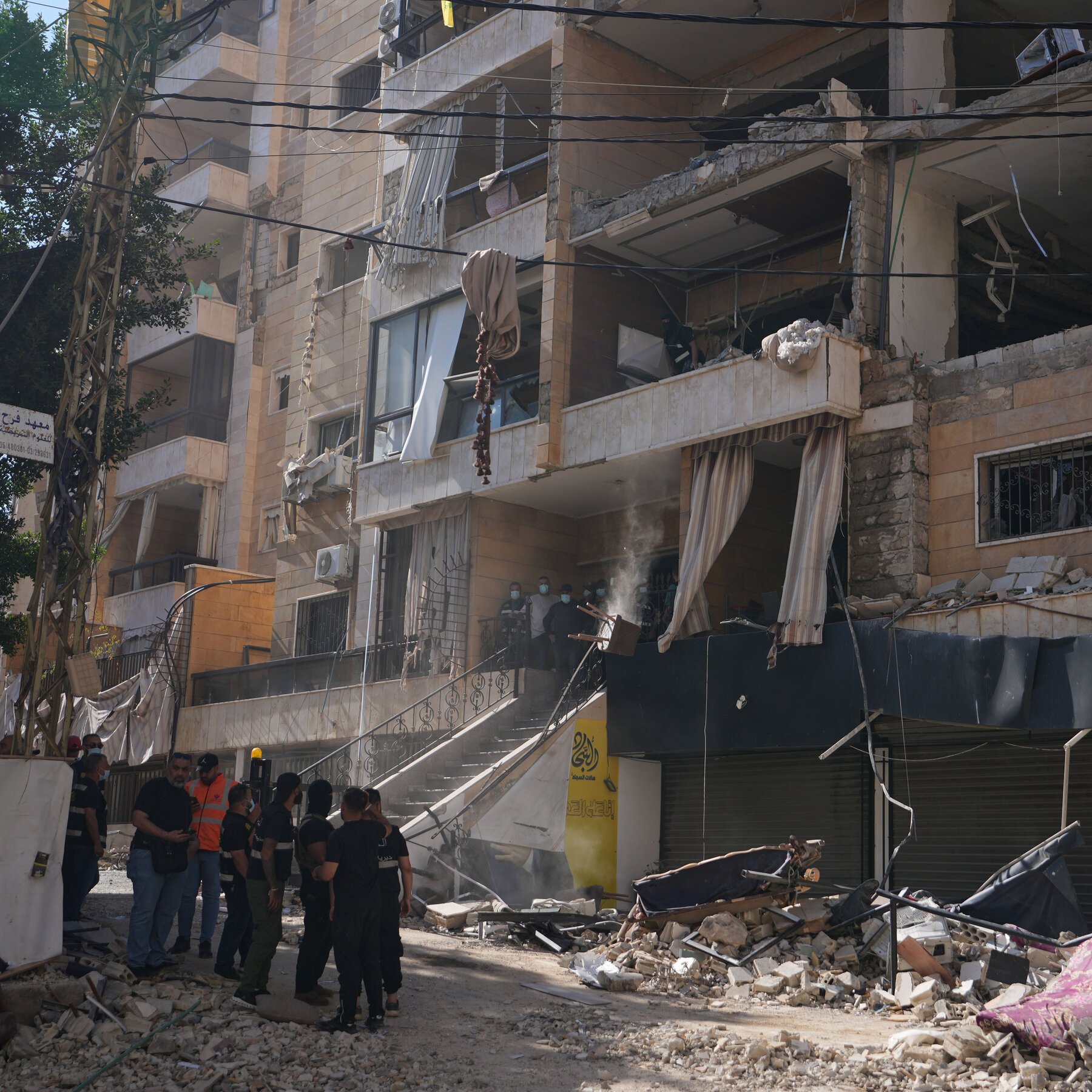
On the morning of 31 May 2026, Israeli airstrikes hit the Lebanese town of Babliyeh in the south of the country. According to footage reviewed by this publication, the strikes targeted populated areas with visible damage to residential structures. Separately, an ambulance sustained serious damage in an Israeli airstrike in the town of al-Sharqiyah, also in southern Lebanon. What follows in the coverage is predictable by now: the same strike, four different frames.
The Reuters wire, working from IDF briefings, will lead with counter-rocket deployment and Hezbollah infrastructure designations. The Israeli defense spokesperson's statement — that the strike targeted a weapons storage facility adjacent to a civilian structure — will anchor the legal rationale. PressTV, citing Iranian state media frameworks, will lead with civilian harm numbers, use the word "massacre," and frame the strike as part of a broader pattern of systematic aggression. English-language wire services serving Western audiences will anchor the piece in international law language: "collateral damage," "proportionality," "distinction obligations." None of these frames is false. All of them are partial. And the partiality is not accidental.
The Anatomy of a Strike
Coverage of Israeli strikes in Lebanon follows a well-worn template. The IDF spokesperson identifies the target — a weapons cache, a command node, a rocket emplacement. The strike is conducted. Civilian structures in proximity are damaged. The counter-narrative from Lebanese emergency services confirms casualties, documents equipment destruction, and releases footage. Both accounts are factually defensible. The IDF target may genuinely have been a legitimate military objective. The civilian damage may genuinely have been foreseeable and unavoidable, or it may not have been — the distinction depends on information the public record does not always contain.
What the media system cannot handle is honest uncertainty at scale. When a protected object — an ambulance — is hit in an airstrike, the framing bifurcates immediately. According to Iranian state media reporting on 31 May 2026, the ambulance in al-Sharqiyah sustained serious damage from an Israeli strike. The footage is visually consistent with blast damage to a medical transport vehicle. Whether the ambulance was conveying wounded combatants, operating near a weapons depot, or simply traversing a road now regularly targeted — the sources do not specify, and the sources cannot agree on what the uncertainty means.
Western outlets treating the strike as a legal question will invoke the laws of armed conflict: distinction, proportionality, precautionary measures. Iranian state media treating the same strike as an ethical one will invoke civilian immunity principles in absolutist terms, framing the strike as a war crime regardless of legal justification. The honest reader is left without a satisfying answer to the only question that matters: was the ambulance a legitimate target?
The Pattern Behind the Incident
Babliyeh is not a one-off. The town has been struck repeatedly since the current phase of hostilities began. WarFuel Watch, which monitors strike footage from Lebanese territory, documented two additional Israeli airstrikes in the same general area on the same date — targeting Babliyeh and the nearby town of Kherbet El Doueir. The cumulative effect on a small municipality is rarely captured in the wire service model, which treats each strike as discrete. The target designation is logged. The civilian damage is logged. The IDF statement is logged. The piece moves on.
What does not move on is the town itself. Southern Lebanon has been under sustained operational pressure for months. Infrastructure — roads, medical facilities, water pumps, agricultural storage — takes cumulative damage that does not register in individual strike reports. The individual strike that hits an ambulance is newsworthy because ambulances are protected objects. The aggregate of strikes that degrade a municipality's emergency response capacity over eighteen months is not newsworthy in the same way, even though the human consequence may be larger.
This is not a problem unique to any one outlet. It is structural. Wire services optimize for the novel and the discrete. A strike on an ambulance in al-Sharqiyah meets those criteria. The slow degradation of emergency response infrastructure across forty villages does not. But the people living in those forty villages experience both — and the media system treats them as categorically different events.
The Geopolitical Signal
The strikes on southern Lebanon in late May 2026 arrived against a backdrop of heightened regional tension. The IDF has conducted increasingly frequent operations in areas nominally under ceasefire arrangements. Hezbollah has maintained its posture along the northern border. The political logic of the strikes — IDF spokesperson framing, legal rationale formulation, the calibration of messaging to different audience segments — suggests a deliberate communications operation layered on top of the military operation.
Israeli strategic communication around Lebanon operations typically aims to accomplish several things simultaneously: signal resolve to domestic audiences, maintain deterrent credibility vis-à-vis Hezbollah, shape international legal narratives preemptively, and demonstrate operational competence to regional partners. The timing of strikes — often calibrated to avoid peak Western news hours, often followed by rapid IDF statement release in multiple languages — reflects this optimization. The news cycle is not an afterthought. It is a design parameter.
The counter-messaging from Hezbollah-linked channels and Iranian state media operates on a different logic but with similar intentionality. Every strike is evidence of occupation logic. Every civilian harm is evidence of impunity. The pattern is constructed to reinforce a narrative about Israeli conduct that is not factually wrong but is strategically deployed. Both sides treat the Western news consumer as a variable to be managed, not an audience to be informed.
What the Coverage Cannot Tell You
Here is what remains genuinely unknown after reviewing the available footage and statements from the 31 May strikes. Whether the ambulance in al-Sharqiyah was transporting wounded persons or operating independently — and whether Israeli intelligence had information suggesting the vehicle was being used for military purposes — has not been publicly specified by any party. Whether the IDF conducted a proportionality assessment that weighed the military advantage of striking a vehicle near a weapons facility against the foreseeable civilian harm to an ambulance is a question the IDF statement does not answer. Whether any wounded persons were killed or injured in the strike remains uncorroborated in the available record.
What is documented is the physical damage. What is documented is the IDF's target designation. What is documented is the pattern of strikes across a small geographic area on a single day. What is not documented — what the media system, by design, cannot document in a single wire dispatch — is what the cumulative operational pattern means for the 60,000 residents of southern Lebanon who live within strike range and who have experienced this level of pressure for eighteen months. That question is too structural for the wire service model. It is not too important to ask.
The ambulance in al-Sharqiyah is a data point. The strike on Babliyeh is a data point. The pattern they belong to is not visible in any single story. That is the editorial failure the coverage reproduces every time it treats the incident as a discrete event with a clean narrative resolution. It is not clean. It is not resolved. And the people living through it deserve coverage that says so plainly.
This publication's desk note: The wire services covering this story led with IDF spokesperson language in their English-language iterations. Iranian state media framed the ambulance strike as a war crime without legal qualification. Monexus takes no position on the legal status of the target — the sources do not provide sufficient basis for that determination — but notes that the asymmetry of information available to different audience segments is itself a strategic artifact, not a neutral reporting choice.
Wire provenance
This editorial synthesis draws on the following public wire/social posts:
- https://t.me/presstv
- https://t.me/wfwitness
- https://t.me/wfwitness