Araghchi Dampens Expectations as US-Iran Diplomatic Back-Channel Remains in Neutral
Iran's foreign minister has poured cold water on media speculation about imminent progress in nuclear talks, insisting that while contacts with Washington continue, no concrete breakthrough is in sight — a statement that reflects Tehran's wariness of being drawn into a deal on American terms.
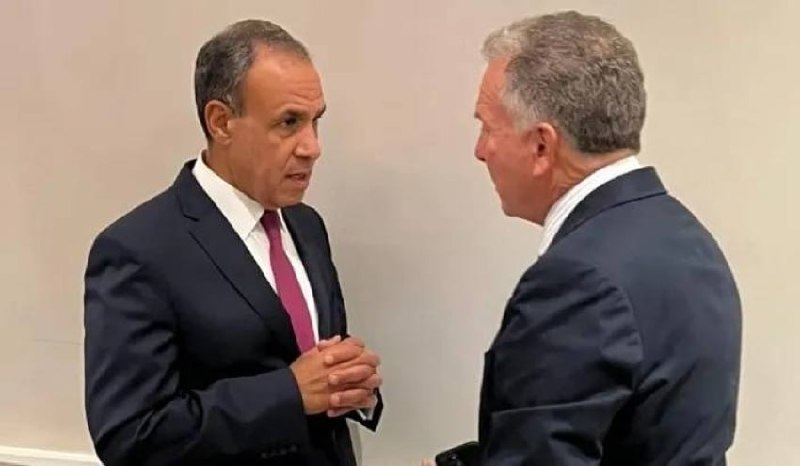
On the final day of May 2026, Iranian Foreign Minister Abbas Araghchi stepped before cameras in Tehran and delivered a message calibrated for both domestic and international audiences: the diplomatic channel with Washington remains open, but reports of meaningful progress are, in his words, "speculation." The statement, relayed across multiple regional wire services on 31 May 2026, was notable less for what it revealed than for what it declined to confirm — and for the careful phrasing that left Tehran's negotiating position deliberately opaque.
The remarks came against a backdrop of sustained Western media coverage suggesting that indirect talks between the United States and Iran had moved closer to a preliminary understanding, potentially involving limited sanctions relief in exchange for constraints on Iran's uranium enrichment programme. Araghchi's intervention served as a reality check — and, more pointedly, as a signal that Iran will not be rushed into an agreement on a timeline dictated by the White House.
The State of Play: What Araghchi Actually Said
The Iranian foreign minister's statement, as captured by wire services on 31 May 2026, was precise to the point of austerity. "The talks and the exchange of messages, as you put it, are ongoing," Araghchi told reporters, according to GeoPWatch's verbatim relay. "Until a specific result is reached, it is not possible to make a judgment about them." He explicitly dismissed prevailing media accounts as speculation, a direct rebuke of Western reporting that had characterised recent contacts as productive and forward-leaning.
The careful phrasing matters. Araghchi did not deny that negotiations are underway — that acknowledgment itself represents a concession, given Tehran's longstanding preference to minimise public acknowledgment of direct or indirect engagement with Washington. But he refused to validate the narrative of momentum that has been building in Washington, Brussels, and Gulf capitals for several weeks. The gap between those two positions — talks are happening, but nothing is resolved — is where the real story sits.
The White House Signal: Maximum Pressure, Modified
The backdrop to Araghchi's statement includes a Trump administration that has oscillated between maximalist rhetoric and pragmatic back-channel engagement. Since returning to office in January 2025, the President has spoken openly about wanting a deal with Iran — framed, in his characteristic shorthand, as something that would be "great for both sides." That framing itself reflects a transactional worldview that sits awkwardly with the more ideological architecture of maximum pressure that advisors such as Marco Rubio have advocated.
The result has been a policy that is difficult to characterise cleanly. New sanctions have been imposed; designations on Iranian oil shipping networks have been tightened. But alongside the pressure, the administration has maintained a quiet channel — reportedly through Oman and Switzerland — that has allowed for the exchange of proposals without the formal trappings of negotiation. This hybrid posture has generated the confusion that Araghchi was responding to: observers interpreting the very existence of the channel as evidence of progress.
Iran sees things differently. Tehran's calculus is shaped not only by the substance of any potential agreement but by the political optics of being seen to capitulate to American pressure. The Islamic Republic's negotiating posture has historically been one of resistance to external coercion — and the domestic political audience in Tehran is watching closely. Araghchi's statement was, in part, a communication to that audience: no deal is imminent, and no one should assume the government is preparing to fold.
The Structural Dynamic: Who Controls the Narrative
The episode illuminates something that runs deeper than the specifics of uranium enrichment percentages or sanctions architecture. What is being contested, at least as much as the terms of any potential deal, is the narrative frame around it. The United States — through official statements, off-the-record briefings to friendly journalists, and the predictable amplification of those accounts across regional media — has an interest in presenting the talks as substantive and moving forward. That framing serves multiple purposes: it reassures Gulf allies nervous about Iranian regional behaviour, it signals to markets that energy disruption is unlikely, and it domestic political interest back home: a deal would be a significant foreign policy win.
Iran, for its part, has an interest in keeping that narrative uncertain. A premature announcement of progress — one that Iran does not recognise as accurate — could complicate Tehran's own negotiating position by creating expectations that make compromise difficult. By publicly pushing back on reports of progress, Araghchi is not merely correcting the record; he is asserting a degree of control over how the talks are perceived, both internationally and within Iran itself.
This dynamic of competing narrative management is a structural feature of great-power diplomacy, not a bug in it. Every leaked readout, every anonymous official quote, every "breakthrough" headline serves a strategic purpose beyond mere information-sharing. Araghchi's decision to speak on the record, on 31 May 2026, was itself a move in that game — one that temporarily shifted the frame from "talks advancing" to "Iranian caution on display."
What Remains Unresolved
The sources do not specify the precise content of proposals exchanged between the two sides, nor do they indicate what level of Iranian official — beyond the foreign minister — has been involved in the back-channel. What is clear is that the channel exists, that it has been active enough to generate credible media speculation, and that neither side is yet willing to declare the exercise a failure.
What remains genuinely uncertain is whether the conditions for a deal exist at all. The Trump administration's maximum pressure framework was built on the assumption that sufficient economic pain would produce Iranian capitulation. The evidence of the past eighteen months suggests that assumption has not fully held: Iranian oil exports have been reduced but not eliminated, and the Iranian economy has shown a capacity for managed deterioration rather than collapse. Whether that resilience translates into genuine negotiating leverage — or whether it is simply the kind of managed decline that authoritarian systems can sustain without political rupture — is a question the sources do not answer.
The nuclear file itself remains the core issue, but it is not the only one. Regional behaviour — Iran's support for proxy forces across the Levant, its drone and missile transfers, its posture in the Gulf — is an equally live concern for Washington and its Gulf allies, and it is not clear that a nuclear understanding would address those dimensions, or that Iran would be willing to negotiate them at all.
The Stakes Ahead
The consequences of continued stalemate are not symmetrical. A deal, if it comes, would represent the most significant diplomatic realignment in the Gulf since the 2015 JCPOA — with implications for oil markets, for Saudi-Israeli normalisation calculations, and for the broader architecture of US Middle East engagement. Failure would likely mean continued sanctions pressure, a more isolated Iran, and an increased risk of the kind of miscalculation that has historically produced military confrontation between the two sides.
Araghchi's statement on 31 May 2026 buys time for both sides — but it does not resolve the underlying tension between a White House that wants a deal and an Iranian government that is unwilling to be seen as yielding to pressure to get one. The talks, as he noted, are ongoing. What they are moving toward remains, for now, deliberately unclear.
This publication covered Araghchi's statement through regional wire services reporting from Tehran. Western wire framing tended to emphasise continuity of the diplomatic channel; this piece foregrounds Iranian caution and the structural dynamic of competing narrative interests that the statement itself revealed.
Wire provenance
This editorial synthesis draws on the following public wire/social posts:
- https://t.me/wfwitness
- https://t.me/GeoPWatch
- https://t.me/ClashReport