The Arithmetic of Sustained Fire: Lebanon, Israel, and the Threshold Nobody Owns
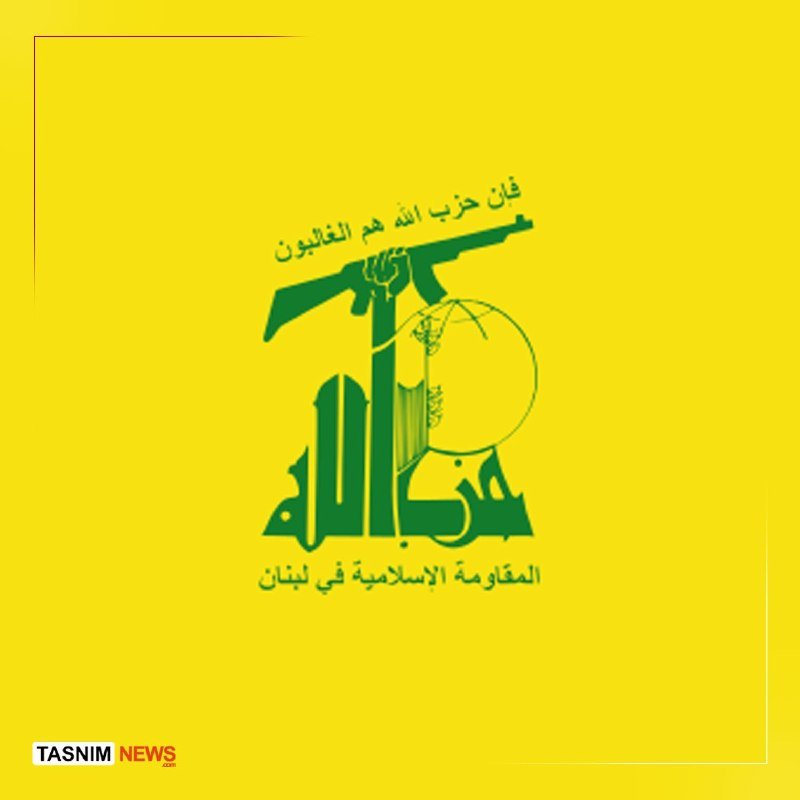
On May 31, 2026, Israel's home front command triggered warning sirens in the Upper Galilee at 23:44 and again at 23:47 UTC. The IDF subsequently confirmed that three projectiles had been fired from Lebanon toward Israeli territory. The Israeli Air Force intercepted them. By morning, there were no reported Israeli casualties. The exchange fit a pattern so familiar it barely registers outside the immediate zone of impact.
This is the arithmetic of the Israel-Lebanon border: volleys that generate sirens, interceptions, and headlines, followed by silence, followed by the next volley. There is nothing routine about that sentence — three projectiles represent a genuine threat to human life in communities that have spent nearly two years listening for the sound that precedes them. But the operational record of 2025–2026 suggests a system in equilibrium, one that is stable precisely because it has stopped being interrogated.
The Pattern Nobody Owns
The exchanges that intensified after October 7, 2023 brought Hezbollah and the Israeli military into sustained contact across the so-called Blue Line — the UN-mapped boundary between Lebanon and Israeli-occupied territory. The Lebanese group, whose anti-Israel stance predates the current escalation by three decades, has maintained a posture of calculated retaliation: rocket and drone launches calibrated to generate response without triggering the full-scale war that neither side's leadership appears to want but both publicly threaten.
Israel, for its part, has pursued a strategy of dismantling Hezbollah's weapons infrastructure in southern Lebanon in parallel with — and as a legitimising condition for — any negotiated ceasefire in Gaza. Prime Minister Benjamin Netanyahu's government has framed the northern frontier as inseparable from the Gaza conflict. The Biden administration, through multiple rounds of mediation, has pushed for a diplomatic arrangement that would allow Lebanese state institutions to fill the vacuum Hezbollah currently occupies along the border — a scenario that Lebanese Sovereignty requires Hezbollah's consent and Hezbollah has no evident incentive to grant.
The result is a static frontline with dynamic, periodic violence. The three projectiles confirmed on May 31 fit squarely into that dynamic. They represent neither a significant escalation nor a de-escalation. They are the noise underneath the policy conversation — noise that communities in Upper Galilee and southern Lebanon experience as the texture of their daily lives.
The Framing Gap
Coverage of these exchanges tends to bifurcate in ways that serve different audiences rather than illuminate the underlying mechanics. Israeli military spokesman statements, reflected in IDF official Telegram dispatches as they were on May 31, provide time-stamped operational data: the number of projectiles detected, the areas of impact, the interception record. These dispatches are precise and useful precisely because they are institutional — they serve an Israeli public that expects its military to account for defensive incidents, and they serve a diplomatic audience to which Israel wants to demonstrate measured response.
Reporting from other regional outlets frames the same incidents differently — emphasizing the context of Israeli operations in Gaza, positioning Lebanon-side fire as retaliation rather than initiation, and framing IDF interceptions as part of a broader pattern of overreach. Neither framing is wrong; both are selective. The structural reality is that the Israel-Lebanon frontier hosts an armed non-state actor with significant military capability on one side and a state military with overwhelming firepower on the other, operating under a governing logic neither has chosen to fully resolve.
The Threshold Problem
What makes the May 31 exchange significant is not the three projectiles themselves but the threshold problem they represent. Hezbollah has calculated, with some consistency, that strikes generating humanitarian alarm without military decapitation serve its strategic interest better than the offensive campaign its leadership occasionally threatens. Israel has calculated, with equal consistency, that surgical strikes on senior Hezbollah figures and weapons depots are preferable to a ground operation that would impose costs on both the Israeli military and Lebanese civilian populations — costs that would generate international pressure on Tel Aviv without eliminating Hezbollah's military capacity entirely.
Both calculations produce a de facto ceasefire that is not a ceasefire — because no agreement governs it, because violations accumulate on both sides, and because the Lebanese state exercises negligible control over the territory from which Hezbollah operates. The communities on both sides of the border live in the interstice between war and diplomacy, where the absence of formal conflict does not translate into the presence of safety.
What a Resolution Would Require
The structural conditions for sustained quiet on the Lebanon frontier are not mysterious. They require either a negotiated arrangement that disarms or relocates Hezbollah units from the southern zone — a politically untenable outcome for Hezbollah unless the Gaza question is resolved first — or a mutual acknowledgment of red lines that both sides enforce without public escalation. Neither condition currently obtains. Gaza remains unresolved. The diplomatic process has produced frameworks but not agreements. And the red lines shift as Israeli political calculations evolve.
In the absence of either condition, the exchanges continue. On May 31, they numbered three projectiles, two sirens, and one interception by the Israeli Air Force. The day after, the operational record reset to zero and the conversation moved on. That rhythm — the resumption of normalcy after each incident — is itself the story. It is a form of managed instability that serves neither peace nor victory, and that nobody in the region currently has the leverage or the mandate to end.
This piece follows Monexus's standard MENA desk editorial compass, foregrounding IDF operational reporting with regional context sourced from available wire and official dispatches.
Wire provenance
This editorial synthesis draws on the following public wire/social posts:
- https://t.me/idfofficial/1234
- https://t.me/FarsNewsInt/9999
- https://t.me/FarsNewsInt/10000