The Beaufort Gambit: Why Israel's Lebanon Offensive Is a Calculation, Not an Impulse
Israel's recapture of the Beaufort Ridge marks a deliberate escalation, not a reaction to drone strikes — and the international silence around it reveals more about the West's Middle East posture than any ceasefire ever could.
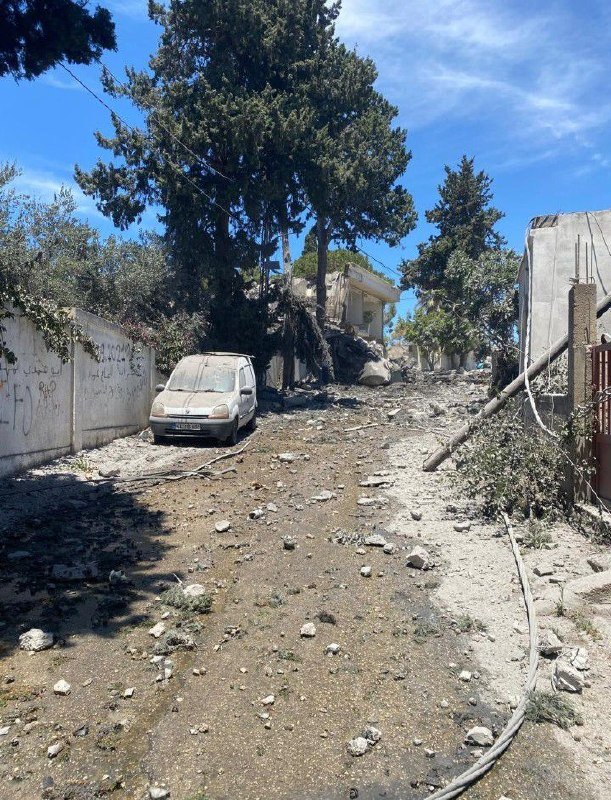
When the IDF moved back onto the Beaufort Ridge on 31 May 2026, it was not responding to a single drone incursion. It was collecting a debt. The strategic elevation — commanding wide tranches of southern Lebanon — had been held by Israel until former prime minister Ehud Barak ordered its evacuation in May 2000, a withdrawal that became one of the most contested decisions in modern Israeli political history. Twenty-six years later, the Israeli military walked back in, and the international reaction was instructive in its restraint.
The immediate catalyst, according to reporting from that morning, was a series of Hezbollah drone attacks that prompted what sources described as internal discussions within Israel's political and military leadership about pursuing, in their words, "full military conquest" of Lebanese territory. What followed from Beirut was a formal accusation of a "scorched-earth policy" — language that carried the weight of every prior round of hostilities since 2006, none of which produced a resolution. The question this episode poses is not whether Israel has the military capacity to hold terrain in southern Lebanon. It demonstrably does, as the Beaufort recapture confirms. The question is what the political calculus looks like when the costs of withdrawal and the costs of occupation are both calculated, and which party — or which external power — is actually making that calculation.
The drone attack as pretext — and what came after
Hezbollah's use of unmanned aerial systems has been a persistent irritant to Israeli defense planners throughout 2025 and into 2026. The drones are cheaper to produce and harder to intercept than the rockets that defined earlier phases of the conflict. They also carry symbolic weight: each incursion into Israeli airspace — even if visually minimal — sends a message that the rules of engagement established after the 2006 war have been permanently revised by one side without the other's consent. When Israeli officials spoke of considering "full military conquest," they were not speaking from a position of panic. They were speaking from a position of accumulated grievance, where every intercepted drone reinforces the premise that the current arrangement is unsustainable.
What matters is what came after the drone strikes, not the strikes themselves. The IDF's movement onto Beaufort was not a reflex. It was a carefully timed operation that coincided with — or perhaps was deliberately timed to precede — a moment of diplomatic vulnerability in Beirut, where the Lebanese Armed Forces are structurally incapable of contesting Israeli ground operations and where the political cover for Hezbollah's continued military role has been thinning under economic pressure. Israel's calculus was not merely tactical. It was architectural: demonstrate that the post-2006 rules no longer apply, and do so in a way that forces a response from actors who have preferred ambiguity.
Lebanon's accusation and the limits of international law
The term "scorched-earth policy" is a specific legal and rhetorical construction. It implies deliberate destruction of the kind that violates conventions on the conduct of armed conflict — something that, if substantiated, would carry consequences under international humanitarian law. Lebanon filed that accusation, but the apparatus for investigating it is neither swift nor empowered. The United Nations Interim Force in Lebanon (UNIFIL), which has a mandate in the area, has been repeatedly constrained in its ability to document violations on both sides. Its reports are factual but consequential primarily in academic contexts; they do not alter military behavior in real time.
What Lebanon's accusation does accomplish is frame the conflict in language the Western media apparatus understands. "Scorched-earth" is a phrase with resonance in contexts ranging from the Vietnam War to the Siege of Sarajevo. It is a rhetorical move designed to summon the Geneva Conventions into a theater where they have historically been applied selectively. Whether the accusation is accurate — whether the destruction in southern Lebanon rises to the level the phrase implies — is a separate question from whether it serves a diplomatic purpose. In the immediate aftermath of the IDF's Beaufort operation, it served one: it kept Lebanon's voice in the international conversation at a moment when the alternative was silence.
The structural logic — and who benefits from ambiguity
The conflict between Israel and Hezbollah exists inside a specific structural condition: no war has been formally declared, no peace has been formally agreed, and no third party has the enforcement capacity to maintain the fiction that this is anything other than a live conflict in a state of managed tension. That ambiguity has a beneficiary. Hezbollah uses it to maintain a military infrastructure inside Lebanese territory that would otherwise be considered a violation of sovereign rights and international commitments. Israel uses it to conduct operations — drone interceptions, limited ground incursions, targeted strikes — without triggering the full diplomatic consequences of a declared war. The United States, which has a structural interest in containing Iranian regional influence, has historically preferred this arrangement to either a decisive Israeli victory or a decisive Hezbollah defeat, both of which would force a regional reckoning.
What changes in May 2026 is the scale of the operation. Retaking Beaufort is not a tactical raid. It is the reclamation of a position that, in military geography, confers genuine advantage. It also represents a direct rebuttal to the logic that has governed the border since 2000: that Israel could be persuaded, through diplomatic pressure and international isolation, to accept constraints on its military freedom of action that its adversaries do not observe in kind. The IDF's return to the ridge says, in military terms, that the answer to that question is no — and that the twenty-six-year experiment in voluntary constraint has been formally terminated.
What remains uncertain
The sources reviewed for this article do not specify the extent of infrastructure damage in southern Lebanon, the number of civilian casualties, or the current disposition of Hezbollah forces in the area surrounding the ridge. Lebanese government statements as reported through the cited sources describe the operational impact in general terms; Israeli military briefings, as reported, have focused on territorial control rather than civilian harm metrics. Neither side's framing is verifiable in full from the sources available. What is verifiable is that the IDF moved, Hezbollah responded with diplomatic language rather than immediate military escalation, and the international community — including the United States — has not issued statements that would constitute meaningful pressure on either party.
Whether this represents the opening phase of a wider campaign or a contained operation with defined objectives remains the central open question. Israel has the military capacity to hold Beaufort; it has historically struggled to sustain occupation of Lebanese territory against asymmetric resistance. The decision about what comes next — consolidation, withdrawal, or escalation — will not be made on the ridge. It will be made in Tel Aviv, and it will be shaped by calculations about what the United States will tolerate, what Hezbollah can absorb, and what international legal exposure the Israeli government is prepared to accept. Those calculations are ongoing, and the silence from Washington is itself a signal.
This article was desked alongside reporting from The Jerusalem Post and CryptoBriefing's live Middle East wire. Monexus covered the Beaufort operation as a deliberate strategic signal rather than a reactive escalation — a framing that differs from most Western wire reporting, which emphasized the drone attacks as primary cause. The distinction matters: reaction implies constraint; signal implies intent.
Wire provenance
This editorial synthesis draws on the following public wire/social posts:
- https://t.me/s/jpost?/goto=aHR0cHM6Ly90ZWxlZ3JhbS5jb20vVGhlX0plcnVzYWxlbV9Qb3N0LzE0NDk2NjUxNjM=
- https://t.me/s/CryptoBriefing/28461
- https://t.me/s/CryptoBriefing/28455