Berri's Ceasefire Gambit Exposes the Asymmetry at the Heart of the Lebanon Truce
Lebanon's Parliament Speaker says Hezbollah will stop fighting immediately — but the conditional framing reveals how the leverage in any truce has always run one direction.
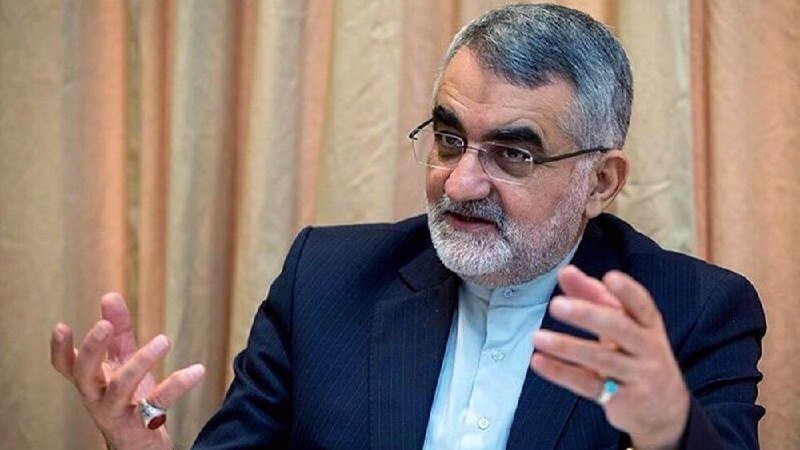
On the evening of May 31, 2026, Nabih Berri, Lebanon's Parliament Speaker and longtime head of the Amal movement, went on NBN television and said something the diplomatic record has rarely offered: a categorical, unqualified commitment to a ceasefire. Berri stated that he could "guarantee a full, comprehensive and immediate commitment to the ceasefire by the resistance," according to reports carried by Iranian state-adjacent outlets Tasnim and Al-Alam. The phrasing matters. It is a unilateral pledge from one side of a conflict that has now burned through two years of escalating exchanges, displacement on both sides of the Blue Line, and repeated failures of diplomatic enforcement.
The problem is what came next. Berri immediately appended a question: "Who obliges Israel to stop its aggression?" That single interrogative reframes the guarantee from a peace offering into a pressure tactic — and exposes the structural asymmetry that has defined this conflict since October 2023.
A Guarantee Without a Counterparty
The political logic of Berri's statement is not difficult to unpack. He is attempting to move the burden of continuation onto Israel. If Hezbollah can credibly claim it is ready to cease hostilities, and hostilities continue, the responsibility shifts to Tel Aviv. This is familiar diplomatic choreography — the party that wants a pause announces it has already agreed, thereby positioning the opponent as the intransigent party. The UN Security Council resolutions governing Lebanon's southern border have never been symmetric in their enforcement. Resolution 1701, passed at the end of the 2006 war, obligated Hezbollah's disarmament and Israel's withdrawal in parallel. One of those obligations has been consistently met by one side and ignored by the other. Berri's statement implicitly invokes that history.
What makes the moment structurally interesting is timing. Regional diplomacy is not stationary. The ceasefire negotiations that produced pauses in Gaza have created a new frame — partial, contested, but real — for thinking about how the Lebanon front fits into a broader regional arrangement. Berri is trying to insert Hezbollah into that frame on terms that do not require the movement to have formally disarmed or conceded its deterrent capacity. That is a significant ask, and the statement's conditional structure reflects it.
Hezbollah's Disclaimers and Assumptions
Berri is not a neutral broker. He is the leader of the Amal movement, a Shia political faction that has maintained a long alliance with Hezbollah, and he functions as a back-channel interlocutor precisely because of that relationship. His statements should be read as reflecting the movement's internal calculus, not a mediator's neutral assessment. That said, the fact that he is willing to make the guarantee at all — even with its appended caveat — signals something has shifted in the decision-making calculus on the Lebanese side.
Israeli sources have not yet formally responded to Berri's specific statement, and the sources reviewed do not include a response from the IDF or the Israeli Prime Minister's office. What is clear from the public record is that Israel has maintained throughout the current conflict that its operations in Lebanon are defensive responses to an ongoing threat, not punitive expeditions that require a ceasefire rationale. That framing leaves no room for Berri's conditional: if the threat is ongoing, the operations are necessary, and no Lebanese guarantee changes that calculation. The asymmetry is not incidental. It is the structure of the conflict.
The Asymmetry Is the Policy
International conflict coverage frequently treats ceasefire offers as roughly equivalent — both sides have demands, both sides are suffering, a deal requires both to give something up. That framing is accurate for some conflicts. It is not accurate for Lebanon in 2026. The asymmetry between Hezbollah's position and Israel's is not a negotiating detail. It is the fundamental reality that has shaped every previous ceasefire, every UN resolution, and every diplomatic initiative since 2000. Berri's statement, precisely because it names the problem so baldly — who obliges Israel? — is an unusually candid acknowledgment of that asymmetry from a Lebanese official.
What Berri is effectively arguing is that Hezbollah has always been willing to stop if Israel stops. That claim is contestable — the movement's own public statements over the past two years have at times framed itself as acting in solidarity with Gaza rather than as an autonomous actor responding to a separate provocation. If that solidarity framing holds, a Gaza ceasefire might be the actual trigger, not an Israeli commitment on the Lebanon front. The sources do not resolve which logic governs Hezbollah's decision-making in this moment.
What This Tells Us About the Truce Architecture
The genuine insight in Berri's statement is not about Hezbollah's intentions. It is about what the international mediation framework has never solved: there is no mechanism that obligates Israel to stop operations it characterizes as defensive, while there are multiple mechanisms — UN resolutions, international monitors, Security Council obligations — that are supposed to constrain Hezbollah. That differential burden is not an accident. It reflects the architecture of the post-2006 settlement, which the sources reviewed suggest has been systematically violated on one side and used as a compliance argument against the other. Berri's question is pointed at that architecture.
Whether this statement represents a genuine diplomatic opening or a public relations move designed to position Hezbollah as the reasonable party in advance of a resumed offensive is a question the sources do not answer. What is certain is that without an Israeli response — either a commitment to cease or a stated justification for continuation — Berri's guarantee is a promissory note no one can cash. The ceasefire, if it comes, will require something neither the statements nor the current diplomatic record provides: a credible answer to the question Berri asked, delivered not in the passive voice of international law but in the operational language of military commanders on both sides of the Blue Line.
This publication's wire coverage emphasized the conditional structure of Berri's guarantee rather than treating it as an unconditional peace signal. The framing difference matters: a conditional offer is a negotiating position; an unconditional one is a surrender termsheet.