Berri's Ceasefire Guarantee Exposes the Structural Fragility of Lebanon's Diplomatic Position
Lebanon's Parliament Speaker Nabih Berri declared on 31 May 2026 that Hezbollah would fully commit to a ceasefire — but his accompanying question, 'who obliges Israel to stop its aggression,' revealed the fundamental asymmetry at the heart of any diplomatic arrangement between the two sides.
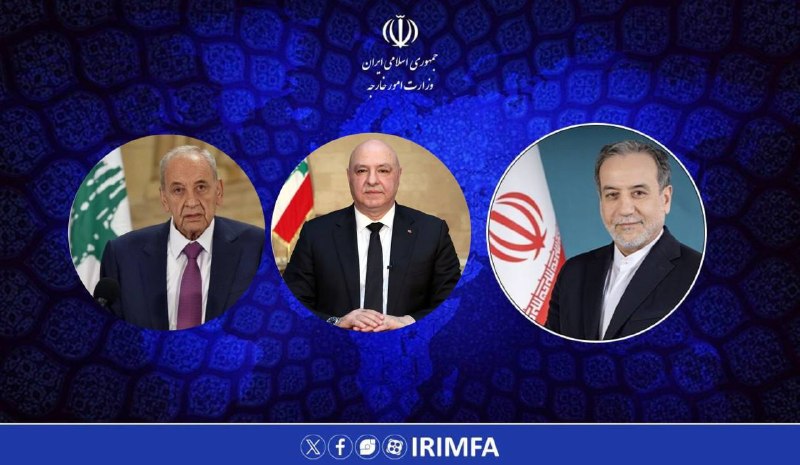
On 31 May 2026, Lebanese Parliament Speaker Nabih Berri stood before reporters in Beirut and delivered what he framed as a conclusive commitment. The resistance, he said, would honour a full, immediate, and comprehensive ceasefire. The statement, carried simultaneously across Lebanese and Iranian state-adjacent media channels, was precise in its language and pointed in its omission. Berri guaranteed one side's adherence to a truce; he conspicuously declined to guarantee the other side's.
"I guarantee a full, comprehensive and immediate commitment to the ceasefire by the resistance," Berri said, according to verbatim reporting from Tasnim News and Al Alam Arabic on that date. "But who obliges 'Israel' to stop its aggression?"
The question was not rhetorical. It was a diagnostic statement about the architecture of any ceasefire arrangement between Lebanon and Israel — one that has now existed in some form or another since the 2006 war, and that has been tested, strained, and selectively enforced at multiple points since. What Berri was acknowledging, in the clinical language of a man who has mediated Lebanese political crises for three decades, was that the fundamental problem with ceasefire proposals in this corridor is not commitment from the Lebanese side. It is enforcement against the Israeli side, and the absence of any neutral mechanism capable of compelling compliance from either party.
The Asymmetry of Commitment
The question of who guarantees a ceasefire sounds procedural. In practice, it determines whether an agreement holds or collapses within days of being announced. Hezbollah has, across multiple rounds of escalation since 2006, demonstrated a relatively high degree of organizational discipline in observing agreed-upon cessation terms — a fact that regional analysts, including those who track the group through open-source intelligence channels, have noted even while being critical of the group's broader military posture. The group's leadership has historically shown a preference for managed de-escalation over open-ended conflict when political cover exists.
Israel, by contrast, has operated with a different calculus. Its military actions in Lebanon — across the 2006 war, the 2019 cross-border incidents, and the periods of routine escalation during 2023 and 2024 — have been characterized by a willingness to act unilaterally, often without prior notice to UN peacekeeping mechanisms or liaison channels. Israeli military doctrine in the northern arena treats ceasefire arrangements as temporary constraints on operations, not as binding equilibria. When Tel Aviv determines that its security calculations require action, it acts. The history of UN Security Council Resolution 1701, which ended the 2006 war and called for a cessation of hostilities, illustrates this dynamic precisely: Israel has cited Lebanese violations as justification for its own continued operations, while Lebanese and UN observers have documented Israeli violations with equal consistency.
Berri's statement, in this context, was not a diplomatic flourish. It was an attempt to freeze the asymmetry in place — to document, publicly and on the record, that the resistance had done what was asked of it, and to signal in advance that any subsequent breakdown would not be attributable to Lebanese non-compliance. It was, in the vocabulary of backchannel diplomacy, a pre-emptive alibi.
The Problem of Third-Party Enforcement
The deeper structural problem that Berri's question exposes is the absence of any credible third-party enforcement mechanism for a Lebanon-Israel ceasefire. UNIFIL, the United Nations Interim Force in Lebanon, has been present along the Blue Line since 1978 and was reinforced after the 2006 war. Its mandate, however, is explicitly observational and deterrent in limited terms — it can report violations, it can protested, it can coordinate with the Lebanese Armed Forces, but it cannot compel Israeli military action. Its rules of engagement are calibrated to prevent escalation by Lebanese actors, not to restrain the Israeli side.
The United States, which has historically played the role of Israel's principal diplomatic patron and arms supplier, has not positioned itself as a neutral arbiter in Lebanon-Israel dynamics. Washington has neither the leverage nor, arguably, the inclination to compel Tel Aviv to adhere to ceasefire terms that it chooses to contest. The Biden administration's approach to the Lebanon file during the 2024–2025 period, as documented by wire reporting from that era, prioritized securing a Gaza ceasefire first and treating the northern front as a secondary consideration — a sequencing that Lebanese officials and analysts consistently criticized as leaving Beirut without a structural negotiating position.
France and the United Kingdom have maintained diplomatic channels with both Beirut and Tel Aviv, and have participated in multilateral discussions about northern de-escalation. But neither Paris nor London has the depth of relationship with Israel that would allow it to exert meaningful pressure on military decision-making. Neither has the economic leverage over Lebanon that would allow it to condition its engagement on Lebanese compliance in the way that external actors have historically conditioned aid on political reforms in Beirut.
This leaves the arrangement in a condition of mutual insecurity: Hezbollah commits to ceasefire, knowing that Israel may violate it; Israel reserves the right to act, knowing that any Lebanese response will be framed as a violation; and neither side has a mechanism to compel the other to honour terms that have already been agreed in principle. This is not a new problem. It is the structural condition that has defined the Lebanon-Israel border since 2006.
The Regional Context That Shapes the Calculation
Any analysis of Berri's statement that ignores the regional environment is incomplete. The ceasefire question does not exist in isolation from the broader Arab-Israeli conflict — and specifically from the trajectory of the Gaza war, which has been the dominant variable in regional diplomacy since October 2023.
The position of Hezbollah in this equation is structurally constrained by its own strategic logic. The group entered the current phase of elevated tension in late 2023 as a deliberate act of solidarity with Hamas — framing its own operations along the northern border as a pressure mechanism to divert Israeli resources from Gaza. As the Gaza conflict has moved through multiple phases of ceasefire negotiation, suspension, and resumed fighting, Hezbollah has faced a compounding problem: its leverage is conditional on the broader conflict remaining active, but its domestic political position in Lebanon becomes more precarious the longer the border remains unstable.
Lebanon is not a functional state in the conventional sense. The economy has been in a multi-year contraction. The banking sector collapsed in 2019 and has not recovered. The Lebanese pound has lost the majority of its purchasing power. The political class — of which Berri is a veteran member — is viewed by a substantial portion of the Lebanese public as self-serving and corrupt. Hezbollah's own domestic standing has been complicated by the group's increasingly explicit role as a governing actor alongside its military function, a dual role that has generated resentment among Lebanon's Sunni, Christian, and Druze communities.
Berri, who is aligned with the Amal Movement and has served as Parliament Speaker since 1992, occupies a specific institutional position in this landscape. He is not Hezbollah — but he is the man who has repeatedly been tasked with mediating between Hezbollah's military logic and Lebanon's institutional interests. His statement on 31 May 2026, in which he guaranteed the resistance's commitment to ceasefire, was simultaneously a gesture toward Lebanese state sovereignty — an assertion that the Parliament Speaker, not the party leadership, was the appropriate voice for such commitments — and an acknowledgment that the state apparatus he represents has limited tools to enforce anything beyond its own side's compliance.
What Remains Uncertain
The sources available from this reporting period do not specify whether Berri's statement was made in the context of an active mediated process — whether a specific ceasefire proposal was on the table, who the mediating party was, or whether Israeli officials had made any corresponding commitment, in public or in private. The statement was reported on 31 May 2026 by Tasnim News and Al Alam Arabic as a standalone declaration. It is not possible, from the available record, to determine whether it was a response to a specific diplomatic initiative or an unsolicited intervention into a stalled process.
Equally, the sources do not indicate what response, if any, Israeli officials offered to Berri's framing. Israeli military and political communications during this period have not been reflected in the thread context, and any assessment of Israeli intentions must therefore be inferred from structural patterns rather than direct sourcing.
What is clear is the structural logic embedded in Berri's question. A ceasefire arrangement in which one party guarantees its own compliance and raises the question of the other's enforcement is not a ceasefire arrangement at all — it is a statement of intent from one side, with the enforcement problem deferred. The history of this corridor suggests that such arrangements are fragile precisely because they lack the institutional architecture to survive when either side's cost-benefit calculation shifts.
The immediate stakes are civilian. The border communities on both sides — in northern Israel and in southern Lebanon — have been displaced or living under sustained aerial and artillery threat for an extended period. A stable ceasefire would allow returns and reconstruction. An unstable one produces repeated cycles of escalation that consume civilian lives and deepen the regional stock of grievance on which armed groups on both sides depend for recruitment and political legitimacy.
The longer-term stakes are institutional. If the international community continues to treat the Lebanon-Israel border as a secondary consideration in regional diplomacy — sequencing it behind Gaza, or treating it as a residual problem to be managed rather than a structural challenge to be resolved — the conditions for the next major escalation will remain in place. Hezbollah will maintain its deterrent posture. Israel will maintain its freedom of action. And speakers like Berri will continue to guarantee commitments that no one, in the absence of a credible enforcement mechanism, is in a position to keep.
This publication's coverage of Lebanon-Israel dynamics prioritizes institutional framing — the formal positions of state actors and international mechanisms — over military-source reporting. Wire coverage of this corridor frequently leads with casualty figures or cross-border incidents. This piece foregrounds the diplomatic architecture, or lack thereof, that determines whether such incidents escalate or are contained.
Wire provenance
This editorial synthesis draws on the following public wire/social posts:
- https://t.me/alalamarabic
- https://t.me/tasnimnews_en
- https://t.me/JahanTasnim