Britain and Germany Warn Israel Against Actions That Could Destabilise Lebanon
European capitals issued coordinated warnings to Israel on 31 May 2026, urging restraint along the Lebanon border as regional tensions remained elevated following months of conflict in Gaza.
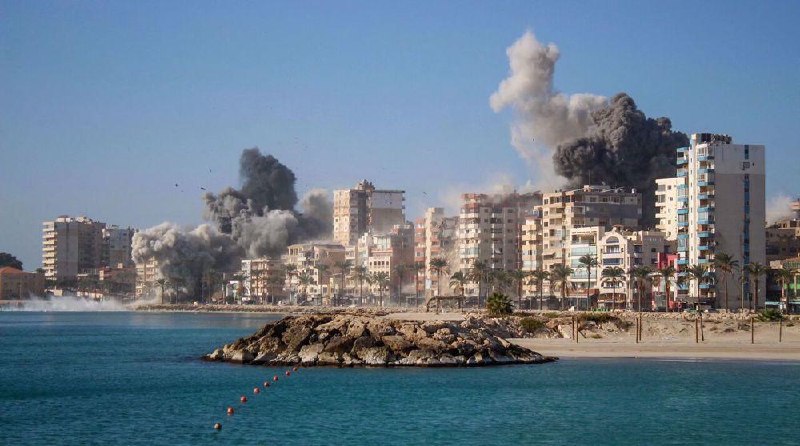
Britain and Germany issued coordinated warnings to Israel on Saturday, urging the Israeli government to refrain from actions that could precipitate a wider conflict along its northern border with Lebanon. The diplomatic intervention came as the Middle East continued to absorb the consequences of the Gaza conflict now in its second year, with cross-border exchanges between Israeli forces and Hezbollah having intensified markedly since early 2026.
The twin warnings from two of Europe's largest economies arrived on the same evening that multiple explosions were reported in the centre of Erbil, the capital of Iraq's Kurdistan Region. Initial accounts from Al Mayadeen, a regional broadcaster, described several detonations in the city but offered no immediate explanation for their origin. Neither the scale of damage nor any casualty figures were available at the time of publication. The sources reviewed for this article do not establish a connection between the Erbil incident and the European diplomatic moves.
European diplomacy under pressure
The timing of London's and Berlin's representations to Jerusalem reflects the particular vulnerability European governments feel to a second front opening in the Levant. Britain and Germany maintain significant diplomatic relationships with both Israel and Lebanon's caretaker government, and both have sought to position themselves as constructive actors capable of engaging all parties. A sustained escalation along the Blue Line — the UN-marked border between Israel and Lebanon — would likely draw direct European attention to evacuation logistics and to the fate of the roughly 100,000 civilians estimated by UN agencies to have been displaced within Lebanon's southern districts during earlier periods of heightened tension.
Germany's involvement carries particular weight given Berlin's historical sense of obligation toward Israel's security — a framing that successive German governments have endorsed, including provision of military hardware and diplomatic cover at the United Nations. That Berlin is now joining London in counsel of caution marks a recognisable shift. It signals that the costs European officials associate with a Lebanon flare-up have become, in their calculus, equal to or greater than the reputational risk of publicly advising Israel.
The Lebanon border context
Israeli military activity in northern Gaza and strikes attributed to Israel inside Syria have kept the northern front an active concern throughout 2026. Hezbollah has maintained its defensive posture along the border but has periodically increased operational tempo in response to events in Gaza, according to statements from the group's leadership. The arrangement that has largely held since the 2006 war — a deterrence architecture managed through US and UN intermediaries — has appeared increasingly fragile in recent months, with both sides conducting probing operations that occasionally produce civilian casualties on the Lebanese side.
The sources reviewed do not indicate that Israel has announced specific plans for a northern operation. The European warnings appear to have been calibrated to the risk environment rather than to a discrete trigger. Whether that represents prudent anticipation or diplomatic overreach depends on information not present in the available record.
Iranian and regional reactions
Iranian state-linked reporting, including coverage by Fars News International, disseminated accounts of both the European warnings and the Erbil explosions without editorial framing that suggested a connection. Iranian officials have repeatedly characterised Western support for Israel's military campaigns as complicit in regional instability. Tehran's own relationship with Hezbollah is documented and publicly acknowledged, and Iranian officials have suggested that any Israeli action in Lebanon would be met with a proportional response.
Iraq's federal government and the Kurdistan Regional Government have not issued statements regarding the Erbil explosions as of the time of this article's composition. The absence of immediate claim of responsibility or denial is consistent with the pattern for unexplained incidents in that part of Iraq, where multiple armed groups operate and competition between Baghdad and Erbil on security matters is a chronic feature of the political landscape.
What remains uncertain
The Erbil incident is unverified by independent sources reviewed for this report. The available accounts do not establish the type of ordnance involved, the target, or the responsible party. Regional security analysts have noted that Erbil has previously been subject to attacks by Iranian-aligned militia groups targeting either Western diplomatic or commercial interests, and on other occasions by localised criminal or territorial disputes. Without corroboration from Iraqi authorities, UN observers, or Western intelligence assessments, the significance of the Erbil event remains genuinely unclear.
Similarly, the precise content of the British and German representations to Israel is not available in the source material. Whether the warnings were conveyed in private diplomatic channels, public statements, or a combination of both — and whether they included explicit references to consequences for the bilateral relationship — cannot be confirmed from the record as it stands.
The structural picture
The episode illustrates a pattern that has become familiar across European Middle East policy in recent years: a genuine desire to restrain escalation, combined with limited direct leverage over Israel's security decisions. Britain and Germany can apply diplomatic pressure, suspend arms export licences, and articulate red lines in multilateral forums. They have done so. But the structural reality is that neither London nor Berlin controls the timeline of events along the Lebanon border, and both are aware that their influence with Jerusalem is transactional rather than hierarchical.
The simultaneous occurrence of the Erbil explosions — whatever their provenance — reinforces a structural reality that European capitals cannot ignore: the Middle East's fault lines are interconnected. A conflict that begins in Gaza can migrate north. Events in Iraq can complicate the calculus of regional powers whose behaviour affects events elsewhere. European diplomats who seek to manage one flashpoint are operating in a system where the next disruption may originate somewhere unexpected.
For now, the immediate signal from two of Europe's most consequential governments is clear: they want the Israel-Lebanon border to hold. Whether Jerusalem shares that priority, and whether the deterrence architecture can sustain the pressure it is currently under, are questions the available record does not yet answer.
This publication compared the Iranian state-linked reporting of the European warnings against accounts from Western-aligned wire services. The factual content converges on the existence and broad timing of the warnings; the editorial framing diverges on the question of which party bears responsibility for regional instability.
Wire provenance
This editorial synthesis draws on the following public wire/social posts:
- https://t.me/FarsNewsInt/38452
- https://t.me/FarsNewsInt/38448
- https://t.me/FarsNewsInt/38445