China's economic statecraft is rewriting the rules of the global order
From Benin's ports to Brussels' trade tables, Beijing is demonstrating that economic leverage is now its primary instrument of foreign policy—and the West is struggling to respond.
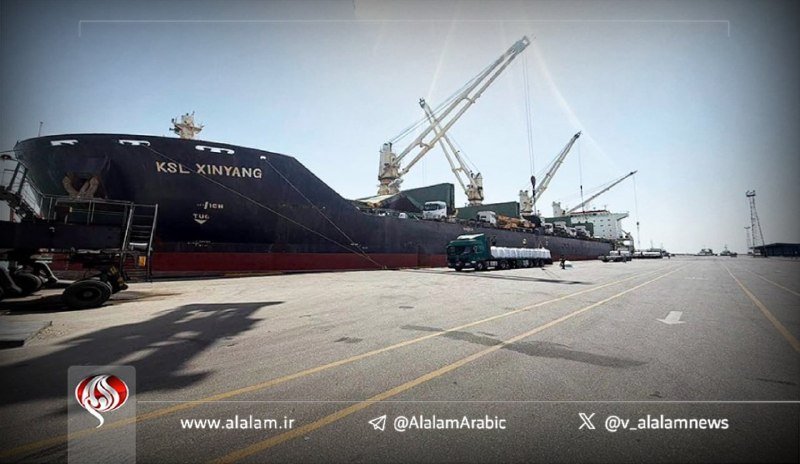
Benin will not be a footnote in the history of the twenty-first century's great power contest. That is the quiet ambition animating Beijing's latest African wager: a partnership anchored in port infrastructure, trade corridors, and a bilateral currency arrangement that reduces dependence on dollar clearing. The South China Morning Post reported on 31 May 2026 that Chinese engagement with Benin is positioned as the centerpiece of a broader push into West African markets, backed by state-linked financing and a commitment to what Chinese officials describe as «win-win» development. The language is familiar. The implications are not.
What is happening in Benin is not an isolated act of development charity. It is one visible node in a pattern that spans three continents and multiple policy theatres simultaneously. On the same day, Polymarket markets were registering non-trivial probability weights on a US-China tariff agreement by year-end, a China blockade of Taiwan by December 2026, and—most directly relevant—a Chinese foreign ministry commitment to «resolutely» retaliate if the European Union imposes new trade restrictions. These are not separate stories. They are the same story, told in different registers.
Beijing has arrived at a strategic conclusion that is difficult to argue with on its own terms: economic interdependence is a form of deterrence, and the more deliberately a country positions itself inside China's trade and infrastructure architecture, the more costly any future coercion by Western powers becomes. This is not a new insight. What is new is the confidence with which China is now operationalising it.
Infrastructure as influence, influence as insurance
The Benin case illustrates the mechanism cleanly. Chinese state enterprises are building the infrastructure that will process Benin's imports and exports for a generation. The financing is concessional; the contractors are Chinese; the operational know-how stays in Chinese hands. When a country builds its economic core around Chinese partners, the political alignment that follows is not ideologically imposed—it is structurally induced. The Ministry of Commerce in Beijing understands this. So do the export credit agencies that underwrite these projects.
This is not uniquely Chinese behaviour. Western development banks and bilateral aid programmes operate on similar logics. But China's model is distinctive in speed, scale, and the degree to which it sidesteps the conditionality framework that Western lenders treat as non-negotiable. For governments in the Global South, the absence of political conditionality—human rights benchmarks, governance reforms, transparency requirements—is not a bug. For many of them, it is the feature that makes Chinese financing usable when Western capital is not.
The implication for Washington and Brussels is uncomfortable: the development financing gap in Africa is real, and China is filling it in ways that generate long-term strategic alignment without requiring the recipient country to change its domestic governance in any respect. The West's response—complaining about «debt traps» while offering slower, more conditional alternatives—has failed to move the needle.
The European problem
The EU-China trade relationship is entering a more turbulent phase. Beijing's explicit warning that it will retaliate «resolutely» against new EU trade restrictions reflects a hardening of the Chinese negotiating posture that has accompanied the re-election of a more protectionist American administration. With the United States absorbed by its own tariff politics, Beijing has concluded that Europe is now the primary front in its trade defence.
The risk for Europe is twofold. First, Chinese retaliatory capacity is asymmetric: the EU exports significantly more to China in high-value manufactured goods than it imports in the categories where counter-tariffs would bite hardest. Brussels has limited leverage in a pure tariff tit-for-tat. Second, and more structurally, the EU's internal consensus on China policy remains fragile. Member states with heavy Chinese investment exposure—notably Hungary, but also several Mediterranean economies with BRI-adjacent infrastructure relationships—have consistently softened the harder line that the Commission would prefer to adopt.
The Polymarket signal on a potential US-China tariff agreement by year-end compounds this problem. If Washington and Beijing reach a détente, European businesses that have relocated supply chains away from China over the past three years find themselves exposed on two sides: priced out of the American market by competitive Chinese products now entering duty-free, and facing fresh Chinese countermeasures in their home markets. That scenario is not certain. But the market is assigning it enough probability that it is already shaping corporate planning in Berlin, Paris, and Rotterdam.
The Taiwan calculus, reframed
The Polymarket listing on a Taiwan blockade by end of 2026 is, on its face, a market on geopolitical tail risk. Markets price probability; they do not make policy. But the mere existence of credible liquidity on that question tells us something important about how Beijing's threat posture is perceived by sophisticated participants. They are not dismissing it.
China's core strategic calculation on Taiwan has not changed: unification is the stated goal, and the timeline is deliberately ambiguous. What has shifted is the perceived cost-benefit balance. The economic integration of China's neighbours—not through military coercion but through trade dependency—means that a Taiwan contingency is no longer a pure military question. It is a question about whether the economic leverage China has built across the region is sufficient to limit the willingness of third parties to intervene. The evidence from Benin's port agreements to the Mekong corridor investments suggests Beijing believes the answer is increasingly yes.
What this means, concretely
If the current trajectory holds, three outcomes become harder to avoid. First, the infrastructure gap in the Global South continues to be filled primarily by Chinese state-linked capital, which will entrench long-term political alignment with Beijing in a large number of countries that also maintain formal diplomatic relationships with the United States. Second, the EU's ability to act as an autonomous actor in China policy erodes as internal divisions—driven by investment exposure in Hungary and Southern Europe—constrain the harder line Brussels would prefer. Third, the ambiguity around Taiwan becomes harder to sustain as both economic integration and military modernisation proceed in parallel.
The West has not run out of instruments. But it has repeatedly failed to deploy them with the speed and coherence that the Chinese model requires. Development finance that is slower and more conditional than the Chinese alternative is not, in practice, a substitute for it. Until that changes, Beijing's economic statecraft will continue to set the terms of engagement in the places that matter most for the next decade of global order.