Civil Defense Withdrawal from Tyre Signals Deteriorating Civilian Protection in Southern Lebanon
Lebanese Civil Defense units evacuated their headquarters and vehicles from the southern city of Tyre on Saturday, relocating to Sidon after explicit threats from Israeli forces — a withdrawal that leaves a significant gap in emergency response capacity for a civilian population increasingly exposed to active hostilities.
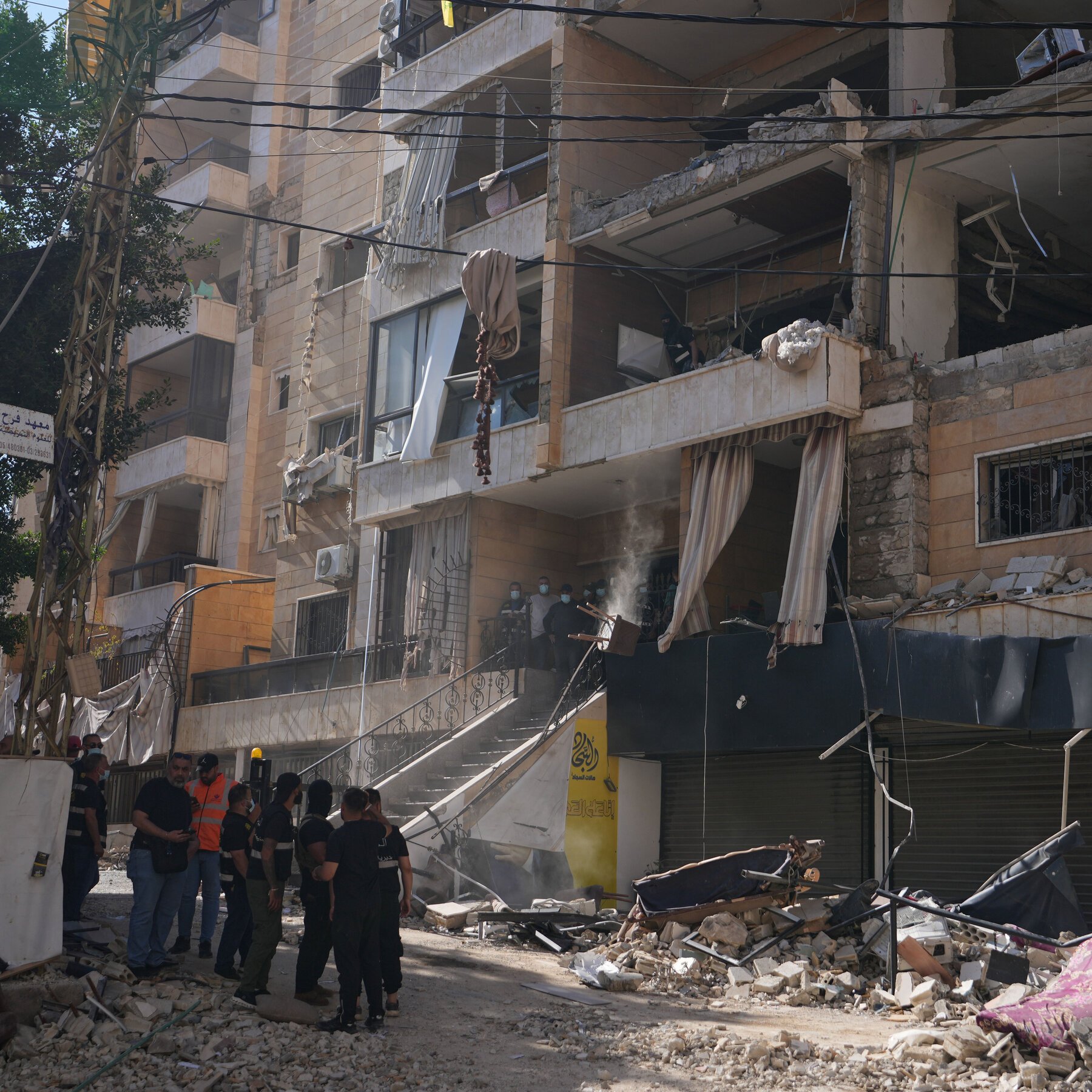
Lebanese Civil Defense units abandoned their headquarters and fleet in the southern city of Tyre on Saturday, relocating to Sidon after receiving explicit threats from Israeli forces — a withdrawal that leaves a critical gap in emergency response capacity just as hostilities along the Lebanon-Israel frontier continue to intensify.
The evacuation, confirmed by the Civil Defense Directorate and reported by regional monitoring channels on 31 May 2026, involved the loss of one operational base and its vehicles from Tyre, a Mediterranean port city approximately 80 kilometres north of the border with Israel. The move places the units further north, beyond the immediate arc of Israeli military operations that have repeatedly struck southern Lebanon since October 2023.
Israeli forces have been explicit that they do not consider all infrastructure in southern Lebanon to be civilian in character — a distinction that has significant consequences for emergency responders operating in areas Israel classifies as active military zones.
What the Withdrawal Reveals About the Operational Environment
The evacuation of a national emergency service from an inhabited coastal city is not a routine event. Civil Defense units in Lebanon — staffed primarily by volunteers and operating under the Interior Ministry — perform search and rescue, firefighting, and medical first response functions that become critical when municipal emergency services are overwhelmed or displaced by conflict. Their departure from Tyre leaves an exposed civilian population with fewer formal channels for rescue and medical care in the event of strikes, collapses, or mass casualties.
Israeli military officials have stated publicly that the Israel Defense Forces are working to clear what they describe as threats from southern Lebanon — a category that has expanded to include military personnel, Hezbollah infrastructure, and, by implication, any actors operating in areas the IDF has designated as active zones. The framing suggests that emergency responders embedded in those zones may find their protected status under international humanitarian law contested or eroded in practice.
Israeli security doctrine holds that any actor operating in a declared military zone — regardless of its nominal civilian function — forfeits the protections that would otherwise attach to medical or humanitarian infrastructure. That position is consistent with how the IDF has approached Hezbollah-adjacent facilities throughout the current phase of hostilities. Whether it extends to a national Civil Defense post serving a civilian population of roughly 70,000 is a question the Israeli military has not publicly resolved.
Israeli Security Concerns and the Expanding Zone of Operations
Israel's stated rationale for operations in southern Lebanon centres on eliminating threats posed by Hezbollah forces positioned near the border and, increasingly, deeper into Lebanese territory. IDF spokespeople have described the goal as creating conditions for the safe return of northern Israeli communities displaced by rocket and missile fire since October 2023.
From Tel Aviv's perspective, the presence of armed groups, weapons caches, and command infrastructure within populated areas of southern Lebanon — including Tyre and its surroundings — complicates any distinction between military and civilian targets. Israeli military briefings have repeatedly cited incidents in which what were described as civilian structures were used to store weapons or shelter combatants, arguing that this pattern necessitates a broader operational posture.
The IDF has not issued a specific statement regarding the Civil Defense post in Tyre. However, explicit threats communicated through military channels — the nature of which has not been fully disclosed — were sufficient to prompt the Directorate to order the evacuation. That the Lebanese authorities complied rather than risk an incident at the site suggests the threats were considered credible.
The Erosion of Civilian Infrastructure Protections
International humanitarian law is unambiguous that Civil Defense organizations — defined under the Geneva Conventions as entities engaged in rescue, medical, and disaster-response functions — must be respected and protected in all circumstances, regardless of where they operate. Attacking such infrastructure is prohibited, and the same protections apply even when it is situated near legitimate military objectives.
In practice, that protection has been under sustained pressure throughout the current cycle of hostilities. Syrian Civil Defense volunteers — operating under the same organizational designation as their Lebanese counterparts — have been killed in strikes attributed to Syrian government and Russian forces in recent years. Ukrainian emergency responders have been killed in Russian strikes. In Gaza, the destruction of hospitals, ambulances, and Civil Defense posts has been extensively documented by UN agencies and international media.
The withdrawal from Tyre fits a pattern in which the gap between legal protections and operational realities has widened to the point that civilian infrastructure operators make pragmatic calculations about their own safety. When a national emergency service concludes that remaining at a post poses an unacceptable risk — and when that conclusion is driven by explicit military warnings rather than circumstantial risk — the incident reflects something structural about the current rules of engagement rather than an isolated event.
Stakes and What Comes Next
For the residents of Tyre and surrounding coastal communities — a population that has not experienced the same scale of displacement as areas closer to the border but has nonetheless been subject to repeated evacuation orders and strikes — the loss of a formal Civil Defense presence is a concrete deterioration in their access to emergency assistance. If a building collapses, if fires break out, if mass casualty events occur, the response capacity is now measurably reduced.
For Hezbollah, the withdrawal may be framed as another indicator of Israeli overreach and the failure of international mechanisms to enforce civilian protections. For Israel, it may be read as evidence that pressure works — that explicit warnings produce the desired operational effect without requiring kinetic action.
The diplomatic question is whether this episode adds urgency to ceasefire negotiations or whether both sides interpret it as a normalisation of a more permissive operational environment. Lebanese government officials have not issued a public statement on the withdrawal as of late Saturday. The United Nations Interim Force in Lebanon has not commented on whether it was consulted or notified.
What is clear is that the threshold for what constitutes a legitimate target in southern Lebanon continues to shift — and that civilian emergency infrastructure is not exempt from that redefinition.
—
This publication's wire inputs on this story were limited to regional monitoring channels. The specific content of Israeli military warnings to the Civil Defense post in Tyre has not been independently confirmed through Western or UN sources. Monexus will update as further reporting becomes available.
Wire provenance
This editorial synthesis draws on the following public wire/social posts:
- https://t.me/GeoPWatch
- https://t.me/thecradlemedia
- https://t.me/TheCradleMedia