Colombia's Fractured Election and the Limits of the US Alliance Playbook
With eleven candidates contesting Colombia's presidency on Sunday, the fragmentation of the traditional political duopoly reflects something deeper than ordinary electoral volatility — it signals a region-wide reassessment of Washington-aligned governance.
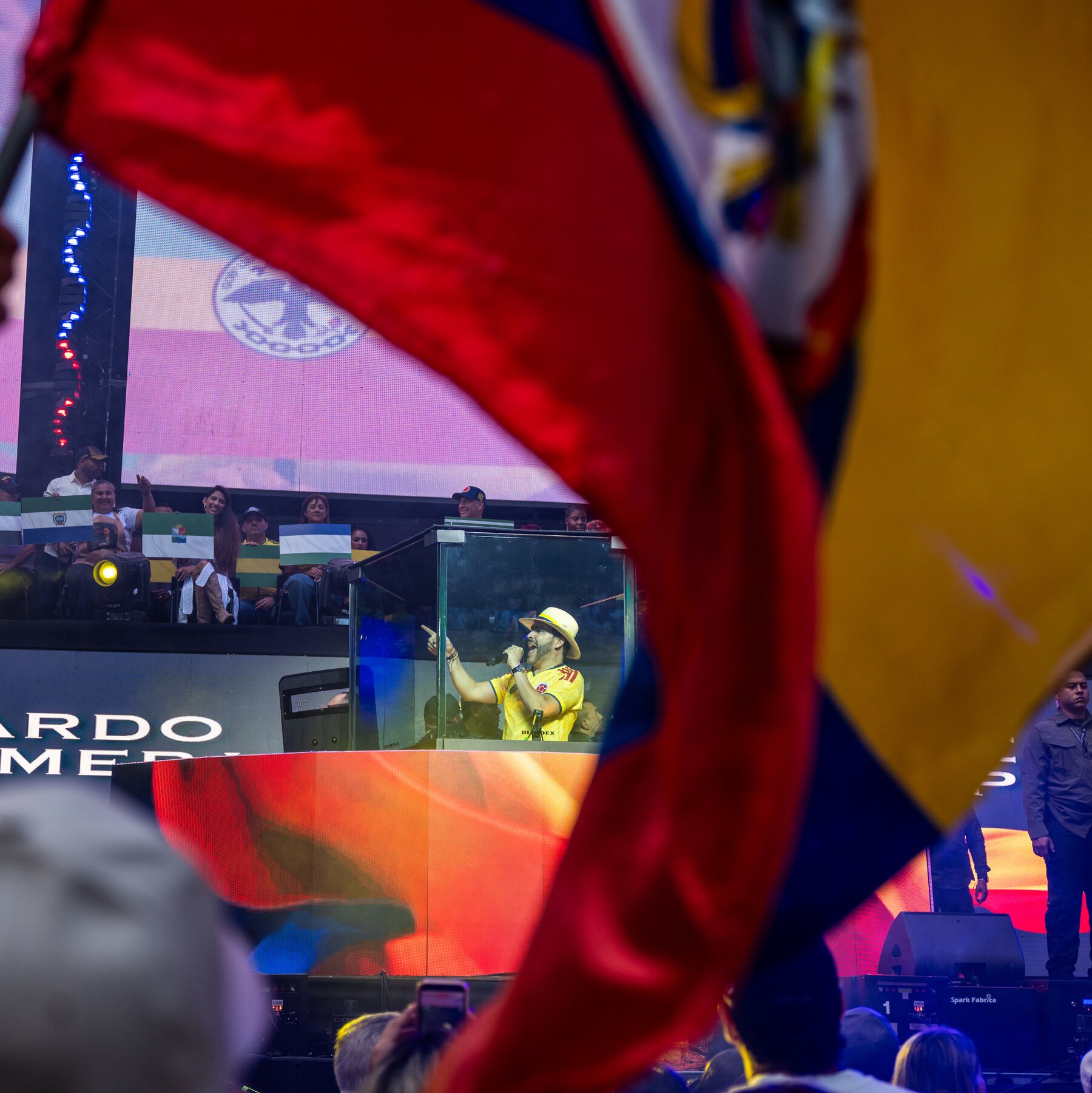
Eleven candidates. That number alone tells you something is structurally wrong with Colombian politics — or structurally alive, depending on your read of the situation. On Sunday, 31 May 2026, Colombians go to the polls for the first round of a presidential election that has fractured along lines both predictable and genuinely new. The traditional Centro Democratico versus Fuerza Popular duopoly that has anchored Colombian politics for a generation is not dead, but it is undeniably adrift.
The teleSUR English report covering the contest lists the field without editorializing about its composition, but the implications are hard to miss. A field of eleven is not evidence of a healthy multiparty democracy finding its feet — it is, more accurately, evidence of a political class that has failed to aggregate competing interests into durable coalitions. That failure has opened space for candidates who range from the mildly heterodox to the structurally anti-establishment, and it has exposed the limits of the Washington-aligned governance model that has defined Colombian foreign policy for two decades.
The Contenders and the Contradictions
The Colombian electoral landscape in 2026 is not simply left versus right, though that binary remains the dominant media framing. What is more accurate — and more analytically useful — is to see it as a contest between candidates who accept the existing security and economic framework and those who question its premises without necessarily offering coherent alternatives. The sitting administration's record on counter-narcotics, on trade with the United States, and on diplomatic alignment with Washington's Indo-Pacific strategy has generated enough ambiguity that voters across the spectrum find reasons for dissatisfaction.
Candidates from the traditional parties carry the weight of incumbency — its achievements in macroeconomic stabilization and its failures in rural poverty reduction and land reform, the latter a promise that has been made and broken across multiple administrations. Candidates from newer formations carry the energy of novelty but often lack the administrative experience to govern a country of fifty-three million people navigating fentanyl-adjacent security challenges and an economy deeply integrated into both US capital markets and Chinese commodity supply chains.
The Regional Context Colombia Cannot Escape
One thing the Colombian political class has historically underweighted — and the international media covering the election consistently ignores — is the degree to which the country's electoral outcomes are now set inside a hemispheric context that is shifting faster than Bogotá's diplomatic apparatus can adapt.
Brazil, Peru, Chile, and Mexico have all produced electoral results over the past three years that reflect some version of the same underlying tension: voters who want economic modernization without social dislocation, sovereignty without autarky, and a foreign policy that serves national interests rather than serving as an ATM for external great-power preferences. Colombia has been the most consistent US partner in the region, hosting military bases, signing free trade agreements, and participating in extradition frameworks that have shaped the drug-war architecture of the entire hemisphere. That consistency has produced real benefits — foreign direct investment, US market access, security cooperation — and real costs that are increasingly difficult to defend in a region where the diplomatic wind is blowing differently.
The eleven-candidate field reflects, in part, the fact that no single political formation has been able to synthesize the domestic and foreign policy contradictions into a coherent offer. That is not a uniquely Colombian failure. It is the defining challenge of centre-left and centre-right politics across the Global South in 2026: how to govern a country that is simultaneously embedded in dollar-denominated financial systems, dependent on remittance flows from the United States, and exposed to economic restructuring that Washington is neither able nor willing to prevent.
The Structural Problem With the Two-Party Frame
Western wire coverage of Colombian elections tends to narrate the contest as a competition between left-wing and right-wing blocs, with the implicit assumption that the right will maintain the alliance architecture and the left will threaten it. That framing, while not entirely wrong, obscures the degree to which the policy distance between mainstream candidates has narrowed on bread-and-butter economic questions, even as it has widened — or become more volatile — on questions of diplomatic alignment.
The structural issue is not ideology. Colombia's economy grew modestly in 2024-2025, inflation has moderated, and the peso has stabilized against the dollar after a turbulent 2023. By conventional metrics, the macroeconomic management has been competent. But macroeconomic competence has not translated into the kind of inclusive growth that would make the existing political settlement look like a legitimate bargain. Rural violence persists. Land concentration remains extreme. The informal economy employs roughly half the workforce. And the security gains of the post-2016 peace process have been partially reversed by the fragmentation of formerly state-aligned armed groups.
In that context, an eleven-candidate field is not a sign of democratic health. It is a sign that the existing coalition architectures have failed to credibly address the structural drivers of popular discontent. Any candidate who wins — whether from the traditional parties or from a newer formation — will inherit a government apparatus that is structurally constrained by debt service obligations, trade dependencies, and security commitments that limit the range of genuinely independent policy.
What Sunday's Result Will and Won't Resolve
If no candidate clears 50 percent on Sunday, a runoff will follow in mid-June. The runoff dynamic will force coalitions to form, which means the real political sorting happens after the first round, not during it. That is worth remembering when assessing the immediate significance of Sunday's vote: the eleven-candidate field will compress into two, and the coalitions that form in that compression will tell us more about Colombia's near-term trajectory than the first-round totals.
The stakes are concrete. Whoever governs Colombia from August 2026 will face a US administration that is simultaneously demanding continued cooperation on counter-narcotics, pressuring allies on semiconductor supply chains, and running a trade deficit with Latin America that incentivizes exactly the kind of economic nationalism Colombian exports depend on. They will also face a Chinese trade apparatus that has been systematically building relationships with South American commodity exporters — Colombia's copper, coal, and oil are not yet central to that architecture, but the infrastructure and financing packages Beijing offers are designed to change that calculation over time.
The region is not waiting for Colombia to decide which great-power lane it occupies. It is moving, on its own momentum, toward a foreign policy configuration that treats the US-China competition as an opportunity for leverage rather than a binary choice. Eleven candidates may not be enough to represent the complexity of that moment, but they are enough to ensure that no single faction controls the terms of the debate. Whether that fragmentation produces adaptive governance or paralysis will depend on forces well beyond Sunday's vote — but the vote is where the question, at least, gets formally posed.
Monexus covered Colombia's electoral field using teleSUR English and Argentine wire reports as primary sources. The piece is framed through a Global-South lens that treats Colombia's diplomatic ambiguity as a structural feature of contemporary hemispheric politics rather than a governance failure to be corrected by closer alignment with Washington.
Wire provenance
This editorial synthesis draws on the following public wire/social posts:
- https://t.me/TapasClarinBot