The G-2 Mirage and the South China Sea's Stubborn Reality
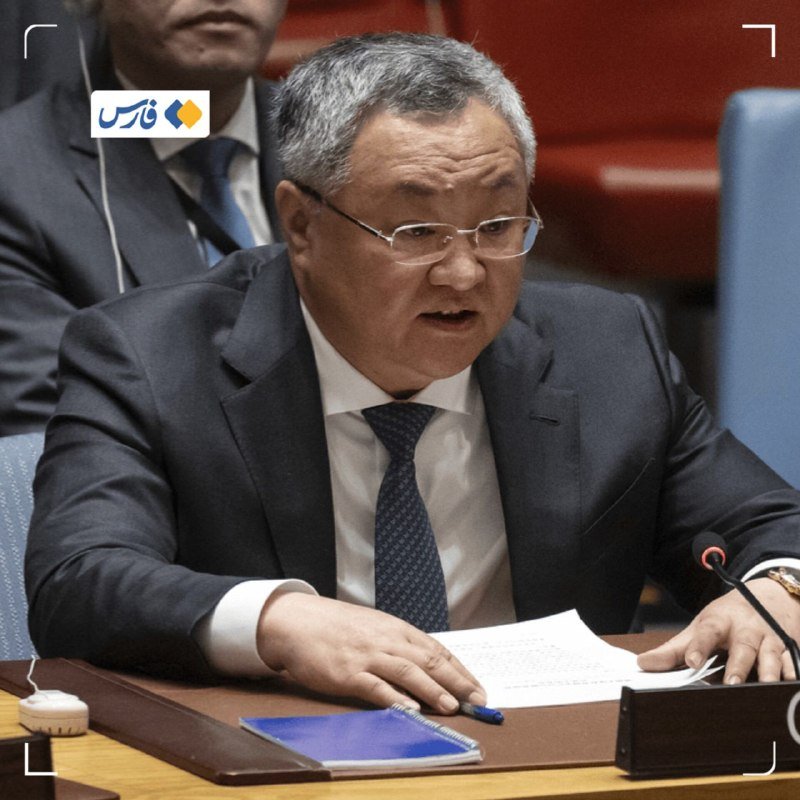
On 30 May 2026, two days after President Trump hosted President Xi at the White House, Chinese coast guard vessels carried out what Manila called "regular patrol and law enforcement activities" near Scarborough Shoal. The Philippines' national security council described the situation as a "severe threat" to its vessels operating in the area — language that would seem to contradict the picture of diplomatic reset that the summit was meant to project. Beijing's response to the summit has been more revealing still: China's former ambassador to the United States told media that Beijing categorically rejects the "G-2" concept, the framing promoted by parts of the Trump administration that the world's two largest economies could jointly manage global affairs. The gap between the summit's optics and the South China Sea's operational reality exposes a structural problem that no diplomatic handshake can paper over.
The G-2 premise was always going to face friction in Beijing. Chinese foreign policy thinking treats sovereignty questions — including maritime claims in the South China Sea — as matters of core national interest that are not bartered away in trade negotiations or diplomatic courtesies. The ambassador's statement, which explicitly rejected the G-2 framing, signals that the Chinese side does not intend to accept a patron-client dynamic with Washington, however cordial the bilateral relationship becomes. That is not a negotiating position that can be walked back; it reflects a structural assessment of China's standing in the world order that Beijing has been building toward for two decades. When Trump officials speak of a new era in great-power relations, the Chinese side hears an invitation to be managed. When Beijing's own officials describe a "community of shared future," they mean China as a principal, not a junior partner. The semantic disagreement is substantive.
The Philippines is, in this framing, a variable that the G-2 concept cannot absorb — and that is precisely the problem. The US-Philippines alliance is a formal treaty commitment, not a courtesy. Manila's national security council is not engaging in rhetorical alarmism when it describes Chinese behaviour near Scarborough Shoal as a severe threat; it is reporting what its vessels encounter on the water. The Philippine foreign ministry's statement that the country remains under severe threat despite the Trump-Xi summit is a direct challenge to the premise that great-power diplomacy can substitute for the security guarantees smaller allies depend on. What Manila is flagging, in diplomatic language calibrated for Washington, is that the summit's positive framing has not yet reached the operational level of the South China Sea. That gap — between what the patron says in the Rose Garden and what the challenger does two hundred nautical miles off the Philippine coast — is where the real alignment of power becomes visible.
The pattern is not unique to the Philippines. Across the South China Sea, and in the East China Sea, US allies and partners have navigated this tension since at least 2016, when the Hague tribunal ruled decisively against China's claims in a case brought by the Philippines. That ruling exists in international law. Beijing ignores it in practice. The United States does not challenge that Beijing ignores it, because invoking the ruling would mean confronting a US ally in a security relationship that Washington needs to maintain — in Korea, in Japan, in the Philippines. This is the contradiction that no G-2 framing resolves: Washington wants to manage China as a peer while maintaining a network of treaty allies who view China as a challenger. Those two orientations do not comfortably coexist.
What Beijing's rejection of the G-2 concept tells us is that the Chinese leadership is not confused about this contradiction. It understands that the G-2 framing, if accepted, would put Washington in a position to speak for the region — to trade away access, to trade away allies' interests, in exchange for a bilateral accommodation with China. Beijing would rather not be in that position of dependence on a single counterparty either. The rejection of G-2 is therefore consistent with a Chinese foreign policy that has spent the past decade building alternatives: multilateral institutions that do not centre the United States, security relationships that do not require US approval, economic frameworks that do not use the dollar. China's position in the South China Sea — the actual maritime deployments, the actual patrol patterns, the actual presence at disputed features — is the physical expression of that decade of positioning. No summit changes that until the underlying structural logic changes.
For the Philippines, and for other states that depend on the US alliance architecture for their security, the implications are uncomfortable but clarifying. The alliance is real; the treaty commitments hold; the US presence in the region is not withdrawing. But the alliance's deterrent effect depends on what it can actually prevent, and what it cannot prevent in the South China Sea has been demonstrated over fifteen years of Chinese incremental expansion. The question for Manila is not whether Washington will show up — it will — but whether showing up is the same as resolving the constraint that Chinese maritime behaviour places on Philippine sovereignty. The evidence from this week's patrol reports says it is not. The G-2 framework, whatever it eventually contains, will not change that until the Chinese leadership decides that Scarborough Shoal is negotiable rather than non-negotiable. Based on everything Beijing has communicated since 2016, that decision is not on the near horizon. The ships know it. Manila knows it. The summit's optics have not yet reached the water.
Wire provenance
This editorial synthesis draws on the following public wire/social posts:
- http://reut.rs/4eetAhy
- https://x.com/Polymarket/status/19512345678901234567
- https://x.com/Polymarket/status/19512345678901234568