The Strait of Hormuz Is Not a Navigation Problem. It's a Dollar Problem.
A US-enforced blockade on Iranian ports is being spun as a freedom-of-navigation operation. The reality is more familiar and more troubling: an escalation dressed in the language of international law, with consequences that will land first on the world’s most vulnerable importers.
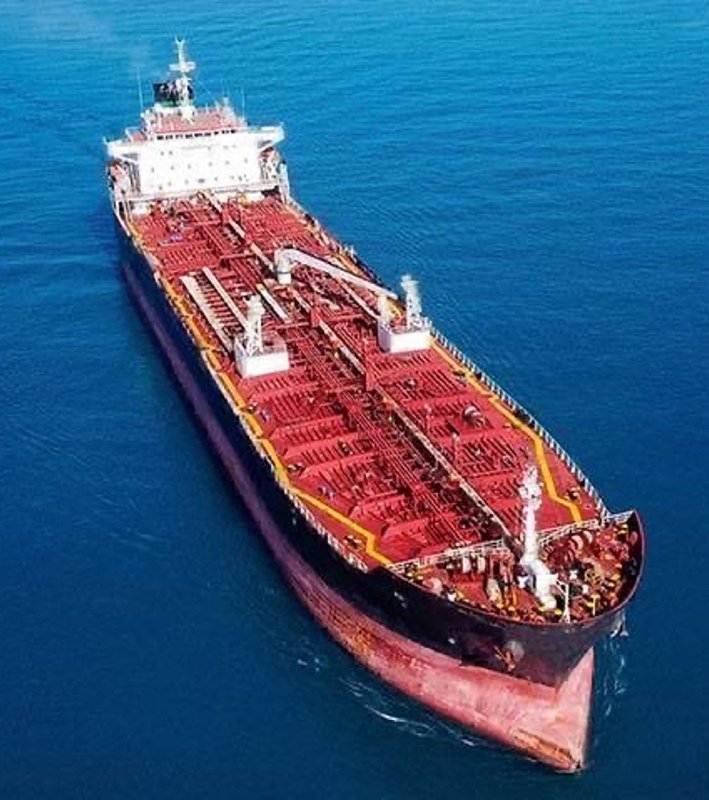
On 30 May 2026, the US Navy began enforcing what amounts to a blockade of Iranian port access. Shipping traffic through the Strait of Hormuz — the chokepoint through which roughly a fifth of the world's oil passes — slowed sharply within hours. The British Maritime Authority issued a concurrent advisory urging vessels to avoid the waterway. By 29 May, reports confirmed that the disruption was already rippling into global oil supply chains.
The language being used by Western officials leans hard on the vocabulary of international law: freedom of navigation, enforcement of sanctions, counter-proliferation operations. That framing is available to any reader who has followed the US Navy's presence in the Persian Gulf for two decades. It is a familiar script.
But scripts, however familiar, are not explanations. And the gap between the official framing and the structural reality is wider than most coverage has suggested.
The Gap Between "Enforcement" and "Blockade"
The US has not used the word "blockade" publicly. It has used "strict enforcement" and "interdiction operations." This is deliberate. Under the UN Convention on the Law of the Sea, a blockade is an act of war. "Interdiction" is softer; it can be characterised as sanctions enforcement, counter-terrorism support, or simply the protection of international waters. The legal distance between those terms is measured in escalation thresholds that Tehran understands perfectly.
What the sources describe — a strict blockade on Iranian ports that is directly impacting Strait of Hormuz traffic — is precisely what the words "blockade" means. The terminological hedging is not accidental. It is the diplomatic art of doing something aggressive while preserving deniability.
Tehran's position, as expressed through state-aligned channels, frames the operation as an act of economic warfare that violates Iran's sovereignty and its rights under existing nuclear agreements. That argument has structural merit, regardless of one's view of the Iranian government. When a foreign power begins interdicting shipping to a sovereign state's ports, the impact on that state's civilian economy is immediate and measurable. The question of whether sanctions justify that impact is a political question, not a legal one that international law cleanly resolves.
The Framing Game: Who Controls the Narrative
The news cycle has been consistent: tensions escalating in the Gulf, naval assets repositioned, shipping warned away. The dominant framing centres on Western security concerns — Iran's nuclear programme, its ballistic missile tests, its support for regional proxy forces. These are real concerns. They are not, however, the only frame available.
The counter-narrative — present in regional and Global South coverage — foregrounds the economic consequences of disruption. The Strait of Hormuz is not merely a military theatre. It is the arterial route for oil shipments that keep energy markets functioning across South Asia, East Africa, and Southeast Asia. Countries with limited strategic alternatives — meaning they cannot simply reroute supply like a US or European economy can — face acute exposure when traffic slows.
This asymmetry is rarely foregrounded in Western wire coverage. The "tensions in the Gulf" story tends to be written from London, Washington, and Riyadh. The consumption-side impact — fuel price rises in Pakistan, India, or Kenya — appears as a footnote, if it appears at all. The asymmetry matters because it reveals whose interests are structuring the frame.
Energy, the Dollar, and Why This Escalation Is Not New
The Strait of Hormuz has been a site of US strategic attention since the Carter Doctrine established, in 1980, that the Persian Gulf was a core American interest to be defended by military means if necessary. That doctrine has never been formally rescinded. Every naval deployment to the Gulf since then — and there have been many — has been an expression of the same logic: the dollar's reserve currency status, and the petrodollar system that underpins it, requires that this waterway remain under US influence.
Oil priced in dollars means dollars must circulate globally. Dollars circulating globally support US borrowing costs. US borrowing costs support the fiscal architecture that allows US military spending to remain as high as it does. The circularity is not accidental. Maintaining it is a strategic priority, and the Strait of Hormuz is the most critical node in that system.
This context is not speculation. It is the documented architecture of US Middle East policy since the Nixon-era arrangement with Saudi Arabia. What is new in the current escalation is the depth of the blockade — and the explicit targeting of Iranian port access rather than merely the monitoring of shipping lanes. That shift matters. It moves from surveillance to interdiction, from observation to enforcement. The strategic objective, whether or not it is publicly stated that way, is to cut off Iran's oil export capacity entirely.
Who Wins, Who Loses, and Over What Time Horizon
The immediate winners are US-aligned Gulf states, particularly Saudi Arabia and the UAE, whose oil exports remain unaffected and whose competitive position improves as Iranian exports fall. US arms manufacturers and defence contractors benefit from sustained Gulf tension — the US Navy's operational tempo in the region is high, and high tempo generates procurement arguments.
The losers are more numerous and less audible. Iran faces acute economic pressure on its civilian population — the blockade's first-order effect. But the disruption to Strait of Hormuz traffic raises freight costs and insurance premiums for all shipments through the waterway, regardless of origin. Asian importers — India, Japan, South Korea, China — face higher energy input costs that feed into broader inflation dynamics. East African economies with dollar-denominated fuel import bills face additional fiscal pressure.
The time horizon matters here. An isolated interdiction operation might be absorbed. A sustained blockade, backed by US naval enforcement and British maritime warnings, signals that the disruption is structural, not episodic. Markets price in uncertainty; uncertainty prices in risk premiums; risk premiums translate into higher costs for the least resilient economies.
The sources do not agree on whether the blockade is designed as a negotiating tool or as a long-term pressure campaign. What the sources do confirm is that the disruption is real, that it is being sustained, and that the language being used by Western officials is carefully chosen to manage the legal and diplomatic consequences of what is, in practice, a comprehensive economic operation against Iran.
That operation is unlikely to be resolved quickly. The geopolitical logic sustaining it — dollar architecture, regional competition, domestic political calculation in Washington — does not disappear because diplomatic language is available. The Strait of Hormuz will remain a fault line. The question is whether the international system can absorb the disruption without it becoming a structural feature of global energy pricing for years to come.
This publication framed the Strait of Hormuz disruption as a dollar-hegemony problem rather than a freedom-of-navigation story, foregrounding the consumption-side impact on Global South economies that wire coverage from Western capitals tends to underweight.
Wire provenance
This editorial synthesis draws on the following public wire/social posts:
- https://t.me/CryptoBriefing/28471
- https://t.me/CryptoBriefing/28467
- https://t.me/CryptoBriefing/28452