The Strait of Hormuz Is Not a Metaphor — It Is the World's Most Critical Chokepoint
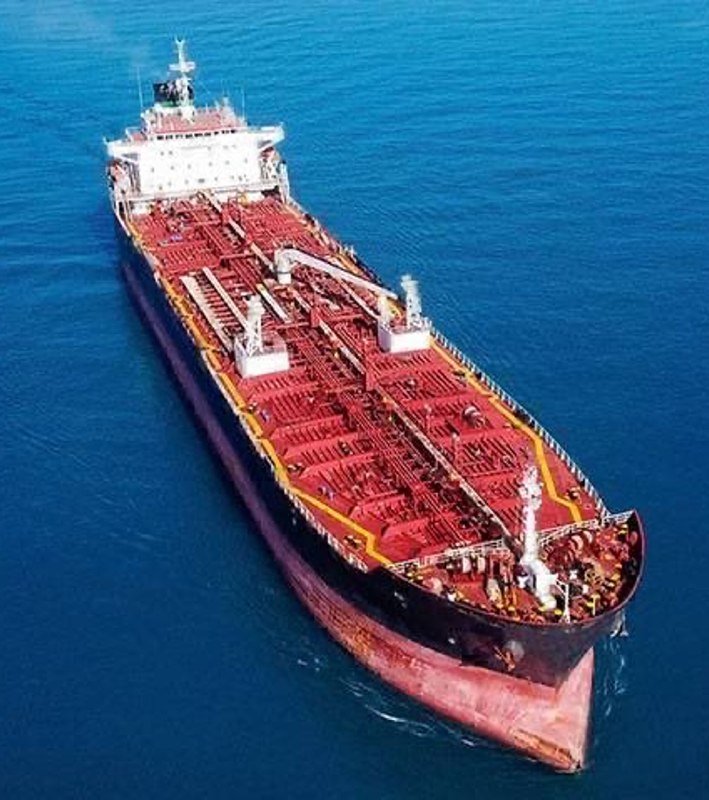
The Islamic Revolutionary Guard Corps Navy announced on 31 May 2026 that it would exercise full operational authority over all traffic transiting the Strait of Hormuz — and that warning applied equally to American military vessels. The statement landed against a backdrop of escalating incidents: the discovery of a naval mine in the waterway, a US announcement that it maintains control of the chokepoint, and Iranian accusations that Washington had betrayed diplomatic commitments. The Strait of Hormuz is not a metaphor. It is the world's most critical energy corridor, and the current confrontation is not simply a bilateral dispute — it is a stress test of whose rules govern the global economy.
Tehran's claim to operational authority is, on its face, a challenge to a decades-old status quo in which the US Navy has effectively guaranteed freedom of navigation — a guarantee that most non-Iranian observers have treated as synonymous with stability. But the Iranian position carries a structural coherence that Western coverage rarely grants it. The Hormuz Strait sits in Iran's territorial waters; the Islamic Republic has never conceded that a foreign power — particularly one that has sanctioned it, assassinated its generals, and withdrawn from a nuclear agreement Tehran insists it honoured — should operate as the de facto gatekeeper of its own coastline. The question is not whether Iran has the right to make this claim. The question is whether the international order's invocation of "free navigation" has ever been a neutral principle, or whether it has been a selectively enforced one that conveniently advantages the United States and its allies.
The naval mine discovery compounds the instability. On 30 May 2026, reporting indicated that a device had been found in the waterway, raising the spectre of deliberate obstruction, autonomous mining by a non-state or proxy actor, or an operation designed to be attributed ambiguously. Whatever the device's origin, its effect is the same: it reinforces the narrative that the Strait of Hormuz is vulnerable, and vulnerability in a chokepoint that carries roughly 20 percent of the world's oil supply is not a technical matter. It is a pricing matter, a policy matter, and a matter of direct consequence for every economy that imports crude.
The American response, delivered through Secretary of Defense Pete Hegseth on 30 May, was unambiguous in its assertion: the US maintains control over the Strait of Hormuz. That framing — "maintains control" — is worth examining. It is not a legal claim grounded in any treaty. It is not an international arbitration outcome. It is a statement of operational fact that rests on the presence of the US Fifth Fleet and the assumption that no adversary will physically challenge that presence. The assumption has held for decades. Whether it holds when the IRGC Navy announces, in unambiguous terms, that it will control traffic in its own territorial waters is the question the current moment poses.
The structural frame here is not complicated, even if Western commentary tends to complicate it. The dollar's reserve currency status is underwritten by the petrodollar system's dependence on stable hydrocarbon flows priced and settled in dollars. Any disruption to those flows — whether from physical blockage, price shock, or a decision by a major producer to price in a different currency — erodes that architecture incrementally. Iran's repeated assertions of sovereignty over Hormuz are not merely nationalist rhetoric. They are a signal that Tehran understands its geographic position as a card to be played in a game whose stakes extend far beyond bilateral relations with Washington. The timing of the IRGC's announcement, amid ongoing nuclear negotiations and a US pressure campaign, suggests that Tehran is recalculating how much leverage its geography actually provides when diplomatic channels are failing.
The counter-narrative — that Iran's navy remains dependent on foreign systems and that the IRGC's bold claims are not matched by genuine operational capability — is legitimate and worth holding. Iranian military hardware is substantially imported. Maintenance cycles are constrained by sanctions. The IRGC Navy's fleet is built around asymmetric capabilities: small boats, missiles, mines, and the threat of quantity over quality. Whether that is sufficient to actually close the Strait, or merely sufficient to raise the cost of transit high enough to matter, is a distinct question from whether Tehran can assert nominal authority over it. A mine found in the waterway is not the same as a minefield laid across it. The gap between declaration and capability is where most analysts expect Iran to operate — in the grey zone where ambiguity itself is the weapon.
What the current episode reveals is the degree to which the Western framing of energy security has never genuinely interrogated its own premises. "Free navigation" is invoked as a universal principle, but the institutions that enforce it are national ones — the US Navy — and the interests they serve are not universally distributed. When Iran objects to that arrangement, it is not objecting to the principle of navigation itself; it is objecting to the table at which the rules are written and the chair in which the enforcer sits. That objection is not illegitimate simply because it is inconvenient for the current arrangement. It is inconvenient precisely because the current arrangement has never been as neutral as its proponents claim.
The stakes are real and measurable. A sustained disruption to Hormuz transit — even a partial one that raises insurance premiums and forces route detours around the Cape of Good Hope — adds measurable cost to global trade in crude and liquefied natural gas. That cost does not fall equally. It falls on importing nations, on energy-intensive industries, and on consumers in economies that cannot easily substitute their supply chains. It does not fall on the United States, which is increasingly energy-independent, or on Saudi Arabia, which can redirect exports through Red Sea routes. It falls hardest on Europe, on South Asia, and on East Asia — precisely the economies whose dollar-denominated energy imports already expose them to the structural asymmetry that the current system embeds.
Whether the current escalation resolves through back-channel communication, a show of force that is then de-escalated, or a genuine incident that forces a response, the underlying tension will not resolve. The Hormuz Strait will remain contested precisely because its control is a prize worth contesting. What changes is whether the international system continues to treat that contest as a question of law and order, or begins to recognise it as a question of whose order and whose law.
This publication's analysis of the Hormuz Strait confrontation draws on reporting from PressTV and CryptoBriefing covering the IRGC Navy statement of 31 May, the US Secretary of Defense's remarks of 30 May, and the naval mine incident reported on 30 May 2026.
Wire provenance
This editorial synthesis draws on the following public wire/social posts:
- https://t.me/presstv/37438
- https://t.me/cryptobriefing/84931
- https://t.me/cryptobriefing/84926
- https://t.me/cryptobriefing/84928