The Iran Diplomatic Window Is Cracking — and Neither Side Looks Ready to Blink
President Pezeshkian's offer to negotiate sits against a Pentagon ultimatum, revealing a fundamental contradiction at the heart of the US-Iran standoff: Washington demands concessions Tehran cannot give without first being guaranteed survival, and Tehran cannot guarantee survival without concessions. That loop has not changed in forty years.
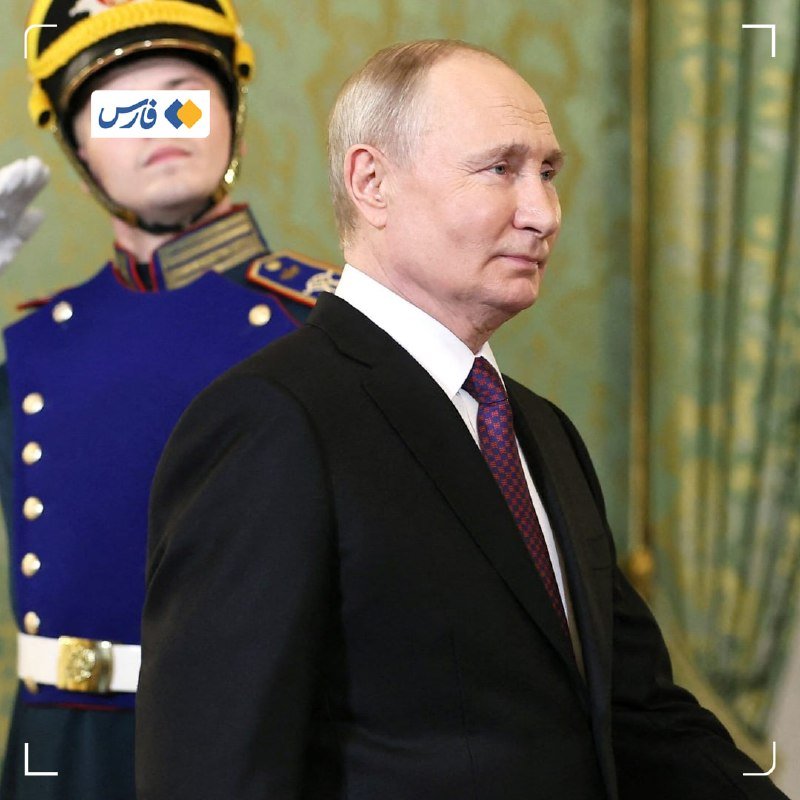
It is the oldest broken record in Middle Eastern geopolitics: the United States and Iran exchange threats, issue diplomatic overtures, and then watch as the gap between the two positions calcifies into something permanent. On 30 May 2026, that pattern reasserted itself with unusual clarity. President Masoud Pezeshkian told the public that Iran is ready for diplomatic talks to end the ongoing conflict — and within hours, the Pentagon chief publicly warned that the US military remains prepared to resume strikes against Iran should negotiations fail.
The juxtaposition was not accidental. It was the signal.
The signal, in this case, is a pressure campaign wearing diplomatic language. Washington wants Tehran to make the first concession — to freeze nuclear activity, reduce regional militia support, or open facilities to inspections — before any sanctions relief is granted. Tehran wants a ceasefire, sanctions relief, and a formal end to the hostilities state before it considers any structural change to its program. Each side is asking the other to cross a red line that the other has explicitly placed in the middle of the negotiating room.
Pezeshkian himself complicated the picture on 31 May. Speaking publicly in Tehran, he said Iran is facing a very sensitive situation with many challenges, and that the management of the country must not be limited to a limited circle of decision-makers. The framing was a rebuke — apparently aimed at hardliners within the Iranian establishment who have resisted his outreach to Washington — but it also served as a quiet admission of political weakness. A president publicly arguing for a broader consultative process is a president who does not fully control the state apparatus he nominally leads.
The Pentagon chief's warning, meanwhile, carried a specific operational weight that distinguishes it from earlier cycles of rhetorical escalation. US military assets in the Gulf have been repositioned in recent weeks, according to several regional security assessments that have circulated among allied governments. The phrase "ready to resume strikes" is not a threat to topple the regime — it is a threat to degrade the nuclear program again, as happened in 2020 with the Soleimani strike and the subsequent cyber operations that temporarily crippled Iranian centrifuge operations.
The structural logic of that threat is straightforward. Each round of military action delays but does not destroy Iran's nuclear progress. International inspectors have repeatedly confirmed — in reports cited by the IAEA and referenced in multiple Western intelligence briefings — that Iran's enrichment capacity continues to grow, quietly, between rounds of diplomacy. The military option buys time. It does not solve the problem. And every time the military option is used, it validates the Iranian hardliners who told Pezeshkian's moderates that talking to Washington is futile.
That is the trap. And it has been the trap since 2003.
The counter-narrative — the one that circulates in Gulf capitals, in parts of the European foreign policy establishment, and in the offices of regional mediators who have tried to broker back-channel talks — holds that the real obstacle is not Iran's intentions but the architecture of US demands. The argument runs that any Iranian leader who agrees to the complete dismantling of its enrichment program, in exchange for sanctions relief that a future US administration could re-impose by executive order, would not survive domestically. The Iranian political system is not monolithic, but it is genuinely sensitive to the appearance of national humiliation. This is not propaganda — it is a structural observation about how sovereign states with a recent history of foreign-engineered regime change behave when asked to unilaterally surrender strategic assets.
Pezeshkian knows this. The hardliners know he knows it. The Americans know all of it, which is why the Pentagon threat is calibrated not to force a concession but to keep the negotiating window technically open while applying pressure.
What neither side appears to have calculated is the cost of the alternative.
The conflict that began in early 2026 — named by the international press as a regional escalation but understood inside Iran as a state under siege — has now lasted eighteen months with no resolution and no exit ramp that either party can publicly acknowledge without losing face. The humanitarian toll in Iraq, in Yemen, and in parts of the Iranian border provinces has been substantial, though casualty figures remain contested and are difficult to independently verify. What is not contested is the economic damage: Iran's oil exports have fallen by an estimated forty percent, its currency has weakened significantly, and the cost of basic imports has risen to levels that are generating social friction in cities that have historically supported the pragmatic wing of the political system.
If the current trajectory holds — sustained military pressure from the US, continued Iranian enrichment, and no negotiated exit — the most likely outcome is a further hardening of Iran's negotiating position, not a softening. The historical record across multiple cycles of US pressure suggests that Iran does not collapse under sanctions; it adapts, reduces visibility, and continues advancing its program in facilities that become harder to target. The 2024 IMF working paper on sanctions effectiveness, widely cited in policy circles, concluded that Iran had maintained or increased enrichment capacity through every major round of international pressure since 2006.
The European intermediaries — France, Germany, and the United Kingdom, operating through their nuclear envoys — are attempting to keep both sides in the same room. Their leverage is limited: they cannot offer Iran sanctions relief without US agreement, and they cannot offer Washington a credible commitment to maintain sanctions pressure without a clear mechanism to verify compliance. The gap is real, and no amount of diplomatic choreography closes it.
What would close it is a structural concession from one side — and neither side, as of this writing, has shown a willingness to make that concession first. The Pentagon threat is intended to pressure Iran into moving first. The Pezeshkian offer is intended to show the international community that Iran is the reasonable party. Neither tactic works if the other side has already decided that the cost of failure is acceptable as long as the other side pays a higher price.
That is where this stands: two powers performing diplomatic openness while simultaneously preparing for military escalation. The language of negotiation has not been abandoned. But it has been hollowed out — filled with conditions and caveats and threat signals that make it functionally indistinguishable from a continuation of hostilities by other means.
This publication covered the Iran-US diplomatic impasse with a structural lens — foregrounding the negotiating deadlock over the personalities involved, in contrast to wire coverage that led with the Pentagon warning as a standalone military story.
Wire provenance
This editorial synthesis draws on the following public wire/social posts:
- https://t.me/alalamarabic/78654
- https://t.me/CryptoBriefing/28491
- https://t.me/CryptoBriefing/28489