Iran Internet Restrictions Ease as US Energy Costs Mount and Nuclear Standoff Remains Deadlocked
Tehran has restored partial internet access following a sweeping blackout, but access remains heavily restricted for most users as diplomatic and economic pressure mounts over Iran's nuclear programme.
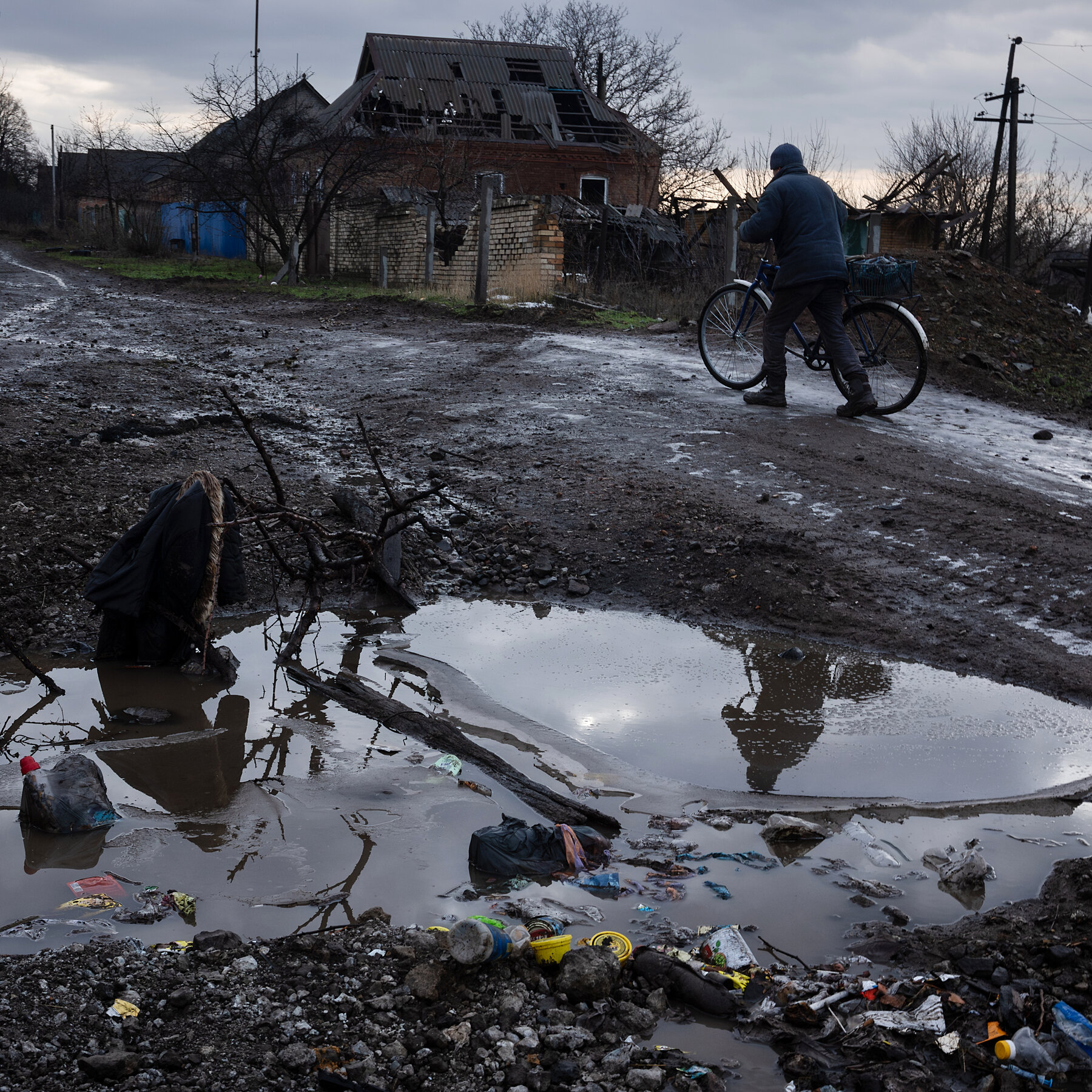
On 31 May 2026, Iran began restoring some internet access following a near-total digital blackout that had silenced much of the country's online communications for days. The reinstatement was partial at best. Not all data centres had resumed operations, and critical internet protocols remained blocked, restricted, or available only through government-approved whitelisting. For most ordinary Iranians, the web remained inaccessible or severely curtailed.
The timing of the blackout — and its partial reversal — tracks closely with a period of acute international pressure over Tehran's nuclear programme. Iran has accumulated a substantial stockpile of enriched uranium over years of sanctions-busting activity, and diplomatic efforts to negotiate a freeze or reversal of that programme have repeatedly stalled. On the same day Iran partially restored connectivity, Polymarket's market on whether Tehran would agree to surrender its enriched uranium stockpile by the end of June 2026 was pricing a 27 percent implied probability. That figure, derived from crowd-sourced wagering on a discrete, time-bound outcome, reflects a consensus among speculative traders that agreement remains unlikely.
The Economic Pressure on Washington
While Iran navigates its domestic digital landscape, the broader cost of sustained confrontation is being measured in American households. A report published by CNBC on 31 May 2026 estimated that the average US household is paying approximately $450 more per year on gas and energy as a result of the elevated geopolitical risk premium embedded in global oil markets. That figure captures not just the direct price impact of sanctions and supply disruptions but also the knock-on effect of elevated freight costs, insurance premiums for shipping through contested corridors, and the hedging behaviour of commercial energy buyers.
The $450 estimate is a composite measure. It does not represent a discrete tax or tariff but rather the structural cost of a market environment in which traders systematically price in the risk of supply disruption from a major oil producer sitting astride the Strait of Hormuz. Energy economists have long argued that these risk premia are effectively a covert tax on consumers — one that is distributed unevenly, falling hardest on lower-income households for which energy constitutes a larger share of monthly expenditure.
The Biden and Trump administrations both pursued maximum-pressure campaigns against Tehran, and both faced the same structural dilemma: sanctions bite hardest on the Iranian side, but they also remove supply from a global market that has limited spare capacity. Each administration has, at various points, released strategic petroleum reserves to blunt the domestic political impact of elevated pump prices. Neither effort succeeded in fully decoupling US consumer costs from the geopolitical risk premium.
Tehran's Calculation
Iranian officials have consistently argued that their nuclear programme is entirely peaceful — a position rejected by the International Atomic Energy Agency, which has documented activities with no credible civilian explanation. Under successive rounds of sanctions, Tehran's response has been to accelerate enrichment rather than to freeze it. The logic, from Tehran's perspective, is straightforward: a uranium inventory represents leverage, and leverage increases as the inventory grows.
The Polymarket figure of 27 percent reflects a market that has been wrong before — prediction markets tend to underestimate tail risks and overestimate the prospects for diplomatic breakthroughs in protracted disputes. But it also captures something real: the deal architecture that governed Iran's nuclear activities under the 2015 Joint Comprehensive Plan of Action was dismantled by the United States in 2018, and no credible alternative framework has since been constructed. The remaining parties to the original agreement — France, Germany, the United Kingdom, and the European Union — have continued to engage, but without US participation, their leverage is circumscribed.
Iranian state media, in its limited coverage of the current standoff, has framed Western demands as illegitimate interference. That framing resonates domestically in part because it is paired with the explicit reminder that Iran has survived years of sanctions and that its negotiating position has, if anything, strengthened as its enrichment capabilities have expanded. Whether that self-assessment is accurate or reflects an institutional interest in projecting strength is a question the available sources do not resolve.
What Comes Next
The internet restoration on 31 May does not signal a thaw. Iranian authorities have historically used connectivity as a pressure valve — tightening access during periods of internal unrest or external tension, loosening it when the immediate security concern recedes. The fact that restrictions remain in place for most users, with whitelisting requirements still active, suggests the blackout was not a technical failure but a deliberate policy decision that has been only partially reversed.
The energy-cost figure is a reminder that the Iran question is not a distant geopolitical abstraction for American consumers. It is embedded in the price of every gallon of gasoline, every kilowatt-hour of electricity, and every product that travels through shipping lanes adjacent to Iranian territory. The $450 annualised estimate may be conservative if a further escalation — whether a maritime incident, a cyber operation, or a military strike — were to push oil prices sharply higher.
On the nuclear question itself, the 27 percent probability on Polymarket is best read not as a prediction but as a market's honest assessment of where the incentives currently lie. Iran has invested too much in its enrichment infrastructure to surrender it voluntarily without a credible, verifiable sanctions-relief package. The United States, for its part, has shown limited appetite for the kind of direct, high-level engagement that previous administrations used to broker agreements. Without a negotiated freeze, the uranium inventory continues to grow. Without growth in the inventory, the international community loses what little leverage it retains.
The sources do not indicate any imminent change in either side's position. What they indicate is a situation that is stable in the worst sense: managed by mutual deterrence, paid for by consumers on both sides, and left unresolved pending a political will that has not yet materialised.
Desk note: This publication's coverage of Iran has consistently foregrounded the lived costs of confrontation — on both sides — rather than treating the nuclear programme as a purely technical or legal matter. The Polymarket figure is included not as a predictive tool but as a proxy for market-assessed probability, a format increasingly common in financial journalism. The CNBC energy-cost estimate is the most concrete public quantification available of the consumer-level impact of Iran-related risk; where a specific figure is available, we report it rather than hedging with generalities.