Iran's Economic Messaging Machine Defaults to External Blame — Again
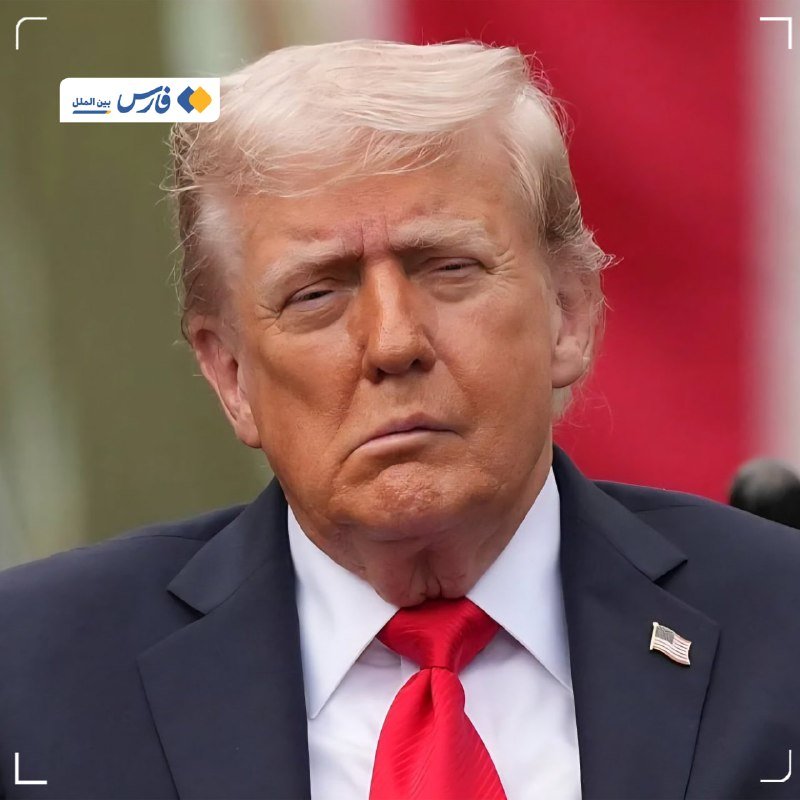
On 31 May 2026, Iran's government spokesperson appeared before cameras in Tehran and delivered an economic diagnosis that will surprise no one who has tracked the Islamic Republic's communication strategy through multiple rounds of sanctions, currency crises, and subsidy adjustments. A significant portion of market price increases, he said, is attributable to international impulses. The Ministry of Economic Affairs, meanwhile, has designed support packages for industries — conditional on those businesses retaining their workforce. The framing is tidy. The timing is deliberate. The substance is another matter.
The claim that external pressures drive domestic inflation is not wrong in isolation. Sanctions regimes, currency depreciation, and the premium on imported inputs all filter through to consumer prices in ways that are real and measurable. But the spokesperson's formulation is doing more work than a simple cause-and-effect statement. It is preemptively inoculating the government against accountability for a price environment that has been volatile since at least 2022, and that has accelerated through 2025-2026 as the cumulative weight of secondary sanctions began constraining even the Islamic Republic's most resilient workarounds. When a government spokesperson leads with international impulses on the same day that support packages are announced, the message is structurally consistent: credit for any relief belongs to Tehran; blame for any pain belongs to the world.
The Conditionality Problem
The support package design reveals a telling assumption at the heart of the government's industrial policy. Eligibility requires that businesses have not retrenched their workforce — a condition presented as protecting workers, and one that has surface plausibility. Mass layoffs would deepen the economic distress that the price environment is already generating. But conditioning state support on headcount maintenance also accomplishes something quieter: it transfers a measure of risk from the industrial sector onto the state, while preserving the government's narrative authority over employment figures. Businesses that would otherwise restructure — shedding costs, modernizing operations, potentially becoming more competitive — face a perverse incentive to preserve headcount in exchange for subsidy access, even if that headcount is partially unproductive. The Ministry of Economic Affairs gets to claim it is defending workers. Industries get access to liquidity they might otherwise lose. The government gets to point to employment numbers as evidence of policy success, regardless of what those numbers actually represent in productivity terms.
The structure of this intervention is not new. Iran has oscillated between subsidy expansion and subsidy contraction since the subsidy reform of 2010, with each cycle producing its own set of winners, losers, and political communications. What is notable in the current moment is the combination: a government that is simultaneously blaming external actors for inflation and designing conditional support that reinforces its own control over the industrial sector's labour decisions. These are not contradictory moves — they are complementary ones. External blame clears the government of responsibility. Conditional support extends the state's embeddedness in the private sector's decision-making. The message to businesses is clear enough: stay compliant, stay employed, stay visible to the Ministry, and the support will flow. The message to workers is equally clear: your job security depends partly on your employer navigating a government-designed maze.
What the Framing Excludes
The spokesperson's attribution of market pressures to international impulses sits alongside a second claim that received less amplification: the government has an interest in increasing the amount of goods available in the economy. This is presented as a policy goal, but it also inadvertently describes the problem. Supply shortages — or the perception of shortage — are a structural feature of Iran's import-dependent consumer markets, exacerbated by banking sector isolation and the difficulty of maintaining regular trade corridors under tightening sanctions. The gap between stated interest in expanded supply and the regulatory architecture that constrains it is not addressed in the spokesperson's framing. That architecture includes foreign exchange allocation systems, import licensing requirements, and the parallel currency markets that emerge when the official rate fails to clear demand. These are domestic policy choices, not international impulses, even if their origins lie partly in the external environment.
There is also the question of what the support packages actually contain. The sources do not specify disbursement mechanisms, eligibility criteria beyond headcount maintenance, or fiscal envelope size. Without those details, the announcements function primarily as political communications — signals to domestic audiences and to the business community that the state is engaged, that it has a plan, and that it expects compliance in return. Whether the packages materially shift the economic calculus for affected industries depends on details the spokesperson did not provide and that the available reporting does not clarify.
The Multipolar Alibi
There is a broader pattern worth noting. When governments across a range of political economies face domestic economic stress, the instinct to attribute problems to external forces is nearly universal. Washington's trade hawks blame foreign dumping. Beijing's officials cite supply chain disruptions beyond national control. Moscow points to sanctions and proxy economic warfare. Tehran joins a crowded field. The rhetorical move is structurally similar in each case: it positions the governing authority as a responder to hostile external conditions rather than a architect of domestic outcomes. It assumes that audiences will accept the framing because the external conditions are, in many cases, real. But accepting that sanctions create economic pressure is not the same as accepting that a government's policy response is adequate, well-designed, or free of its own distortions.
For audiences in the Global South — and for the broader audience of readers tracking Iran from outside the immediate region — the relevant question is not whether external pressure exists. It manifestly does, and the secondary sanctions architecture has tightened substantially since 2025. The relevant question is whether the government's response to that pressure serves the population it governs, or whether it primarily serves the government's own political and economic management needs. The conditional support package — with its explicit link between state benefit and workforce retention — suggests the latter is at least a significant driver. Workers are protected, but in ways that also make them legible to the state. Industries are supported, but in ways that bind them to government expectations. The economic logic is inseparable from the political one.
This publication has noted before that economic policy in resource-constrained, sanction-affected economies tends to conflate national resilience with governmental control. The two are not the same. A state that expands its footprint in the industrial sector during a period of external pressure may be building resilience — or it may be using the crisis as cover to deepen economic dependence on its own apparatus. The evidence from the 31 May statements does not resolve that distinction. What it does is confirm that the Islamic Republic's economic communications team remains disciplined in its approach to framing: externalize the pain, centralize the solutions, condition the benefits on continued alignment with state priorities. Whether that approach produces economic recovery or merely the appearance of it depends on what happens when the support packages meet the market conditions they are designed to address.
The spokesperson said the government wants more goods in the economy. That much, at least, is clear. Whether the Ministry's design will deliver them — and at what cost to the businesses and workers nominally protected by its conditions — remains the question that the announcements themselves do not answer.