Iranian Military Channel Posts Provocative 'Symphony of War' Message as Regional Tensions Simmer
An Iranian military Telegram channel posted a message invoking 'the symphony of war' as US-Iran tensions remain elevated over nuclear negotiations and reported military incidents in the Gulf.
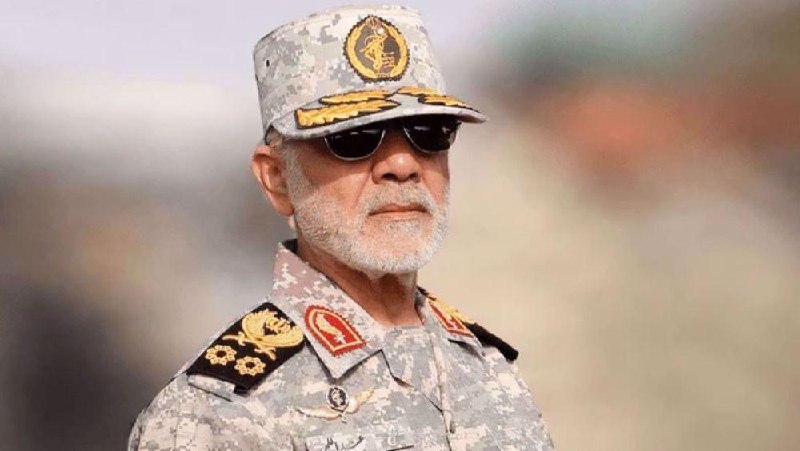
On the morning of 31 May 2026, an Iranian military-affiliated Telegram channel describing itself as a platform for defence communications posted a single message to its audience of several hundred thousand subscribers. The text was spare and declarative: "You cannot defeat a nation that has mastered the symphony of war." No further context was provided in the post itself. The channel, operating under the handle @IRIran_Military, has previously published updates attributed to Iranian military and Revolutionary Guard sources, though the exact provenance of any individual post is difficult to independently verify without additional corroboration from Iranian state media outlets or official government channels.
The message landed in a region already on edge. Over the preceding weeks, multiple Western and regional wire services had reported a series of incidents in the Persian Gulf and wider Middle East that had tested the diplomatic temperature between Tehran and Washington. Talks over Iran's nuclear programme, which had shown tentative signs of progress earlier in the year, had reportedly stalled over the question of uranium enrichment limits and the pace of sanctions relief. Separately, multiple outlets including Reuters and regional press had covered incidents involving naval or aerial approaches between US and Iranian forces in the Gulf, without definitive attribution on either side. The cumulative effect of those reports had produced an atmosphere in which any public military assertion from the Iranian side would attract heightened scrutiny.
The Propaganda Layer
State-adjacent communications in Iran follow a well-established grammar. Official spokespeople and military-affiliated media outlets routinely combine nationalistic assertion with strategic ambiguity — signalling capability and resolve without specifying means, timelines, or triggers. The phrase "symphony of war" is unusual in its literary register; standard Iranian military communications tend toward functional directness. Iranian state media, including outlets such as Press TV and the official IRNA news agency, have in past periods of elevated tension published similar declarations framed as expressions of national will rather than operational declarations. The language in this instance may be designed for domestic consumption as much as for external signalling: a reminder to Iranian audiences that the armed forces project strength and coherence, particularly in periods when diplomatic negotiations create uncertainty about the country's strategic direction.
From the Western side, the language would typically be characterised by US Central Command or State Department briefings as provocative and destabilising. American officials have repeatedly stated that the US presence in the Gulf is defensive and designed to ensure freedom of navigation, not to threaten Iranian sovereignty. The framing from Washington tends to treat military posturing from Tehran as an attempt to pressure negotiations or to divert attention from domestic economic pressures. Neither side's characterisation is straightforwardly true or false — the messaging serves different functions for different audiences simultaneously.
Regional Counter-Dynamics
The broader context includes the positions of Iran's regional allies and adversaries. Iranian-linked media outlets across the region, including those operating in Arabic, have previously amplified messages framing Iran's military posture as central to regional stability rather than as a threat to it. The framing in Arabic-language Iranian state media often presents Western military presence as the destabilising factor and Iranian capabilities as a counterweight. This rhetorical structure — casting oneself as the defender against external aggression — is not unique to Iran; it appears across a range of state communications in the region, from competing perspectives on the Yemen conflict to disagreements over Iraq's security architecture.
What the post did not contain is equally notable. There was no mention of specific capabilities, no reference to ongoing military exercises, and no direct threat directed at a named actor. That restraint may itself be significant. Recent reporting by regional outlets, including Iran International and other wire services, has covered moments when Iranian military communications appeared to calibrate the intensity of their messaging in response to diplomatic developments — softening tone during active negotiations, hardening it when talks appeared to falter. The timing of this post, in the absence of any stated trigger, raises questions about whether it was reactive, anticipatory, or simply part of a sustained communications cadence.
Structural Stakes
The underlying tension is not merely rhetorical. Iran's nuclear programme remains the central axis around which broader strategic competition rotates. Western powers, particularly the United States, have insisted that any diplomatic resolution must include verifiable limits on enrichment. Iran has argued that its programme is entirely peaceful and that sanctions relief must come quickly and comprehensively. The space between those positions has been occupyable for extended periods — the architecture of diplomatic engagement has included several periods of apparent progress followed by collapse. Each collapse produces a round of military signalling, both from the Iranian side and from the US regional posture, and each round of signalling narrows the space for the next diplomatic opening.
The countries caught in that squeeze include states with no direct stake in the US-Iran dispute but with profound exposure to its consequences. Gulf states including the UAE and Saudi Arabia have pursued their own diplomatic channels with Tehran while maintaining security ties with Washington. European parties to the original nuclear agreement have attempted to preserve the deal's architecture while navigating their own commercial interests. The ripple effects of a breakdown in talks, or of a military incident misread on either side, would extend well beyond the two principals.
What Comes Next
The Telegram post, standing alone, is not a policy document and cannot be read as an operational announcement. It is a piece of military-adjacent communications, deliberately provocative in language, placed into a media environment where such messages circulate widely and are consumed by audiences with varying levels of sophistication. Analysts tracking Iranian military communications for signs of escalation would likely flag it as within the normal range of domestic-facing propaganda, absent further corroboration from official channels or state media.
That absence of corroboration is itself worth noting. Iranian official communications tend to amplify through multiple channels simultaneously when a message is intended for external consumption — a post on a Telegram channel would typically be followed within hours by coverage in state media. At the time of publication, no Iranian state outlet had published the phrase or attributed it to a named official or institution. The message may have been intended primarily for domestic audiences, a demonstration of assertiveness at a moment when negotiations are faltering and economic pressure on ordinary Iranians remains acute. Or it may simply have been a post by a channel using the Iranian military identity, without formal institutional backing.
The episode illustrates the difficulty of reading military-adjacent signalling in a media environment where state communications, semi-official outlets, and proxy channels operate with varying degrees of coordination and independence. Without clarity on the institutional source, observers can identify the message's tone and cultural register, compare it to prior patterns, and situate it within the broader diplomatic context — but cannot attribute to it a specific strategic intent that would change the calculus of the parties involved. What the post communicates, ultimately, is a mood: assertion without specification, readiness without definition, and a language of war deployed as a statement of identity rather than as a declaration of intent.
The desk notes that this post received limited initial coverage in Western wire services, which focused instead on the ongoing nuclear negotiations and reported Gulf incidents. The framing in Iranian state media and pro-Tehran regional outlets has not yet emerged in a form that would allow cross-referencing. Monexus will continue to monitor official Iranian channels for corroboration or context.
Wire provenance
This editorial synthesis draws on the following public wire/social posts:
- https://t.me/IRIran_Military/1843