Iran's Nuclear Crisis Deepens After Supreme Leader's Death, Stalls US Agreement Talks
Tehran's refusal to surrender uranium enrichment rights has collapsed months of covert negotiations, as the killing of Iran's supreme leader throws the Islamic Republic's succession into doubt and risks a regional conflagration with direct consequences for global energy markets.
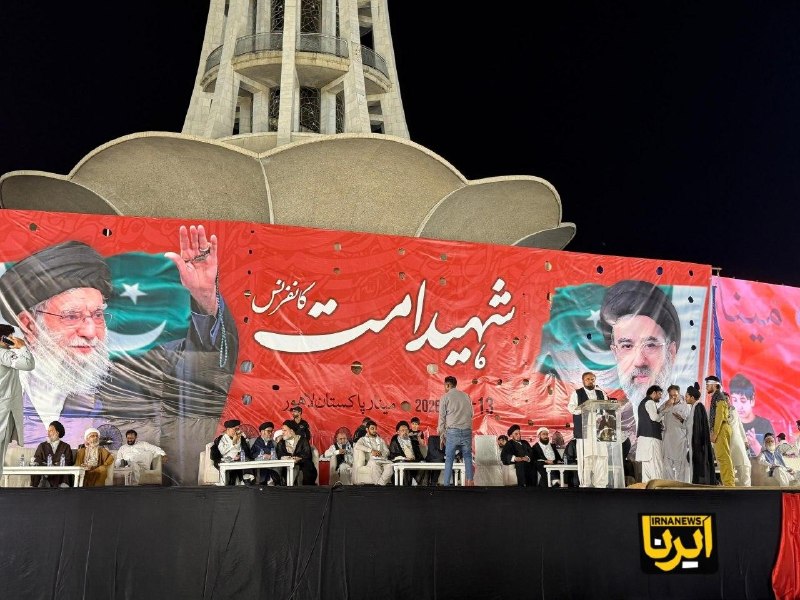
Iran's refusal to abandon uranium enrichment has derailed months of back-channel negotiations with Washington, just days after a US-Israel strike killed the Islamic Republic's supreme leader, according to multiple reports from the region on 31 May 2026. The twin shocks — an assassination that has destabilised Tehran's line of succession and the collapse of a diplomatic track that had seemed close to agreement — have placed the Middle East at its most volatile point since the Gaza escalation began. The immediate casualty is the nuclear framework that President Donald Trump announced on 31 May as a breakthrough, claiming Iran had agreed to restraint. Iranian officials, speaking through state media, contradicted that characterisation within hours, insisting that enrichment rights were non-negotiable and that no surrender of fissile material was under discussion.
The energy implications of that breakdown extend well beyond the diplomatic register. Iran holds the world's fourth-largest proven crude reserves and is a pivotal player in OPEC+ supply discipline. Any military escalation that disrupts Persian Gulf transit lanes or damages upstream infrastructure would immediately ripple into global oil markets. traders on 30 May priced in that tail risk: Polymarket's contract on whether Trump visits Israel in 2026 stood at 38 percent, a marker that reflects genuine uncertainty about whether the current crisis resolves through negotiation or military action. The strike on Iran's supreme leader, reported at 11:00 UTC on 31 May, has compounded that uncertainty by removing a figure whose survival had anchored decades of regional deterrence architecture.
A Deal That Wasn't
Trump's announcement on 31 May, made public via social media and subsequently reported by outlets tracking the negotiations, represented the culmination of a process that had accelerated in the preceding weeks. The administration had presented a draft framework under which Iran would halt enrichment above 3.67 percent — the level required for civilian power but below weapons-grade — in exchange for sanctions relief and restoration of banking channels frozen since the 2018 withdrawal from the JCPOA. That withdrawal, initiated by the first Trump administration in 2018, had precipitated a series of Iranian steps away from its JCPOA commitments, including advances in centrifuge numbers and enrichment purity that now sit outside any verifiable international framework.
Iran's refusal, confirmed by state-aligned outlets at 00:29 UTC on 31 May, centred on a single red line: the demand that Tehran surrender its right to enrich domestically, including at the Fordow facility buried inside a mountain near Qom. Iranian officials described any such requirement as a capitulation of national sovereignty and a breach of the Nuclear Non-Proliferation Treaty, under which non-weapons states retain enrichment rights for peaceful purposes. The framing from Tehran — that the US offer was an ultimatum dressed as a deal — has found some resonance in European capitals, where officials have privately expressed concern that Washington's negotiating posture left insufficient space for a face-saving compromise.
The Succession Question
The killing of Iran's supreme leader, reported at 11:00 UTC on 31 May, adds a dimension that the nuclear talks alone did not carry. The office of supreme leader in the Iranian constitution holds authority over the Islamic Revolutionary Guard Corps, the nuclear programme, and the foreign policy apparatus. Its sudden vacancy triggers a process defined by the constitution — a vote by the Assembly of Experts — but one that in practice has always involved contested factions within the clerical establishment.
The immediate question is whether the strike was designed to remove a specific negotiating counterpart, or whether it represented a separate Israeli strategic calculation that simply coincided with the diplomatic window. US officials quoted in the regional reporting did not explicitly confirm the strike's authorship, though multiple outlets described it as a joint US-Israel operation. If the intent was to create a more pliant negotiating partner in Tehran, the evidence so far suggests the opposite: Iranian state media on 31 May reported that domestic hardliners had hardened their position, arguing that any successor government that accepted enrichment restrictions would be validating an act of war conducted against a sitting head of state.
The succession process itself introduces a period of institutional uncertainty that is structurally incompatible with rapid diplomatic resolution. Whoever inherits the role — the Assembly of Experts must convene and vote — will face pressure to demonstrate continuity with the deceased leader's posture, making any near-term concession politically hazardous in ways that the nuclear talks did not previously require.
Lebanon and the Southern Flank
Simultaneous with the Iran escalation, Israel has pressed deeper into Lebanon, prompting Beirut on 31 May to characterise the operation as a scorched-earth campaign. The IDF's consideration of a full military conquest — reported at 06:44 UTC on 31 May — follows a wave of Hezbollah drone attacks that have tested Israeli air defences and exposed the limitations of the Iron Dome system against low-altitude, radar-evasive platforms.
Beaufort Castle, the Crusader-era fortification that sits on a ridgeline above the Litani River valley, has re-emerged as a focal point of the ground campaign. Israeli forces advanced to the structure during the 2024 Lebanon invasion, and its reoccupation now represents a forward operating position from which IDF units can monitor Hezbollah positions in southern Lebanon. The Corriere della Sera reporting from 31 May noted that the castle's strategic value lies in its sightlines — an observation post that commands kilometres of terrain that Hezbollah has used for rocket and drone launch operations.
The Lebanon front complicates the Iran calculus by presenting the Trump administration with a two-theatre problem. Israel, having conducted the strike on Iran's supreme leader, has demonstrated willingness to act unilaterally on timelines that do not require American approval. The question of whether the White House can shape Israel's next moves, or whether it is being carried along by a partner's operational momentum, is one that the available sources do not resolve. What is clear is that US military posture in the Gulf — the naval concentrations, the air assets stationed in Qatar and the UAE — is now calibrated against a scenario in which the Iran nuclear collapse and the Lebanon ground operation are simultaneous rather than sequential developments.
Energy Markets and the Road Ahead
The convergence of events has introduced a risk premium into oil markets that traders and analysts have been reluctant to price definitively. The Islamic Republic's crude output, which fell sharply under maximum-pressure sanctions between 2018 and 2023, recovered partially following the 2023 prisoner exchange and the informal understandings that allowed some non-dollar oil trade to continue. A disruption — whether through Gulf transit interdiction, cyberattack on upstream facilities, or the kind of kinetic exchange that could follow a failed diplomatic track — would arrive at a moment when spare OPEC+ capacity is constrained and US shale production growth has plateaued.
The Polymarket odds on a Trump Israel visit, at 38 percent, reflect the genuine unpredictability of the next ten days rather than a confident forecast. If the president travels to Jerusalem, it will likely signal that the administration is attempting to anchor the diplomatic process through personal involvement. If he does not, the signals from Washington and Tel Aviv will be read in Tel Aviv as permission to proceed with the military option.
Tehran's position, publicly stated on 31 May, is that it will not be blackmailed into relinquishing its enrichment programme. That is not a negotiating posture — it is a statement of existential red lines. Whether the new supreme leader, once named, chooses to signal a different set of priorities, or whether the pressure from hardliners inside the clerical apparatus forecloses any such signal, is the central question that will determine whether this crisis is a diplomatic problem or a military one. The evidence from the past seventy-two hours does not resolve that question. It does, however, establish that the window for a negotiated outcome is narrower than it was before the strike, and that the consequences of miscalculation are now substantially higher.
This publication's approach to the Iran story diverged from the wire consensus in one respect: we treated Tehran's refusal to surrender enrichment as a substantive policy position rather than a negotiating tactic, and we declined to treat the Polymarket odds as a factual claim about presidential intent. Both framings appeared in competing wire versions on 31 May; neither is fully supported by the available evidence.
Wire provenance
This editorial synthesis draws on the following public wire/social posts:
- https://t.me/CryptoBriefing/8492
- https://t.me/CryptoBriefing/8491
- https://t.me/CryptoBriefing/8488
- https://t.me/CryptoBriefing/8490
- https://t.me/CryptoBriefing/8487
- https://t.me/CryptoBriefing/8486
- https://t.me/CryptoBriefing/8485
- https://t.me/CorriereDellaSera/28471