Iran's Nuclear Negotiators Are Marketed as Warriors. The Economy Is Sold as a Discipline Problem. Both Narratives Collide.
Tehran's government spokesperson served up two distinct narratives in 24 hours: the nuclear team as battle-tested operators, the economic situation as a coordination challenge. The tension between those framings reveals more than either message alone.
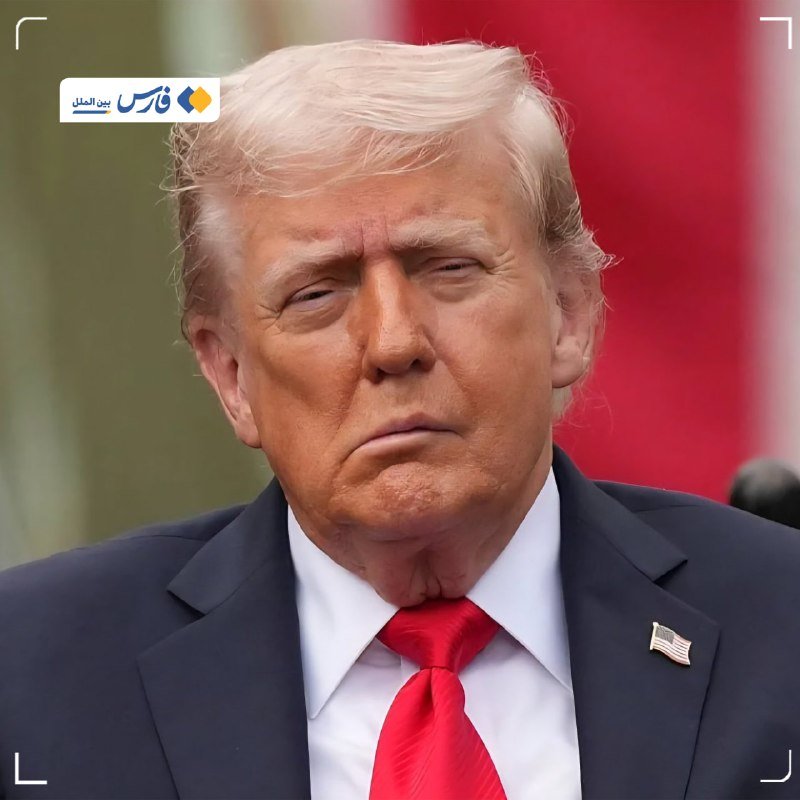
Government spokesperson Ali Bahadori Jahromi had a dual mandate on the last day of May 2026. First: assure the domestic audience that the team negotiating Iran's nuclear file knew what it was doing. Second: convince the same audience that the government had a handle on prices, goods supply, and inflation — without promising anything it couldn't deliver.
The two messages arrived in close succession via Tasnim and FARS, two Iranian state-affiliated news agencies. Neither was accidental. Together they form a coherent government posture in a moment when Tehran is under simultaneous pressure from Western sanctions and domestic economic strain.
A Team Built for的信
On nuclear negotiations, the messaging was unmistakable. Bahadori Jahromi described parliament speaker Mohammad Bagher Qalibaf as "the commander of the field" and foreign minister Abbas Araghchi as "a wartime warrior." Both descriptors carry deliberate weight in Iranian political culture. Field commanders and wartime warriors are not bureaucrats or diplomats in the pejorative sense — they are people who have operated under pressure and survived decisions with real consequences.
The framing is a political investment. Any deal Iran strikes with the United States or European parties will face domestic criticism. The hardline bloc in Tehran — and the broader conservative infrastructure that surrounds parliament — will demand that the government not give away what previous administrations gave away. By signalling that the team is made of negotiators with combat credentials rather than compromise credentials, the government is building a buffer against accusations of weakness.
This matters because Araghchi in particular has been the lead figure in the current diplomatic cycle. His background as a former Islamic Revolutionary Guard Corps commander — confirmed across Iranian state media — gives him a particular profile that Western analysts have noted. He can speak to hardliners from a position of institutional credibility that a career diplomat cannot replicate.
The risk, of course, is that describing your foreign minister as a wartime warrior signals something to the other side of the table as well. American and European negotiators reading this framing may interpret it as a signal that Tehran is not looking for easy compromises — or that any compromise it reaches will come with conditions set by the security establishment rather than by technocrats.
The Economy Nobody Wants to Promise On
The second message was more hedged. When asked about increasing the supply of goods — a euphemism for tackling price inflation through imports — the spokesperson offered a careful construction: "Currently there is no news about increasing the amount of goods. Increasing the amount of goods is one of the government's interests, but the reality is that we must coordinate the desired with the possible."
That phrase — coordinating the desired with the possible — is a government formulation that predates this administration. It translates roughly to: we want to help, we are working on it, but constraints exist. The constraint, unstated but structural, is the sanctions regime that limits Iran's ability to import freely and access foreign currency at official rates.
The same briefing included mention of an investigation into the price of "Kalaberg" — an Iranian food staple whose price has apparently been under scrutiny. The framing was classic: inflation is being managed through financial discipline, and price anomalies are under review. No timelines, no targets, no promises.
The effect is to make the economic situation sound under control while making no commitment that could be held against the government if conditions don't improve. This is, in essence, a communications strategy rather than an economic plan — but in a context where the tools of economic management are constrained by external pressure, the communications strategy may be all that's available.
The Structural Gap Between the Two Narratives
Here is where the two framings collide. The nuclear team is being sold as competent, experienced, and capable of making hard choices. The economic situation is being sold as managed, disciplined, and responsive to domestic needs. But the reality that sits underneath both messages is that Iran's economic constraints and its negotiating posture are not separate stories — they are the same story.
The sanctions that restrict goods imports are the same sanctions that give Iran leverage in nuclear talks. The economic pain that makes domestic messaging necessary is the same pain that pushes Iran toward a deal it might not otherwise need. And the "wartime warrior" leading the diplomatic effort is negotiating not just over enrichment levels but over the architecture of relief that would ease the price pressures the spokesperson was simultaneously describing as under control.
Western coverage of these negotiations tends to separate the two tracks — the nuclear technicalities on one side, the humanitarian economic impact on the other. Iranian state media, by contrast, presents them as integrated. The negotiation team is qualified because it understands both the security dimension and the economic stakes. The economic messaging is careful because it cannot afford to overpromise while a diplomatic outcome remains uncertain.
Neither framing is dishonest in itself. The gap between them becomes politically significant only if one of them shifts — if, for instance, the nuclear talks produce a deal that the domestic audience reads as having been given away, or if the economic situation deteriorates faster than the coordination language can absorb. At that point, the wartime warrior narrative and the financial discipline narrative stop reinforcing each other and start pulling in opposite directions.
The spokesperson's statements on 31 May did not cross that threshold. But the structural tension they exposed is real — and it sits at the centre of everything Tehran is trying to hold together in this diplomatic moment.
Desk note: Wire coverage of this briefing prioritised the nuclear framing — Araghchi's background, the signals about negotiating posture — and treated the economic passage as routine government messaging. This piece inverts that emphasis, treating the economic statements as equally revealing of how the government manages expectations while negotiations run parallel to it.
Wire provenance
This editorial synthesis draws on the following public wire/social posts:
- https://t.me/tasnimplus
- https://t.me/tasnimplus
- https://t.me/farsna
- https://t.me/farsna