Iran Nuclear Talks Near Collapse as Enrichment Deadline Passes
Diplomatic efforts to restore the 2015 Iran nuclear accord have effectively broken down, with Tehran insisting on domestic enrichment rights that Washington has declared a non-starter, and the Pentagon publicly outlining the conditions under which military strikes would resume.
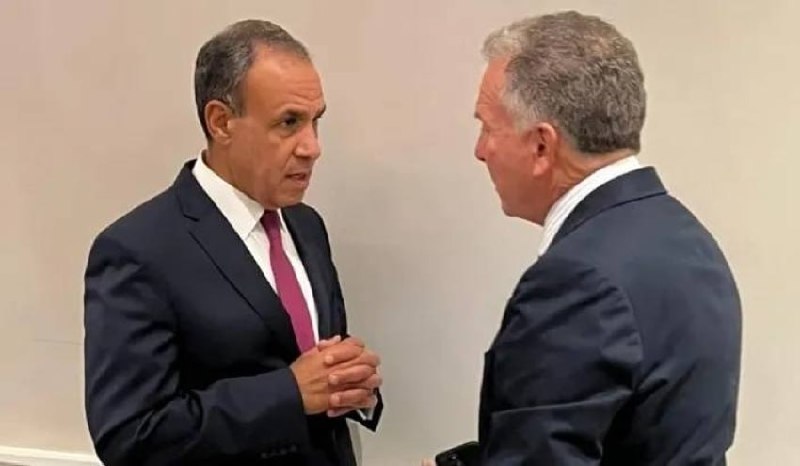
The United States and Iran are further apart on a nuclear accord than at any point since indirect negotiations collapsed in 2025, according to multiple reports filed on 29 and 30 May 2026. The immediate flashpoint is Tehran's categorical refusal to surrender its domestic uranium enrichment programme — a demand the Trump administration has made as a precondition for lifting the sanctions architecture imposed since 2018. Without a deal, the administration has warned that military options are back on the table.
The diplomatic rupture represents the third major failure of nuclear talks since the United States unilaterally withdrew from the Joint Comprehensive Plan of Action in 2018 under the first Trump administration. Each round of collapsed negotiations has left Iran farther along its enrichment timeline and the United States more reliant on a maximum-pressure campaign that critics — including some allied governments — have long argued is self-defeating.
The enrichment impasse
The core dispute has not changed: Iran insists that any agreement must recognise its sovereign right to enrich uranium on its own soil, at levels and quantities it determines. That position is a red line for Washington, which has demanded Iran dismantle or significantly scale back its enrichment infrastructure as the price of sanctions relief. Sources filed between 29 and 31 May indicate that Iranian negotiators have not moved from that position across three successive negotiating rounds, and that senior officials in Tehran have described the enrichment programme as non-negotiable under any circumstances.
The framing from Tehran has been consistent with statements from the Iranian Foreign Ministry and state-aligned outlets, which characterise the American position as a demand for capitulation rather than negotiation. Iranian officials have argued that the 2015 accord — which permitted limited enrichment under international supervision — was itself a compromise the Islamic Republic accepted reluctantly, and that reimposed sanctions since 2018 have given Iran no incentive to concede further.
Western analysts who follow the IAEA verification programme note that Iran's stock of 60-percent enriched uranium is now significant enough that the weapons-breakout timeline — the time required to produce one nuclear device if Iran chose to pursue one — has shortened considerably since the 2018 withdrawal. That technical reality shapes both the urgency and the negotiating positions on each side.
Military escalation and regional spillover
On 29 May 2026, the Pentagon publicly outlined conditions under which the United States would resume air strikes against Iranian nuclear and military facilities. The statement, attributed to the office of the Secretary of Defense, represented a deliberate shift from the diplomatic posture that had characterised the opening months of renewed talks. The following day, reporting from multiple outlets indicated that a missile attack on a Kuwaiti base used by American forces had further hardened the military tone within the administration.
The Kuwait attack — which caused casualties and material damage, according to initial accounts — has not been attributed to a state actor in the available reporting. However, officials in Washington have pointed to Iranian-backed groups operating in the Gulf as the likely responsible parties. Iranian state media has not acknowledged the attack.
The escalation has strained the diplomatic patience of Gulf allies, several of whom have privately urged Washington to maintain a negotiating channel even as military preparations continue. The UAE, Qatar, and Oman have all maintained open lines with Tehran and have passed messages between the two governments, according to regional sources. Those channels are described as active but unproductive — useful for avoiding miscalculation, not for bridging the substantive gap on enrichment.
Sanctions as leverage — or as signal
The United States imposed a fresh round of sanctions on Iranian individuals and entities on 29 May 2026, expanding the designations targeting the Islamic Republic's oil export infrastructure, its banking sector, and associated shipping networks. The move followed an earlier tranche of designations in the same week. Treasury officials described the measures as designed to increase economic pressure on Iran's clerical leadership and to signal that the diplomatic window is closing.
The sanctions architecture against Iran is already the most extensive of any country subject to American secondary penalties. The question among analysts is whether additional designations meaningfully change Tehran's cost-benefit calculation, or whether they represent a diplomatic signal to domestic and allied audiences more than a pressure tool capable of altering Iranian behaviour. Iran's oil exports have already been compressed to historically low levels; the marginal impact of further designations is disputed among economists who track the country.
Iran has responded to successive rounds of sanctions by deepening ties with China and Russia — both of which have provided diplomatic cover at the UN Security Council and commercial pathways that partially insulate Tehran from the worst effects of American penalties. That structural relationship means the sanctions regime is operating in a different geopolitical environment than it was in 2018, when the United States could count on near-unanimous support from European allies and a relatively unified coalition of Gulf states.
What comes next
The immediate trajectory points toward further escalation unless one side moves significantly. Iran has shown no willingness to abandon enrichment rights; the Trump administration has shown no willingness to accept a deal that does not. The military messaging from the Pentagon — while intended as coercive leverage — also raises the risk of miscalculation, particularly given the regional fluidity demonstrated by the Kuwait attack.
The European parties to the original JCPOA — France, Germany, and the United Kingdom — have publicly called for both sides to return to the table, but their leverage is limited. They cannot offer Iran the sanctions relief Washington controls, and they cannot offer Washington the diplomatic cover that a multilateral agreement would provide. The EU's independent sanctions pipeline offers some additional pressure points but no alternative structural solution.
The 60-percent enrichment stock remains the most consequential variable. Iran has not crossed the threshold into weapons-grade material — 90 percent — and has consistently maintained that its programme is for civilian purposes. That claim is treated with deep scepticism by American and Israeli intelligence assessments, which have described the trajectory as consistent with a hedging strategy rather than a purely civilian one. The gap between those two assessments — the difference between a weapons programme and an option to build one — is where the negotiating space has always existed. That space appears to have closed for now.
The thread reflects a consistent pattern of reporting across multiple outlets on the same story: the wire characterised this as a straightforward diplomatic failure. Monexus has foregrounded the structural conditions — the enrichment right as a geopolitical symbol, the sanctions architecture's diminishing returns, the Gulf ally navigation — that make a straightforward recovery of talks unlikely even if both governments wish to avoid open conflict.
Wire provenance
This editorial synthesis draws on the following public wire/social posts:
- https://t.me/CryptoBriefing/20260629/22:35
- https://t.me/CryptoBriefing/20260629/22:53
- https://t.me/CryptoBriefing/20260630/04:02
- https://t.me/CryptoBriefing/20260630/09:47
- https://t.me/CryptoBriefing/20260630/16:37
- https://t.me/CryptoBriefing/20260630/21:04