Iran-US Standoff at Hormuz: How a Waterway Carrying a Fifth of the World's Oil Became the World's Most Dangerous Chokepoint
As US-Iran nuclear talks stumble and naval mines resurface in the Persian Gulf, the Strait of Hormuz has re-emerged as the central fault line of a confrontation that neither side fully controls — but both have strong incentives to manage.
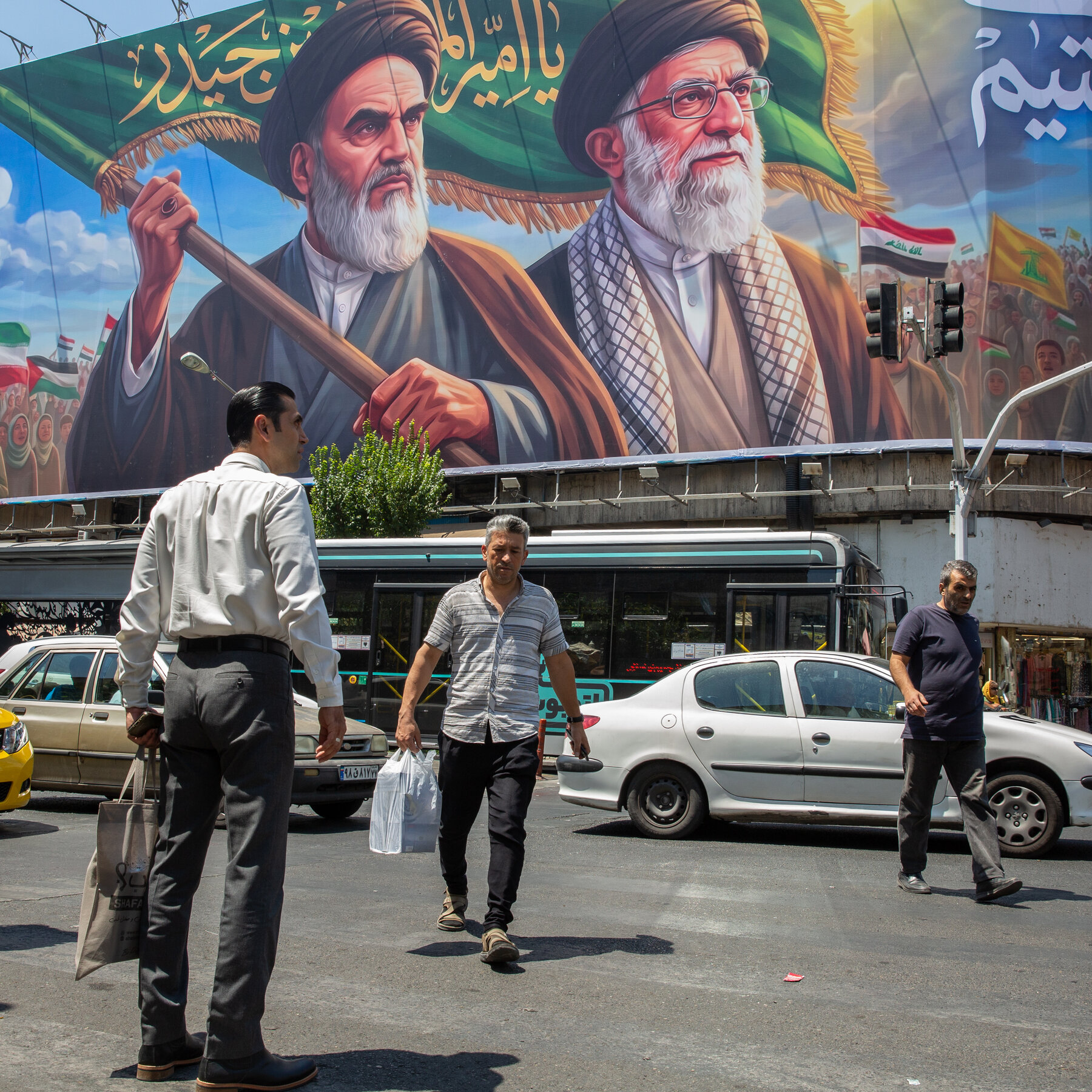
The discovery of naval mines in the Strait of Hormuz — reported on May 30, 2026 — landed in global markets with the blunt force of a confirmed threat rather than a hypothetical one. Within hours, the spectre of a maritime chokepoint that handles roughly a fifth of the world's oil shipments had reasserted itself as the defining tension of the Iran-US confrontation. On the same day, Iranian officials warned that military vessels entering the strait could become targets; Iran later reasserted what it called its lawful control over the waterway. By May 31, the gap between Washington's declared optimism and Tehran's measured defiance had widened to the point where the negotiating table and the seabed were holding equal stakes.
The immediate trigger was the discovery of the mines, which US officials blamed on Iranian-aligned actors, according to reporting from May 30. The following day brought a second escalation: the detection of what sources described as heightened Iranian military presence near the strait's navigational channels. These developments arrived against a backdrop of nuclear negotiations that had already become complicated by shifting American demands.
Negotiations between Iran and the United States continued through May 31, according to reporting from that day. Iranian officials stated that talks were still ongoing but that Trump's introduction of amendments to the draft agreement did not mean Tehran had accepted the revised terms. Iran also communicated that it was, in the words of an official statement cited on May 31, "fully prepared" in the event that no agreement was reached. The same Iranian readout made clear that the nuclear issue had been removed from the scope of bilateral discussions — a development that, if accurate, would represent a fundamental narrowing of what Washington was originally seeking.
Trump has claimed that Iran has agreed to nuclear restraint as part of the ongoing framework, according to statements reported on May 31. The White House framing, consistent with remarks attributed to Trump on May 31, holds that the goal is a peace deal premised on guarantees that Iran will not develop nuclear weapons, in exchange for which the Strait of Hormuz — currently subject to Iranian naval posturing — would be opened to normal traffic. This framing positions the Hormuz passage as both the incentive and the pressure point: Tehran's ability to threaten it is presented as a reason to cut a deal, while its willingness to keep it open would be the reward.
That framing, however, sits uneasily alongside the reporting from the same period. Iran removed the nuclear issue from the talks, according to sources on May 31. That removal suggests either a significant Iranian concession — treating nuclear obligations as a settled matter — or a negotiating tactic to keep the conversation alive while reducing the scope for American leverage. The two readings are not mutually exclusive, and neither is reassuring. A Tehran that treats its nuclear programme as non-negotiable and a Washington that insists on written guarantees are approaching a collision that neither has publicly acknowledged.
The Hormuz factor is what makes this standoff structurally different from earlier phases of the US-Iran confrontation. The strait is not simply a metaphorical flashpoint; it is a 34-mile-wide pinch point between Oman and Iran through which tankers carrying crude oil from Saudi Arabia, Iraq, the UAE, Kuwait, and Iran itself must pass. The International Energy Agency has consistently identified the waterway as one of the world's most critical energy-transit corridors. Disruption does not require a formal blockade. A series of incidents — minelaying, aggressive interdiction, or even an accidental collision escalated by miscommunication — could achieve the same effect as a declared closure, with the added volatility of plausible deniability.
Oil market sensitivity to Hormuz disruptions has been well-documented across previous periods of elevated Gulf tension. Market participants respond to credible threats of disruption with immediate price spikes that reflect not just the physical risk but the speed with which tanker insurance markets and flag-state operators can recalculate. A sustained disruption to even a portion of the waterway's throughput would force buyers in Asia — particularly China, Japan, and South Korea, which together represent the largest share of Gulf crude imports — to seek alternative supply from longer-haul sources, creating a structural cost increase that would feed into broader inflation dynamics.
The naval dimension is the part that most analysts of this conflict have consistently underrated. Iran's Revolutionary Guard Corps Naval Forces operate a mix of small fast-attack craft, naval mines, and anti-ship missiles that are specifically designed to complicate access to coastal waters rather than contest the open sea. This is asymmetric deterrence in practice: not a navy that can defeat the US Fifth Fleet in a conventional engagement, but a layered threat that raises the cost and risk of any maritime operation in the Gulf. The discovery of mines near the shipping lanes on May 30, reported as heightening US-Iran tensions, illustrates precisely this dynamic. Mines are the most deniable of these instruments — their origin is difficult to attribute with certainty in real time, and their threat to commercial shipping is immediate regardless of who placed them or why.
What is unusual about the current moment is that the military tension and the diplomatic negotiation are running in parallel with no apparent hierarchy. Typically, such standoffs feature a clear sequencing: talks fail, then military pressure follows, or vice versa. Here, both tracks are active simultaneously, which means that a miscalculation on the water could collapse the table talks, while a breakdown at the table could incentivise the very disruption that both sides presumably wish to avoid. The naval mine discovery on May 30 — and the Iranian warning that followed on the same day — is precisely the kind of event that erodes the space for diplomatic patience.
The structural backdrop matters here. Iran has, across successive administrations in Tehran, invested in the Hormuz leverage precisely because it is the card that neither Washington nor its Gulf allies can fully neutralise. Saudi Arabia and the UAE have invested in alternative export routes — pipelines through the Red Sea, overland routes to the Mediterranean — but these alternatives cover a fraction of the volumes that transit the strait. The calculus for Tehran has historically been that Hormuz threats are most useful as a deterrent, not an actual instrument of disruption, because actual disruption would invite the kind of military response that Iran has consistently sought to avoid. That calculus, however, depends on the assumption that both sides are playing from the same risk assessment. If Tehran concludes that Washington is not negotiating in good faith — or that the amended draft represents a fait accompli rather than a basis for discussion — the deterrent logic shifts.
What the sources do not establish is whether the Trump administration is prepared to accept a deal that does not include verifiable constraints on Iran's nuclear programme, or whether the White House framing — centred on Hormuz access and energy stability — reflects a deliberate downgrade of the nuclear objective to something more immediately achievable and politically legible. Both readings have precedents in US Iran policy across different administrations. The version of events in which a deal is reached on the strength of Hormuz-related incentives, with nuclear obligations treated as a secondary or implicit matter, would represent a significant departure from the stated goals of the initial negotiating framework. The version in which talks collapse and the naval dimension escalates would place oil markets and regional stability under immediate and direct pressure.
Neither side has signalled a desire for full-scale conflict. Iran's statement on May 31 that it is "fully prepared" for the eventuality of no agreement reads as an assertion of resilience rather than a declaration of intent. Trump's framing, as reported on May 31, positions a deal as achievable — with the Hormuz opening as the centrepiece reward. What remains unresolved is whether the gap between those positions is a negotiating gap, which can be closed, or a strategic one, which cannot. The mines in the waterway make that question considerably more urgent, and considerably harder to answer from a distance.
The Monexus desk approached this story with a structural focus on the Hormuz dimension rather than the diplomatic timeline, which was already extensively covered in the wire output. The naval and economic stakes of a disruption — the specific oil-market exposure, the insurance and tanker-market dynamics, the asymmetric military logic — received more emphasis in this account than in the standard wire framing, which tended to treat the Hormuz angle as a consequence of the negotiations rather than a co-equal driver of the confrontation.
This piece draws on reporting from multiple wire services covering the Iran-US talks and Gulf security situation between May 30 and May 31, 2026.
Wire provenance
This editorial synthesis draws on the following public wire/social posts:
- https://t.me/CryptoBriefing/5142
- https://t.me/CryptoBriefing/5141
- https://t.me/CryptoBriefing/5140
- https://t.me/CryptoBriefing/5139
- https://t.me/CryptoBriefing/5138
- https://t.me/CryptoBriefing/5137
- https://t.me/CryptoBriefing/5136
- https://t.me/CryptoBriefing/5135
- https://t.me/bricsnews/11432
- https://t.me/bricsnews/11431
- https://x.com/polymarket/status/1921865012344983057
- https://t.me/LiveMint/28901