Israel-Lebanon Conflict Crosses a Threshold as UN Security Council Convenes Emergency Session
Israeli forces entered Beaufort Castle in southern Lebanon on 31 May 2026 as Hezbollah drones struck northern Israel, wounding four civilians, prompting Beirut to denounce a scorched-earth policy and the UN Security Council to hold an emergency session.
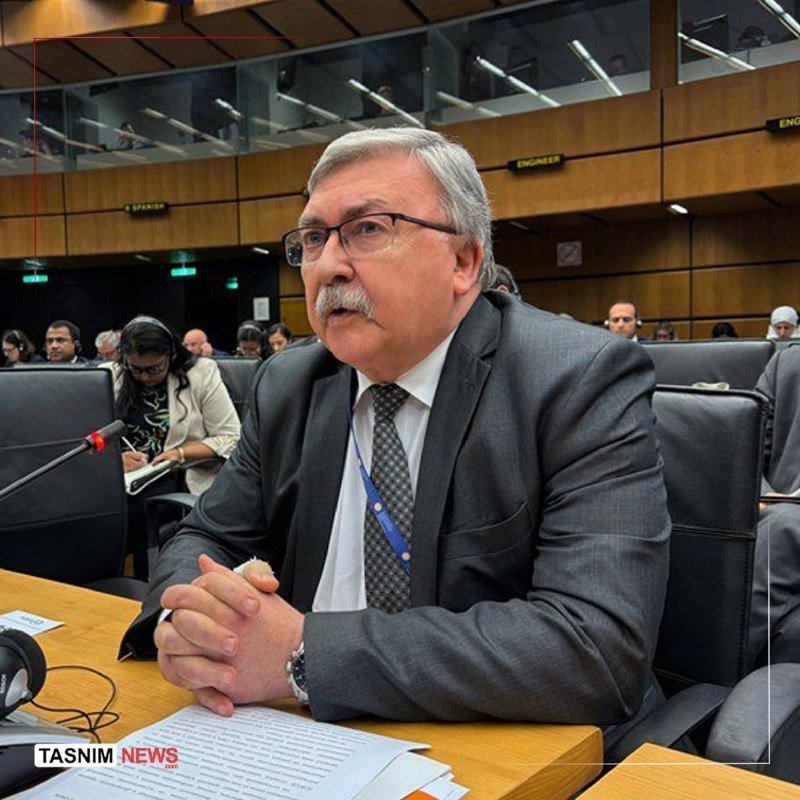
On 31 May 2026, the UN Security Council convened an emergency session as Israel broadened its military campaign inside Lebanon to encompass a historic hilltop fortress long symbolic of resistance to Israeli occupation. Israeli forces published footage of troops operating inside Beaufort Castle, a Crusader-era fortification in southern Lebanon that overlooks the Upper Galilee. The IDF operation, confirmed by an Israeli official speaking to Axios, represented a qualitative escalation from the pattern of cross-border strikes and retaliations that had defined exchanges since October 2023. Earlier the same day, a Hezbollah drone struck the northern Israeli town of Shtula, injuring four civilians, according to Israeli emergency services. Lebanon's Foreign Ministry swiftly condemned what it described as a "scorched-earth policy," accusing Israel of pursuing conquest rather than security.
The simultaneous activation of both an Israeli ground operation and a Hezbollah aerial attack on 31 May marks a threshold moment in a conflict that had previously been containable through diplomatic and military signalling. What was once a defined framework — limited Israeli strikes in response to specific provocations, calibrated to avoid full-scale hostilities — has given way to operations whose scope and intent suggest a different calculation in Jerusalem.
The Strategic Logic of Beaufort Castle
Beaufort Castle, known in Arabic as Qal'at al-Shaqif Arnun, has sat atop a limestone ridge in southern Lebanon for nearly a thousand years. Its military significance derives from geography: the fort commands a clear line of sight across the upper Galilee plains, making it a natural observation and artillery position. Israel occupied the surrounding area from 1978 until 2000, and maintained a foothold in the adjacent hills under a UN Security Council-mandated buffer zone until Hezbollah's 2006 war with Israel disrupted that arrangement.
The IDF footage published on 31 May 2026 showing Israeli troops inside the compound marks the first confirmed entry into the fortress itself since 2006. An Israeli official told Axios that the operation was underway at the site, without elaborating on the scale of forces deployed or the stated objective. The release of footage itself carries communicative weight: Israel chose to make the operation visible rather than covert, suggesting a deliberate signal to Hezbollah, to Tehran, and to Western mediators that a new phase has begun.
Israeli media, citing first responders, reported four injuries from the Hezbollah drone strike in Shtula — a community within range of Hezbollah's unmanned aerial capabilities that have expanded significantly since the group received precision guidance technology from Iran over the preceding years. Israeli fire crews were dispatched to the crash site, according to reporting by The Jerusalem Post. The attack followed a documented pattern of Hezbollah drone launches toward Israeli civilian infrastructure that Israeli analysts describe as low-altitude, difficult-to-intercept systems designed to exploit gaps in air defence coverage.
Lebanon's Response and the Diplomatic Record
Lebanon's characterisation of the Israeli operation as a "scorched-earth policy" reflects the framing Beirut has increasingly deployed in international forums since the expanded ground incursion began. The term, loaded with historical resonance from the 1982 invasion, is calculated to mobilise international pressure on Israel at a moment when Western support, while still firm, has grown more conditional.
Lebanon's complaint to the Security Council — the body that convened its emergency session on 31 May — rests on the argument that Israel's stated self-defence rationale is masking territorial ambitions. This framing has found some purchase in the non-aligned world and among Security Council members who have grown accustomed to parsing Israeli operations in the occupied Palestinian territories and have extended those analytical habits to Lebanon. The Lebanese argument has a structural vulnerability, however: Hezbollah's own cross-border attacks, which are the proximate trigger for Israeli escalation, are not disputed by any party with standing to contradict them.
The emergency session itself is a product of the Council's structural paralysis on Middle East questions, where permanent members hold divergent views and resolutions require consensus that rarely emerges. Emergency consultations, rather than formal sessions with binding outcomes, are the more likely immediate product. The session nevertheless signals that at least four Council members — enough to trigger a consultation under the body's procedures — believe the situation has crossed a threshold that demands international attention.
The Regional Dimension and Tehran's Shadow
Hezbollah's drone programme is not indigenous to Lebanon in the sense of having been developed without external input. The group's unmanned aerial systems, including the platform that struck Shtula, reflect years of technology transfer from Iran's Islamic Revolutionary Guard Corps Quds Force, which has treated Hezbollah as its most capable proxy and a critical forward line against Israeli military presence in the Levant. Iranian state media, in reporting on the exchange, framed Hezbollah's actions as resistance to occupation — language that Tehran applies equally to Lebanon and to the Palestinian territories, eliding the distinction that Hezbollah is a non-state actor operating from the territory of a third country.
Israeli consideration of what officials described to Axios as "full military conquest" of Lebanon marks a significant rhetorical departure from the language of precision deterrence that has characterised Israeli strategic communication toward Hezbollah since the 2006 war. The distinction between a targeted ground operation to eliminate specific threats and a conquest aimed at territorial control or regime change is one that Western capitals will scrutinise closely. The Biden administration's position, shaped by the ongoing costs of the Ukraine support programme and domestic electoral calculations, is unlikely to welcome an Israeli move that opens a second large-scale Middle Eastern conflict simultaneously.
Hezbollah, for its part, has signalled that its calculus is now tied to events in Gaza rather than to Lebanese national interest alone. The group's leadership has stated publicly that it will not cease attacks on Israel until the Gaza conflict is resolved — a linkage that, if maintained, makes a diplomatic off-ramp conditional on a separate, far more intractable negotiation.
What Comes Next
The immediate trajectory depends on whether Israel announces a defined operational objective or allows the campaign to expand organically in response to battlefield conditions. Historical patterns from Israeli ground operations in Lebanon — in 1978, 1982, and 2006 — suggest that the first phase, characterised by tactical success against defined targets, has consistently given way to a second phase of guerrilla resistance that proves far more costly than anticipated. The Beaufort Castle operation, if it results in a permanent Israeli presence in the area, would place IDF forces in exactly the terrain that enabled Hezbollah's insurgency following the 2000 withdrawal.
The UN Security Council session on 31 May is unlikely to produce binding outcomes given permanent-member dynamics, but it may generate a presidential statement or ceasefire call that gives diplomatic cover to whichever party eventually seeks one. For now, both sides appear to be calculating that the costs of escalation are lower than the costs of appearing to have blinked. That arithmetic has proven wrong in the past.
This publication covered the 31 May escalation through Reuters wire reporting, The Jerusalem Post's on-the-ground coverage, and Lebanese government statements. Wire framing centred on Israeli military action; this article incorporates the Lebanese Foreign Ministry characterisation alongside it.
Wire provenance
This editorial synthesis draws on the following public wire/social posts:
- https://t.me/CryptoBriefing/8921
- https://t.me/CryptoBriefing/8919
- https://t.me/CryptoBriefing/8920
- https://t.me/The_Jerusalem_Post/44512
- https://x.com/sprinterpress/status/1957821332544569568