Israel's Lebanon Gambit: Strategy, Overreach, and the Limits of Superiority
Israel's shock at the scale of Hezbollah's retaliation reveals more than a tactical miscalculation — it exposes a strategic confusion at the heart of how the government frames its own objectives. When conquest replaces deterrence as the operative concept, the distinction between security and imperial ambition blurs dangerously.
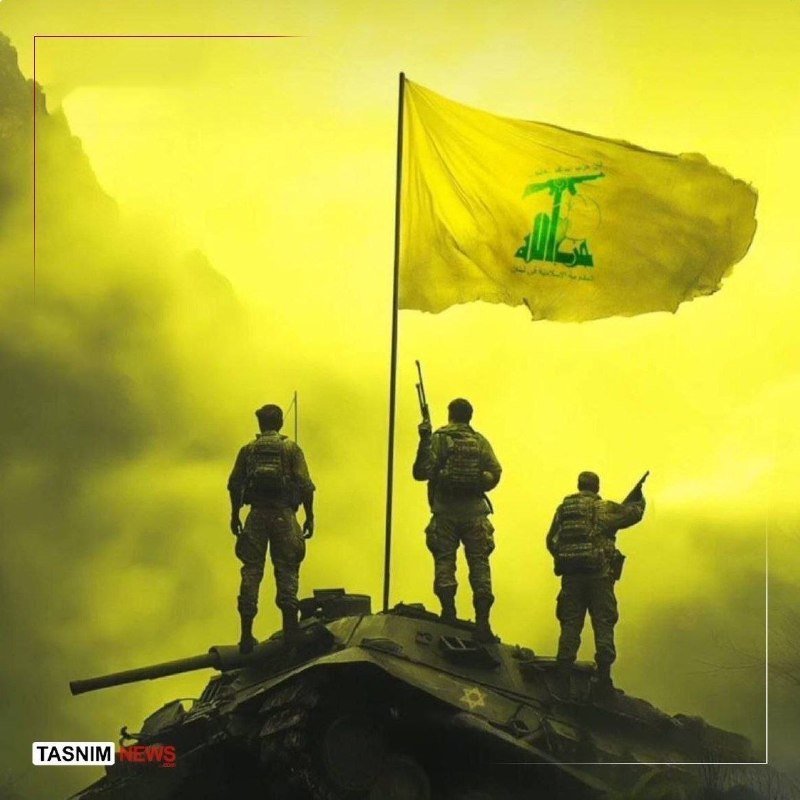
The reports emerging from Israeli and regional sources on 31 May paint a striking picture: Israel was genuinely surprised by the scale and intensity of Hezbollah's rocket and drone barrage across the Lebanon border. That surprise is itself the story — and it says more about the Israeli government's strategic posture than the strikes themselves.
The core thesis is straightforward: when a military power with overwhelming conventional superiority finds itself blindsided by an adversary it believed it understood, the failure runs deeper than intelligence. Israel, by all available accounts, did not expect Hezbollah to absorb and return the level of force it did. The assumption that precision strikes and counter-battery operations had contained the threat proved wrong. Hezbollah's drone and rocket capabilities have grown in sophistication faster than Israeli assessments credited. The consequence is an escalating cycle that neither side appears to have fully intended — and that carries risks neither can easily manage.
The intelligence gap runs deeper than tactics
Surprise at the scale of retaliation points to a systematic overestimation of control and underestimation of adversary development. Israel's intelligence apparatus, widely regarded as among the most capable in the world, has repeatedly underestimated Hezbollah's trajectory — not in 2006, not in the years of border skirmishing, and not now. Each cycle produces the same pattern: an initial assessment that the threat is manageable, followed by a demonstration that the threat has outpaced the assessment. This is not merely a question of operational failure. It reflects an ideological lens that treats Hezbollah as a bounded problem rather than an evolving one. When that lens collides with reality, the gap tends to be large.
The sources do not specify which Israeli assessments were relied upon or how the miscalculation occurred in specific terms. What they confirm is the outcome: a significant discrepancy between what Israeli planners expected and what Hezbollah delivered. That discrepancy has consequences for decision-making now underway.
When conquest replaces deterrence as the operative concept
The reported consideration of what one source characterized as "full military conquest" in Lebanon marks a significant rhetorical and strategic shift. The distinction matters enormously. Deterrence — degrading an adversary's capacity to strike, degrading their willingness to absorb costs — is a coherent strategic goal with definable endpoints and internationally legible justifications. Conquest is something else entirely. It implies territorial administration, sustained occupation, and the assumption of responsibility for a hostile population across a long and porous border. The framing carries domestic political weight in Israel, but it also concedes something: that the stated goal of restoring security cannot be achieved through the means initially described.
Lebanon, for its part, has framed Israel's expanded operations as a "scorched-earth policy." That language is polemical, but it is not without strategic purpose. Lebanon is constructing a narrative for international audiences — one that positions it as the object of disproportionate force rather than a party complicit in the conflict that preceded this phase. The distinction matters diplomatically. Israel's security objectives are legible; Lebanon's framing attempts to make Israel's methods the story. Neither framing is neutral.
Military superiority is not the same as strategic clarity
The paradox at the centre of this escalation is that Israel's overwhelming conventional advantage has not translated into strategic clarity — and may be making clarity harder to achieve. Superiority on paper invites the assumption that any problem can be solved by applying enough of that superiority. The sources suggest that Israel is now considering a level of commitment — ground forces, extended occupation, the full weight of military dominance deployed — that goes well beyond anything contemplated during the border operations that triggered this phase.
The risks are not primarily military. Israel can, almost certainly, push further into Lebanon than it has to date. The risks are political and temporal. A ground incursion consumes resources and attention that cannot simultaneously be applied elsewhere — including to the ongoing Gaza operations that remain unresolved. Hezbollah's calculus, whatever its specific objectives, almost certainly includes the goal of making Israel's position unsustainable at acceptable cost. Whether Hezbollah can achieve that goal is uncertain. But Israel's surprise at the current retaliation level suggests the cost calculation is already higher than anticipated.
The 2006 Lebanon war offers an uncomfortable precedent: a military widely regarded as superior to its adversary failed to translate that superiority into a decisive political outcome. The lesson, if it was learned, seems to have been partially absorbed. Israel's current contemplation of deeper action suggests it has not been fully absorbed.
The regional stakes compound with each escalation
What happens on the Israel-Lebanon border does not stay on the Israel-Lebanon border. Hezbollah's position as a proxy embedded in Lebanese political and social structures means that any Israeli operation that produces significant civilian harm or visible destruction strengthens its hand domestically while deepening international sympathy for Lebanon — a sympathy that will be harder to generate if the international focus remains fixed on Gaza. The sources suggest a closing window: as the duration of major operations extends, the tolerance of international audiences — already strained — erodes further.
The deeper structural point is that Israel's military dominance is real but not unlimited. It cannot be applied everywhere simultaneously. The pressure on force deployment across multiple theatres — Gaza, Lebanon, the West Bank — is a logistical fact that constrains strategic options regardless of political preferences. Hezbollah appears to be counting on exactly that constraint.
What remains genuinely unclear from the available sources is whether the Israeli government has defined what success looks like beyond the immediate suppression of Hezbollah's strike capability. That definitional gap — between military action and political purpose — is where escalation becomes self-reinforcing rather than self-limiting. The history of such wars suggests that armies which do not know when to stop rarely know when they have won.
This publication's thread context on 31 May drew from two Telegram research feeds — PressTV and CryptoBriefing — reporting on Israeli military and diplomatic sources and Lebanese government statements respectively. The wire framing foregrounded Israeli operational assessments; this article foregrounds the structural contradictions those assessments reveal.