Israel Seizes Beaufort Castle in Major Southern Lebanon Advance
Israeli forces have seized the 900-year-old Beaufort Castle near the Litani River, the most significant territorial advance since a ceasefire was announced more than six weeks ago, with Hezbollah deepening its rocket response.
Israeli forces have seized the 900-year-old Beaufort Castle and its strategic ridgeline in southern Lebanon, the Israeli military confirmed on 31 May 2026, in what amounts to the most significant territorial advance since a ceasefire agreement was announced more than six weeks ago. The medieval fortress, perched on an elevated position near the Litani River, commands views across a wide swathe of south Lebanon — terrain that Israeli commanders have long identified as strategically vital. Israeli airstrikes also struck the city of Nabatieh and the town of Babliyeh on the same day, prompting Hezbollah to deepen its rocket barrage in response to what the group called Israeli massacres in south Lebanon.
The seizure represents a sharp break with the stated terms of the ceasefire framework that diplomatic mediators had worked to establish. For all the language of de-escalation in the weeks following the announcement, the advance places Israeli ground forces north of the Litani River — a threshold that international stakeholders, including the United States, had repeatedly described as a red line in earlier negotiating phases. The question now is whether the capture marks a deliberate renegotiation of the ceasefire's terms or a tactical move justified by Israeli authorities under exceptions written into the agreement.
The Castle and Its Strategic Weight
Beaufort Castle — known in Arabic as Qal'at al-Shaqif Arnoun — is a Crusader-era fortification dating to the 12th century, built on a limestone outcrop that had served as a defensive position for centuries before the current conflict. Its capture gives Israel a commanding vantage point over the hills south of the Litani and the surrounding villages. Military analysts who follow the northern front have described the ridgeline as an observation post with direct lines to several key road corridors, making it both an intelligence asset and a physical staging point.
Israeli military spokespeople confirmed the capture in a statement issued on 31 May, describing the fortress and its surrounding ridge as secured. The statement made no reference to ceasefire provisions, framing the operation as a continuation of efforts to dismantle Hezbollah's military infrastructure near the border. Hezbollah, for its part, confirmed the castle had fallen but said its fighters were carrying out flanking operations and had inflicted casualties on advancing Israeli units — a claim that could not be independently verified.
The Israeli advance comes less than two months after a ceasefire announcement that had generated cautious optimism among mediators. That framework was described at the time as a 60-day suspension of hostilities with provisions for Lebanese Armed Forces deployment to southern areas and a parallel Israeli withdrawal. Whether those terms have now been effectively set aside, or whether the castle's capture is being represented internally as consistent with existing agreements, remains unclear from the publicly available statements.
Civilian Impact and the Nabatieh Strikes
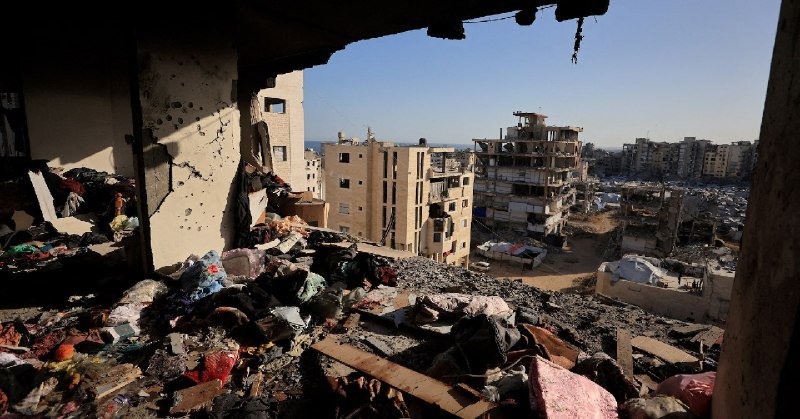
Israeli airstrikes on Nabatieh and Babliyeh on the same day as the castle seizure have compounded the humanitarian pressure on southern Lebanon's civilian population. Nabatieh, a city of roughly 80,000 people before the escalation, has seen repeated displacement since October 2023. The strikes were reported by multiple independent monitoring channels operating in the region, with imagery circulating showing significant destruction in the city centre.
Hezbollah's statement on 31 May characterised the Israeli strikes as massacres, accusing Israeli forces of targeting residential areas without apparent military justification. Israeli officials have not addressed the civilian harm allegations in detail but have maintained that all strikes target Hezbollah infrastructure and that precautions are taken to minimise harm to non-combatants — a standard claim that independent investigators have periodically disputed based on available evidence.
The intensity of the Israeli strikes on Nabatieh appears calibrated, according to regional analysts, to prevent Hezbollah from using the city's proximity to the new Israeli positions as a staging advantage. Whether that logic holds militarily or deepens the conditions for further escalation is a question that events in the coming days will test.
What the Ceasefire Framework Actually Permits
The ceasefire agreement announced in April 2026 was the product of months of back-channel negotiation involving the United States, France, and Lebanese government intermediaries. Its core provisions included a halt to offensive ground operations, Lebanese army redeployment to border towns, and an initial 60-day window for talks on longer-term arrangements. Israel's current advance north of the Litani River sits uncomfortably with those terms, and it is not immediately clear which clause Israeli authorities are invoking as cover.
One reading, advanced by some regional analysts, is that Israel is operating on an expansive interpretation of self-defence provisions embedded in the ceasefire document — arguing that Hezbollah's ongoing rocket fire constitutes a violation that frees Israel from standstill obligations. That interpretation has found some sympathy in parts of the Israeli political and military establishment, but it has not been accepted by the Lebanese government, which has formally protested the advance through diplomatic channels.
The United States, which was a principal broker of the ceasefire, has not issued a direct condemnation of the castle seizure as of the time of this report. State Department spokespeople described the situation as deeply concerning and called for adherence to the ceasefire framework, without specifying what consequences might follow if Israel did not comply. The muted response reflects a broader pattern in the US approach to its Israeli ally — public calls for restraint combined with a reluctance to apply material pressure that might alter behaviour on the ground.
Stakes and What Comes Next
If the Beaufort Castle advance marks the effective end of the ceasefire framework as negotiated, the consequences extend well beyond southern Lebanon. The Lebanese Armed Forces will face an acute dilemma: whether to attempt deployment to areas now controlled by Israel, risking confrontation with a more capable adversary; whether to stay in their current positions and accept the appearance of complicity in Israeli territorial consolidation; or whether to make a formal diplomatic protest that carries little practical weight but preserves a legal record. Each option has costs, and none offers a clear path to stabilising the front.
For Hezbollah, the loss of the castle is a symbolic and operational setback. The group has invested considerable political capital in defending Lebanese territory, and the capture — particularly of a landmark whose name is woven into local memory and anti-colonial resistance narratives — will sharpen internal pressure to respond in ways that go beyond the rocket exchanges recorded so far. Hezbollah's leadership faces a calculation familiar from earlier phases of this conflict: the political cost of seeming to absorb losses without reply, set against the strategic cost of triggering a broader Israeli response that it cannot sustain.
For mediators, the castle's fall is a test of whether the ceasefire framework was ever a genuine floor or simply a device to manage the pace of escalation while each side consolidated advantages. The answer will come in whether there is any mechanism left — diplomatic, economic, or security — that can compel a return to the terms as originally understood, or whether the advance simply sets a new baseline that the international community eventually accepts as fait accompli.
The sources do not provide sufficient detail on whether the ceasefire text includes explicit provisions for operations north of the Litani, nor on whether Israeli officials have made formal representations to Washington or Paris explaining their legal justification. Those are the questions that will determine whether the ceasefire is a dead letter or merely wounded.
Wire provenance
This editorial synthesis draws on the following public wire/social posts:
- https://t.me/thecradlemedia/
- https://t.me/wfwitness/
- https://x.com/reuters/status/1920173847730487354