The Loneliness of Vladimir Putin
Russia's President returned from Beijing in May 2026 nursing frustration with a relationship that has never delivered what Moscow needed. The $26 billion reportedly allocated to life-extension research tells a story about what the Kremlin actually fears.
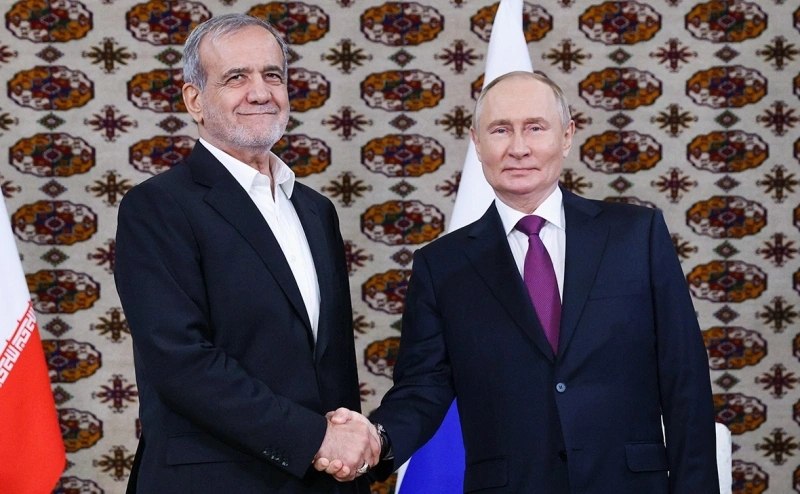
When Vladimir Putin descended the steps of his aircraft in Beijing in May 2026, the diplomatic choreography suggested a relationship at its zenith. Chinese state media produced the familiar imagery: firm handshakes, joint declarations, synchronized geopolitical messaging against a Western order both governments publicly describe as in terminal decline. But according to reporting from Nikkei Asia, the Russian President departed the Chinese capital carrying quiet frustration and a sense of disappointment that the optics of the visit had done nothing to resolve.
The visit landed at a moment of acute paradox in Moscow's position. On the battlefield in Ukraine, the Russian armed forces have demonstrated capacities that Western analysts repeatedly underestimated. The grinding advance across the Donetsk plain, the retention of gains across a wide swathe of occupied territory, the revival of the Russian defence-industrial base after the shock of 2022 sanctions — all of this tells a story of resilience that confounded the early consensus. Russia is militarily stronger in 2026 than it was in February 2022, measured in the currency that matters most to the Kremlin: territorial control and the ability to hold it.
And yet the structural position of the Russian state, measured across the dimensions that determine long-term power, has never looked more precarious. Demography delivers a verdict that no amount of battlefield success can commute: a population in sustained contraction, a gender imbalance that war has worsened, a pyramid of economic dependency that will impose compounding costs across the coming decades. The economy runs hot, sustained by a wartime mobilisation apparatus that has redefined what a modern command economy looks like in the twenty-first century — not the centralised planning of the Soviet era, but a distributed network of state contracts, sanctions circumvention, and commodities leverage that keeps the fiscal lights on while hollowing out everything else.
What Putin brought back from Beijing was the confirmation of a problem his diplomats have been trying to solve since the first shockwaves of Western sanctions arrived in 2022. Russia needs things it cannot easily source: advanced semiconductors, industrial biotechnology, the downstream engineering capabilities that underpin a modern economy. China has those things. China's companies have, at various points, filled some of the gaps. But Beijing has never been willing to provide them at the scale, the speed, or the terms that Moscow's structural vulnerability demands. The relationship is real, but it is not a partnership of equals — and the asymmetry has become more, not less, pronounced as Russia's position has deepened.
The Biography of a Besieged Mind
Reporting from Polymarket in late May 2026 surfaced a figure that has become the subject of intense discussion in Western intelligence and policy circles: an allocation of approximately $26 billion reportedly directed toward life-extension research, including gene therapy programmes, xenotransplantation from pig-grown organs, and 3D-printed tissue engineering. The sources for that figure have not been independently corroborated by Monexus at the time of publication, and the number itself invites scepticism — both about its accuracy and about the premises underlying the reporting.
The interest in longevity science is not new for Putin. His public statements over the past decade contain references to the demographic catastrophe that depopulation would impose on Russian state power. He has spoken about the need to extend healthy life years. He has taken visible interest in the work of Russian scientists operating in this space. Whether the budget figure is accurate or not, the thematic priority is consistent with what Putin has said publicly about Russia's future, and it maps onto a pattern visible across several authoritarian systems in the current era, where regime security increasingly intersects with questions of biological permanence.
The interpretation that Western agencies find most alarming is not necessarily the most coherent one. The image of a leader obsessed with personal immortality is a compelling narrative, and it fits neatly into existing frameworks about how authoritarian systems accumulate pathologies at the apex. But a more structurally grounded reading points in a different direction. When a state faces a demographic collapse whose trajectory is measurable across decades, and when that state also possesses the fiscal capacity — however constrained — to direct resources toward reversing that trajectory, the investment in biomedical science is not irrational. It is, in cold terms, a calculation about which variables can be modified and which cannot.
The distinction matters because it reframes the political economy of the decision. A leader genuinely consumed by personal survival would invest in guards, in palace infrastructure, in loyalty mechanisms. A leader making a rational allocation of scarce resources toward a national priority would invest in the one domain — human biological capital — where a breakthrough would change the arithmetic of Russian state power across the entire forecast horizon. The Putin who reportedly allocated $26 billion to longevity research is not necessarily a man terrified of death. He may be a man who has looked at the numbers and concluded that Russia's long-term position depends on solving a problem that markets and liberal democratic states have proven no better at solving.
A War Economy in Search of a Peace Dividend
Russia's battlefield performance in the third year of what the Kremlin still refuses to call a war has confounded the predictions of Western military analysts who, in 2022 and again in 2023, expected systemic collapse. The sanctions architecture designed to degrade Russian defence production produced real effects — the initial degradation of precision-guided munitions, the destruction of supply chains for advanced electronics — but the system adapted in ways that planners had not modelled. New production facilities came online. North Korean artillery rounds plugged the ammunition gap. Iranian drones replaced the precision weapons that sanctions had made unaffordable. Chinese-manufactured dual-use components filtered through Central Asian transit routes to feed a defence-industrial ecosystem that proved far more resilient than the initial framework assumed.
The costs of that resilience are not fully visible in the headline economic data. Russia's GDP statistics look better than expected on a nominal basis; the energy export revenue that was supposed to crater has found alternative buyers; the rouble, despite wild swings, has stabilised in a range that the central bank defends with aggressive interest rate policy. But these headline numbers obscure a structural distortion that is reshaping the economy in ways that will outlast any ceasefire. A significant fraction of Russia's most productive industrial capacity — engineers, factories, logistics networks — has been redirected toward war production. The civilian economy is not collapsing, but it is not recovering either. It is static, waiting for an outcome that would allow demobilisation of the economy's wartime configuration.
That demobilisation cannot happen while the front lines hold in their current position. Russia cannot shift back to a civilian growth model without first securing an outcome that justifies the financial and human costs incurred to achieve it. And the position it currently holds — broad territorial gains across four Ukrainian oblasts, a claimed annexation that the international community does not recognise — is not a stable resting point. It is a commitment that demands ongoing military expenditure, ongoing sanctions pressure, and ongoing political management of a domestic population that has been told this war is existential and therefore cannot be ended.
The Partner Who Will Not Deliver
The visit to Beijing in May 2026 was, at one level, a routine exercise in diplomatic reaffirmation. Russia and China have deepened their institutional cooperation across multilateral bodies that the United States and its allies regard with varying degrees of hostility — the Shanghai Cooperation Organisation, the BRICS grouping expanded to include new members from the Global South, the various energy and infrastructure agreements that form the substrate of bilateral trade. The alignment is real. It is not, however, the alignment Moscow wanted.
What Russia sought from China was something closer to a technology partnership — the transfer of capabilities that would reduce Russian dependence on Western supply chains, the investment in Russian infrastructure that would modernise the civilian economy, the financial architecture that would allow Russian sovereign assets to function in a non-dollar system. What Russia received was a commercial relationship in which China holds most of the leverage. Chinese companies are willing to sell manufactured goods, to buy Russian energy, to participate in projects that serve Chinese interests. The transfer of dual-use technology that would meaningfully alter Russia's position — the advanced semiconductors, the industrial biotechnology, the precision manufacturing equipment — has proceeded at a pace that suits Beijing's strategic interest, not Moscow's structural need.
This is not a mystery to the Russian leadership. Chinese officials have been consistent in describing their approach to the partnership in terms that are diplomatically correct but strategically self-interested. China does not need Russia to be strong; it needs Russia to be a useful counterweight to Western pressure, a large neighbour whose predicament distracts American strategic attention, and a market for Chinese goods at a moment when other export destinations are being restricted. These are legitimate interests. They are not the interests of a ally committed to the survival of the Russian state.
The frustration Putin carried out of Beijing is the frustration of a leadership that has made a deliberate strategic bet — on the decline of the Western-led order, on the emergence of a multipolar system in which Russia occupies a great-power seat — and is discovering that the bet has costs that were not fully priced in the original calculation. The partnership with China has delivered something. It has not delivered what was promised.
What the Quiet After Beijing Means
The geopolitical narrative that dominated Western policy circles through 2023 and 2024 — the expectation that Russian economic pressure would eventually force a negotiated settlement on terms acceptable to Kyiv and its Western backers — has not played out as predicted. The Russian state proved more durable than expected. The Western support architecture proved less decisive than hoped. The frontline has stabilised in a configuration that neither side can easily alter through purely military means. And the global context — a United States navigating internal political turbulence, an European Union managing the political fallout of prolonged economic strain, a Global South that has not aligned with either side in the binary terms the conflict's architects imagined — has produced something closer to a frozen ambiguity than a decisive outcome.
Into that ambiguity, the reported allocation of $26 billion to longevity research introduces a data point that deserves more attention than it has received in the mainstream framing. It suggests a leadership that is not planning for an early exit from the current trajectory. It suggests an investment horizon measured in decades, not electoral cycles. And it suggests that the central fear of the Russian leadership — the thing that shapes strategic calculus at the highest level — is not the battlefield, which has been managed, or the sanctions, which have been adapted to, but the long-term erosion of the human capital that underpins any state's capacity to exercise power.
The alternative reading — that this is the biography of a man increasingly disconnected from reality, spending state resources on the fantasies of a besieged mind — is not implausible. Authoritarian systems do accumulate pathologies at the apex. The isolation of supreme leadership from honest counsel is a documented feature of systems where accountability is personal and dissent is dangerous. But even that reading does not alter the structural analysis. A Putin making irrational investments in personal survival would still be governing a state whose demographic trajectory is measurable, whose economic model is dependent on a war it cannot afford to end, and whose most important partnership is with a country that has every incentive to keep it dependent.
The silence after Beijing tells its own story. Russia is not weaker in the way that matters most to a leader who wants to hold what he has taken. It is weaker in the ways that compound quietly over decades — in the number of children not being born, in the infrastructure not being maintained, in the science not being done at the pace required to reverse the trend. The $26 billion reportedly directed at solving that problem may or may not produce results. But it is a more accurate measure of what the Kremlin fears than any of the public announcements made during a state visit that produced no breakthrough and left a President quietly nursing frustration with a partnership that has never been what he needed it to be.
This publication covered the Beijing visit as a story about asymmetric partnership dynamics and their consequences for Russian long-term power, rather than as a bilateral diplomatic success story. The $26 billion longevity figure is reported from sources that have not been independently verified by Monexus; it is treated here as a significant data point warranting analysis rather than confirmed fact.
Wire provenance
This editorial synthesis draws on the following public wire/social posts:
- https://t.me/nikkeiasia/10842
- https://x.com/polymarket/status/1923456789012345678