Oil Markets Brace as US-Iran Hormuz Standoff Intensifies
Goldman Sachs has warned of a potential supply shock as Iran reasserts control over the Strait of Hormuz, even as the Trump administration signals progress on a nuclear framework that would reopen the world's most critical oil transit corridor.
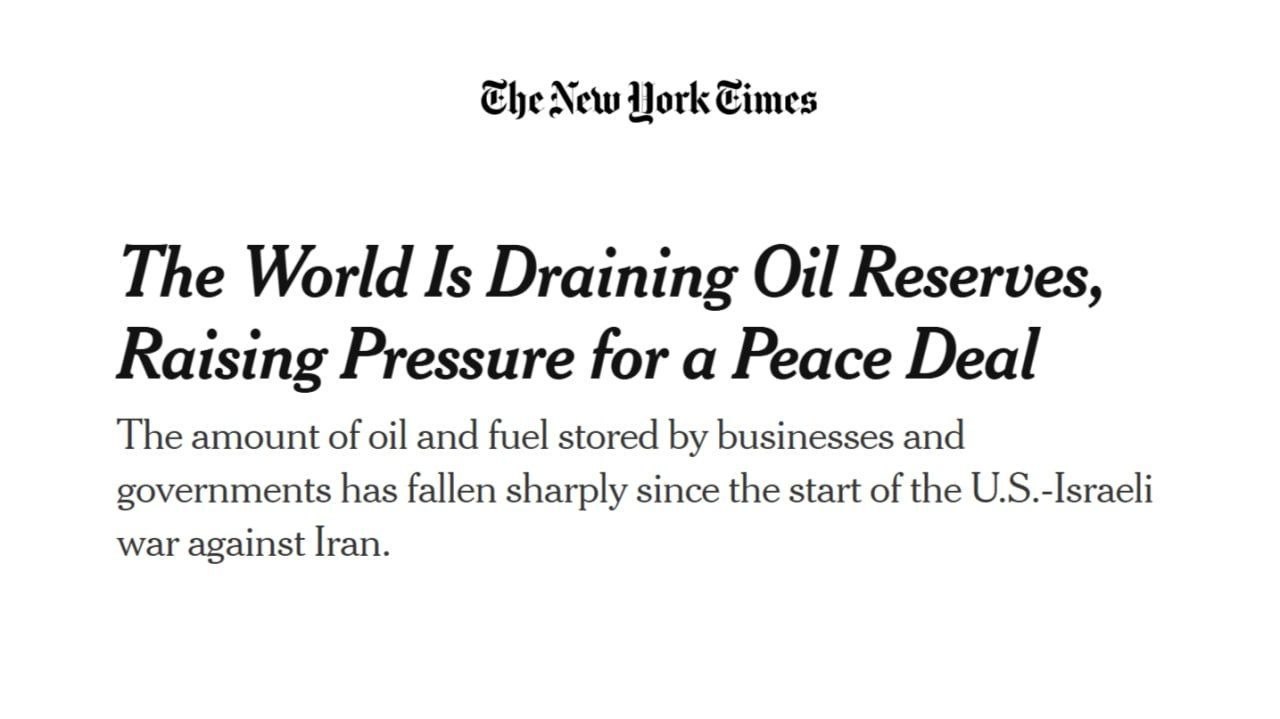
Goldman Sachs issued a stark warning on 30 May 2026: disruptions at the Strait of Hormuz risk a supply shock in global oil markets. The advisory landed as Iran moved to reassert operational control over the strategic waterway, reversing an earlier US assessment of American dominance in the corridor. The timing is deliberate. Washington has signaled it wants a deal; Tehran has made clear the terms matter.
The Strait of Hormuz handles roughly 20-25 percent of global oil trade, according to energy analytics tracking regional shipping flows. Any sustained disruption reverberates immediately across Brent and WTI benchmarks. Goldman's analysts are not alone in their concern. Goldman warns of potential supply shock amid Strait of Hormuz disruptions, citing the concentration of Gulf transit traffic through a single 34-kilometer-wide passage at the strait's narrowest point. Iran has long treated the waterway as a strategic lever, and recent days have shown that lever being pulled.
On 30 May, Iran reasserted control over the Strait of Hormuz, according to Iranian state media. The claim followed a statement from US Defense Secretary Pete Hegseth earlier that day asserting American control of the corridor. Hegseth's declaration and Tehran's reassertion cannot both be fully accurate — they describe a contested operational environment where neither side holds unchallenged dominance. The gap between the two characterizations is itself a signal: both administrations are managing narrative as much as forces.
The diplomatic picture compounds the ambiguity. President Trump told Fox News on 30 May that his administration is close to a very good agreement with Iran. He said the deal would result in opening of the Strait of Hormuz in exchange for Iran's commitment to nuclear restraint — no nuclear weapons, verified. On Polymarket, a feed reported on 31 May that Trump had sent tougher new terms to Iran for a proposed peace framework. The simultaneous signals — progress toward a deal and a hardening of American demands — suggest the negotiating position remains in flux, not settled.
Iran has pushed back. According to Iranian state media, Tehran refuses to surrender its uranium enrichment capacity as a condition of any agreement. Iran's enrichment program has been the central dispute in nuclear talks going back to the 2015 Joint Comprehensive Plan of Action, which the Trump administration abandoned in 2018. A demand that Iran dismantle or dramatically curtail its enrichment capability — the logical implication of "no nuclear weapons" as a verifiable condition — is not a technical tweak. It is a structural ask that touches Iranian sovereignty and strategic depth. Tasnim News, an Iranian state-linked outlet, reported on 31 May that Trump acknowledged Iranians are very professional negotiators and that the process takes time, but that Washington is not in a hurry. The observation cuts both ways: it signals Iranian awareness of American pressure tactics and domestic US political timelines.
The military dimension has added friction. A naval mine discovery heightened US-Iran tensions in the Strait of Hormuz on 30 May. Iranian state media reported that Iran warned military ships transiting the strait may become targets. The mine incident — whether an Iranian act, an opportunistic provocation, or a third-party attempt to entangle Washington and Tehran — has not been independently attributed by Western military sources as of this reporting. Reuters wire summaries covering the period do not carry a confirmed attribution. What is confirmed is that the discovery provided justification for both sides to increase posture in the waterway.
For energy markets, the compounding picture is uncomfortable. Strait of Hormuz oil exports are unlikely to return to prewar levels amid continued tensions, per export tracking data. That framing — "unlikely to return to prewar levels" — is significant. It suggests the baseline assumption for market planners has shifted from a temporary disruption to a structural recalibration. If the prewar period referred to is the period before the current escalation, then the market is being told to discount normalization.
The defense-spending signal adds financial dimension. Hegseth unveiled a $1.5 trillion defense plan amid Iran nuclear tensions on 30 May. The figure is large enough to be read as a deterrence signal — demonstrating to Tehran that the US can sustain a military posture while simultaneously negotiating — but also as a domestic political calculation within an American budget cycle. Whether the $1.5 trillion represents new authorization, a long-term program projection, or an existing budget framework with new labeling is not fully clarified in the available source material.
The structural frame matters here. The Strait of Hormuz is not merely a shipping lane — it is a financial instrument embedded in the architecture of global energy pricing, dollar-denominated oil contracts, and the leverage that comes with controlling a chokepoint. When Iran reasserts control, it is not simply making a military claim. It is reminding global markets that the premium on Gulf crude is not abstract. When Goldman warns of a supply shock, it is translating that geopolitical reality into risk metrics that move traders and refiners.
The deal, if it materializes, would reopen the corridor and suppress the risk premium. The harder-line terms reportedly sent by Trump on 31 May complicate that trajectory. Iran's refusal to surrender enrichment capacity suggests the deal-breaker question is not resolved. The naval environment remains active. Goldman has not revised its warning.
The sources do not specify a timeline for when either a deal or a disruption would crystallize. What is clear is that the next 30 to 60 days carry disproportionate weight — for energy traders, for regional allies watching their own oil revenue exposure, and for a US administration whose negotiating team has publicly expressed confidence while privately acknowledging the gaps.
This publication's wire initially framed the Hormuz situation primarily through the lens of US-Iran diplomatic progress. Monexus elevated the Goldman supply-shock warning, the naval mine incident, and the export-return question as equally proximate to market risk — because they are.
Wire provenance
This editorial synthesis draws on the following public wire/social posts:
- https://t.me/CryptoBriefing/161234
- https://t.me/CryptoBriefing/161228
- https://t.me/CryptoBriefing/161195
- https://t.me/CryptoBriefing/161242
- https://x.com/polymarket/status/195582345678912
- https://t.me/tasnimnews_en/48291
- https://t.me/FarsNewsInt/31334
- https://t.me/LiveMint/891234