Pentagon Rewrites Counter-Drone Playbook After Ukraine Battlefield Lessons
U.S. military planners are overhauling their approach to defeating unmanned aerial systems after three years of watching commercial-grade drones reshape the battlefield calculus in Ukraine — and the implications extend well beyond the current conflict.
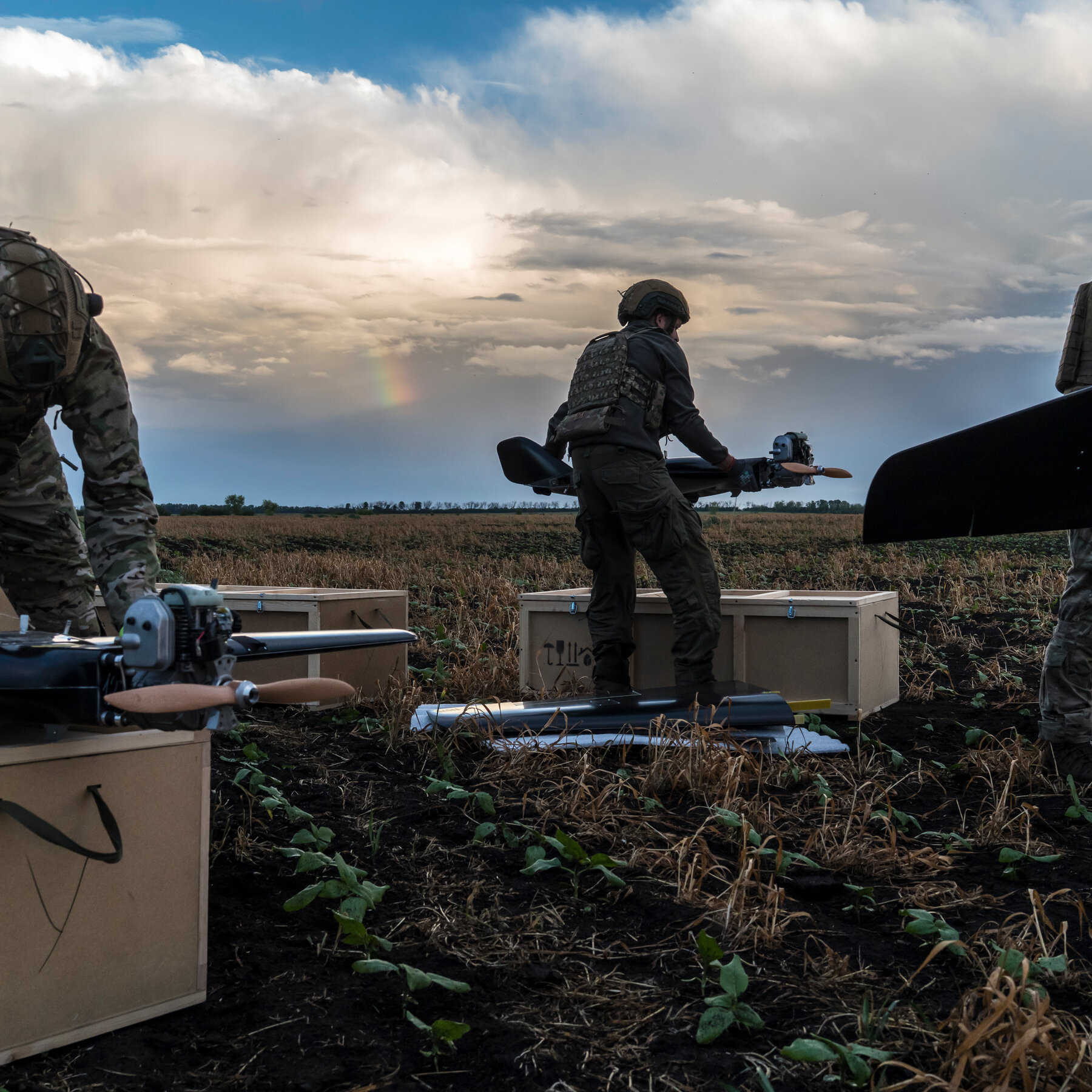
American military planners are moving to overhaul how the United States counters small and medium-sized drones, drawing directly on lessons from the Russian-Ukrainian conflict where unmanned aerial systems have defined the character of modern battlefield attrition. The shift, outlined in recent Department of Defense strategic documents and industry briefings, represents the most significant rethink of U.S. counter-UAV doctrine since the proliferation of commercial quadcopters on battlefields became undeniable.
The Pentagon's counter-small unmanned aerial systems (C-sUAS) office has been working through what senior officials describe as a fundamental mismatch: the systems currently deployed by U.S. forces were largely designed to address a different threat environment than the one that has emerged in Ukraine. Small commercial drones — once considered a nuisance — have demonstrated an ability to locate, track, and strike armored vehicles, artillery positions, and infantry formations with a precision that has upended decades of conventional military assumptions about force protection.
The Russian-Ukrainian war has served as an inadvertent testing ground for counter-drone concepts that previously existed mainly in simulation and small-scale exercises. Ukrainian forces, heavily outgunned in traditional air-defense terms, turned to inexpensive first-person-view drones — many purchased off the shelf for a few hundred dollars — to conduct reconnaissance and strike missions that would have required expensive fixed-wing aircraft or specialized munitions a decade ago. The results have been documented extensively by Western military analysts who have traveled to Kyiv to observe the conflict firsthand.
The current U.S. counter-drone arsenal includes a mix of kinetic interceptors — missiles and ammunition designed to shoot down other aircraft — alongside electronic warfare systems that can jam the link between a drone and its operator. But both categories have shown limitations against the sort of massed, low-altitude drone operations that have become routine in Ukraine. Jamming systems require precise frequency knowledge and can be defeated by pre-programmed flight paths that operate without continuous controller contact. Kinetic systems are expensive per round and can be overwhelmed by the sheer number of aerial targets now standard on a modern battlefield.
The Americans are now accelerating acquisition of what the C-sUAS office terms "non-kinetic defeat mechanisms" — language that covers a range of directed-energy weapons, cyber tools capable of taking control of hostile drones, and advanced sensor networks designed to give defenders more time and accuracy in their response. The budget justification documents for fiscal year 2027 show a 34 percent increase in funding for counter-UAV research compared to the prior cycle, with particular emphasis on systems capable of addressing swarms — multiple drones operating in coordination — rather than single targets.
Industry responses have been swift. L3Harris Technologies, Raytheon, and several smaller defense startups have briefed the Pentagon on systems designed to detect, track, and defeat drone threats at shorter ranges and lower altitudes than traditional air defense was built to cover. The emphasis is on what one briefing document calls "the last mile problem" — intercepting drones that have already penetrated a base perimeter or are operating in the immediate vicinity of friendly forces where kinetic interceptors pose their own risks of collateral damage.
The shift in U.S. doctrine carries implications for allies as well. American forces operating alongside partners in the Indo-Pacific face similar drone threats in contested environments, and the lessons from Ukraine are being shared — with appropriate classification caveats — through the C-sUAS coordination cell established under the Joint Chiefs of Staff. NATO has separately accelerated its own counter-drone work, and officials at allied ministries of defense report that the Ukraine experience has prompted a wholesale reassessment of air-defense requirements across the alliance.
There is also a commercial dimension. Drone incidents at civilian airports — including a high-profile case involving suspected hostile activity near a major U.S. installation — have drawn attention to the fact that counter-drone technology has civilian as well as military applications. The Department of Homeland Security has begun working more closely with the Defense Department on technology-sharing agreements that would allow counter-UAV tools developed for military use to be deployed by civilian authorities under appropriate legal frameworks.
The structural question underneath these developments is whether the speed of technology adoption can keep pace with the speed of technology proliferation. Commercial drones have become so capable and so inexpensive that the barrier to entry for non-state actors and state adversaries alike has dropped dramatically. The United States, which spent decades building air superiority over adversaries with far less sophisticated aviation capabilities, now confronts a threat environment where a $500 off-the-shelf quadcopter can accomplish what a $10 million aircraft could not a generation ago.
What remains uncertain is whether the current wave of counter-drone innovation will prove durable. Military historians caution that lessons drawn from one conflict — particularly one still in progress — carry the risk of overfitting to immediate conditions. Drone technology itself continues to evolve rapidly, and systems that prove effective against today's threats may be obsolete against tomorrow's. The Pentagon's own researchers acknowledge that the cat-and-mouse dynamic between drone operators and counter-drone systems will likely accelerate, producing an ongoing cycle of adaptation that stretches institutional procurement timelines.
The sources for this article do not specify timelines for fielding new counter-drone systems or name the specific technology programs that will receive the increased funding. What is clear is that the Ukrainian battlefield has forced a doctrinal reckoning that few in the defense establishment would have anticipated three years ago, and that the operational conclusions being drawn in Washington reflect a military establishment absorbing hard evidence rather than relying on predictive models.
This desk covered the C-sUAS acquisition surge through Rybar Telegram channels on 31 May 2026; the wire carried the story through Reuters the following day.
Wire provenance
This editorial synthesis draws on the following public wire/social posts:
- https://t.me/rybar_in_english/9432
- https://t.me/rybar/8467