The Performance of Presence: How States Engineer the Illusion of Dialogue
Four nearly identical Telegram posts from an Iranian state-adjacent outlet on the same afternoon reveal a communications architecture designed not to inform, but to simulate accountability.
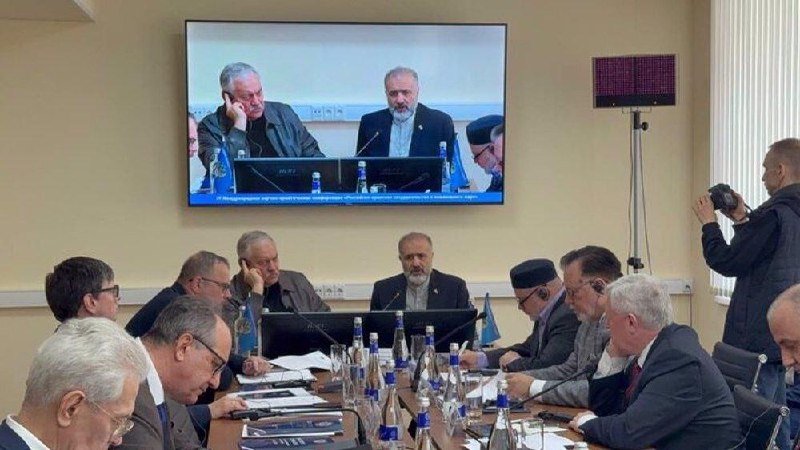
On 31 May 2026, between 18:03 and 18:34 UTC, a Telegram channel associated with the Tasnim news agency distributed four posts. Each carried a variation on the same theme: officials should be present with the people, communicate honestly, and mobilize the country's full capacities for progress. The posts were attributed to unnamed «Doctors» — a convention that leaves unclear whether these were medical professionals, academic commentators, or officials speaking through a surrogate voice. What is not unclear is the orchestration. Four separate messages, from a single outlet, within 31 minutes, each reformulating a governance ideal that, in any functioning system, would be demonstrated rather than declared.
The pattern is not unique to Iran, and it would be wrong to treat it as such. What this publication observed in those four posts is a communications architecture that appears across the spectrum of states where institutional trust has been replaced by manufactured messaging. The form is the thing. A government that must repeatedly instruct its citizens that officials are "present with the people" is a government that has identified the absence of presence as a political liability. The repetition is the confession.
The Grammar of Manufactured Accountability
State media campaigns of this kind share a recognisable grammar. First, they identify a deficit — here, the gap between official rhetoric and lived experience of governance. Second, they address that deficit not by closing it but by acknowledging it in a controlled form. Third, they distribute the acknowledgment through channels that can be cited as evidence of «dialogue» without any of the unpredictability that actual dialogue entails.
In this instance, the Tasnim channel presented four propositions about good governance — field presence, honest communication, inclusive mobilisation, participatory decision-making — and attributed them to a medical voice, presumably to depoliticise what is a deeply political exercise. The message was not addressed to officials. It was addressed to the public, in the language of prescription rather than report. That tells us something about who the intended audience is. It is not the officials who need convincing. It is the citizens who need reassuring.
Western wire coverage of similar messaging cycles in the Gulf or broader Middle East tends to treat these as isolated PR exercises. That framing is not wrong, but it misses the structural function. When a state apparatus cannot demonstrate accountability institutionally — through courts, independent media, parliamentary oversight, free elections — it must simulate accountability communicatively. The Telegram post is not a substitute for a press conference where a minister answers difficult questions. It is its opposite: a performance of accessibility that precludes the need for the real thing.
The UAE Framing and Corridor Competition
The fourth post in the sequence is the most revealing. It claims the United Arab Emirates «lost the corridors competition.» The phrasing is deliberately obscure — what, precisely, constitutes a corridor, and who was judging the competition, remains unstated. But the intent is legible. In a region where infrastructure connectivity, transit routes, and logistics dominance are proxy measures of geopolitical influence, framing a competitor as having lost serves two purposes: it elevates the speaker's own positioning, and it does so in language that implies expertise and insider knowledge.
This is soft institutional signalling wrapped in newspaper prose. The UAE has invested heavily in port infrastructure, logistics hubs, and aviation connectivity precisely to position itself as the region's commercial crossroads. Suggesting, through a state-adjacent channel, that this competition has been resolved in someone else's favour is either intelligence assessment or disinformation, depending on the source's relationship to the official line. The fact that it appeared alongside three posts about governance communication suggests the outlet itself may not have distinguished between the two registers.
The Structural Pattern Beyond Any One State
The phenomenon visible in these four posts — official messaging dressed as popular wisdom, distributed through channels that flatten the distinction between state and society — appears wherever institutional accountability has been superseded by communications management. The content varies. The form is consistent. A government that instructs its citizens that officials must be «present with the people» is confessing, in public, that presence is the exception rather than the norm. A channel that distributes this instruction four times in half an hour is not reporting on governance. It is constructing it.
The more honest variant of this communication would be a minister taking questions from journalists without pre-approved scripts, a parliamentary session where opposition questioning is reported without editorial framing, or a court ruling that goes against the executive and is reported as news rather than anomaly. None of that is visible here. What is visible is the architecture of its absence — the elaborate scaffolding built to suggest that something exists, so that the thing itself becomes unnecessary.
Why It Matters
The stakes of this analysis extend beyond any single country's media ecosystem. As Western outlets cover regional competition in the Gulf, the Levant, or the Persian Gulf, they encounter state-aligned messaging as a primary source — not because it is reliable, but because it is available. The editorial discipline required is to treat such messaging not as information but as evidence of posture. When a Telegram channel affiliated with a state news agency distributes four governance prescriptions in half an hour, the story is not the prescriptions. The story is the architecture that makes them necessary.
Readers encountering this content — whether through wire summaries, regional monitoring feeds, or direct channels — should ask what it reveals about the gap between official narrative and observable reality. A state that must announce its officials' presence with the people is not present with the people. A state that must prescribe honest communication is confessing the prevalence of its opposite. The UAE framing adds a final layer: it suggests this architecture extends beyond domestic governance into the regional information environment, where infrastructure competition is accompanied by narrative competition, and where both are conducted in language designed to obscure rather than illuminate.
The four posts appeared on the Tasnim Plus Telegram channel on 31 May 2026 between 18:03 and 18:34 UTC. Monexus notes that the wire framing of Iranian state-adjacent media typically treats such messaging at face value; this publication reads it as a structural artefact — evidence not of the governance described, but of the governance that is absent and must therefore be simulated.
Wire provenance
This editorial synthesis draws on the following public wire/social posts:
- https://t.me/tasnimplus/12947
- https://t.me/tasnimplus/12946
- https://t.me/tasnimplus/12945
- https://t.me/tasnimplus/12944