The Polymarket Paradox: Why Beijing's Trade Threats and Markets Are Saying Different Things
As traders bet heavily on a US-China tariff ceasefire by year-end, Beijing's vow of 'resolute retaliation' against European restrictions exposes a structural gap between market optimism and diplomatic reality.
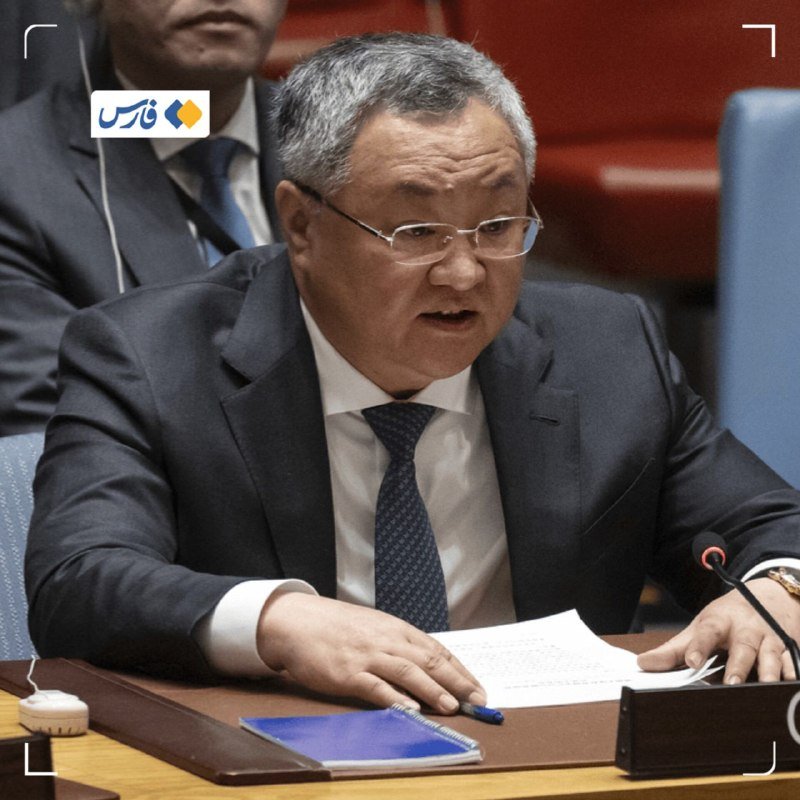
The Polymarket event going live on 30 May 2026 asked a deceptively simple question: will there be a US-China tariff agreement by 31 December? Traders assigned that outcome a 79 percent probability within hours. By 07:38 UTC on 31 May, Beijing had answered with a different kind of clarity. China's commerce ministry stated it would "resolutely" retaliate if the European Union imposed new trade restrictions. The market said deal; the foreign ministry said consequences. These are not contradictory signals. They are both true simultaneously, and that contradiction is the story.
The gap between market pricing and diplomatic posture reveals something structural about how great-power trade conflicts actually work. Prediction markets aggregate information about incentive compatibility—about whether both sides have enough to gain from a deal that it will eventually happen. Beijing's threat of retaliation against European measures does not foreclose a US-China agreement. It may be precisely the kind of pressure that makes one more likely.
The EU Pressure Point
Beijing's targeting of European trade restrictions is not random. The EU has been moving toward new tariffs on Chinese electric vehicles, solar panels, and battery components since 2023, and those measures have progressively tightened. If the United States succeeds in pressuring European partners to adopt a more coordinated stance toward Chinese industrial overcapacity—something Washington has sought since the early stages of the tariff war—Beijing loses a critical arbitrage opportunity. Right now, EU tariffs on Chinese EVs run well below the equivalent US rates. That gap is a commercial asset. Coordinated Western action would close it.
The "resolute retaliation" language is calibrated for European capitals that remain reluctant to fully align with Washington on China policy. Germany, in particular, has significant export exposure to the Chinese market and has consistently argued against aggressive trade measures. Beijing's threat is aimed partly at Berlin, partly at Brussels, and partly at the broader question of whether Europe will act as a bloc or fragment under bilateral pressure. The message is: the moment you move against us, we move against you. That is not the language of someone preparing to capitulate. It is the language of someone preparing to negotiate from a position where every flank is defended.
What the 79 Percent Actually Means
Prediction market odds are not forecasts. They are liquidity-weighted assessments of probability by participants who have skin in the game. The 79 percent on a US-China tariff agreement by year-end reflects several embedded assumptions: that both sides have exhausted the utility of maximum-pressure tactics, that domestic economic constraints in both Washington and Beijing create incentives to declare victory and move on, and that the structural costs of sustained tariff warfare outweigh the political benefits of appearing tough. Those assumptions are not unreasonable. US exports to China remain well below 2020 levels. Chinese manufacturing capacity for export-facing sectors has not meaningfully contracted. Both governments face domestic constituencies—American farmers, Chinese manufacturers, the financial centres that intermediate between them—for whom a ceasefire has dollar value.
But the 79 percent also prices out a specific scenario: that Beijing's threats are performative, that the retaliation language is designed to extract a better deal rather than prevent one, and that the underlying incentive structure makes agreement inevitable. That reading is plausible. It is also the reading that has been made before every failed trade negotiation of the past decade, and it has been wrong before.
The Structural Tension
The paradox at the centre of this story is that the same characteristic that makes a deal likely also makes it unstable. Both Washington and Beijing benefit from a ceasefire in the abstract. But the political economy of trade conflict rewards escalation in the short term and punishes concessions. Each side knows that the other side knows this. That creates a dynamic where agreement is perpetually one negotiation away and perpetually subject to reversal if either side reads weakness in the other's position.
Beijing's retaliation vow against European measures is, in this context, a signal of coherence rather than aggression. It says: we are not going to be isolated, we are not going to be picked off bilaterally, and any coalition formed against us will face costs. That is the language of someone who wants a deal on their terms, not a surrender dressed as a negotiation. The market may be right that a deal comes. But the market may be underpricing the possibility that the deal Beijing signs looks very different from the deal Washington expects.
The Honest Uncertainty
What the sources do not establish is whether Beijing's threat of "resolute retaliation" against EU measures was a direct response to specific European proposals already in motion, or a forward-positioned statement designed to shape the negotiating environment before any formal EU action. The timing—Beijing's statement arriving the morning after the Polymarket event went live—may be coincidental. It may not be. That distinction matters for assessing whether the threat is reactive (and therefore containable) or proactive (and therefore structural). The sources do not specify which EU restriction proposals Beijing was responding to, or whether the retaliation language referred to specific sectors or was deliberately unspecified. Until that specificity is available, the threat and the market odds coexist in a zone of genuine ambiguity.
The 79 percent probability on a year-end agreement is either a sound assessment of incentive compatibility or a market consensus that is pricing comfort over complexity. Beijing's vow of resolute retaliation suggests the latter. Markets have been here before—pricing resolution, betting on deals, and watching negotiations collapse over exactly the kind of unverifiable signals that characterise this moment. The honest position is that a ceasefire is plausible, that both sides have structural reasons to want one, and that neither the market odds nor the diplomatic language should be taken at face value. The truth is that nobody knows, and the 79 percent is not a substitute for that admission.
What is clear is that the space between market optimism and government posturing is where the actual negotiation happens. Beijing is playing in that space deliberately. Whether traders are reading it correctly is a separate question—one that December will answer.
Wire provenance
This editorial synthesis draws on the following public wire/social posts:
- https://x.com/polymarket/status/1954684321848492101
- https://x.com/unusual_whales/status/1954416183578403333