PSG Victory Turns to Unrest: Hundreds Detained in Paris After Champions League Celebrations
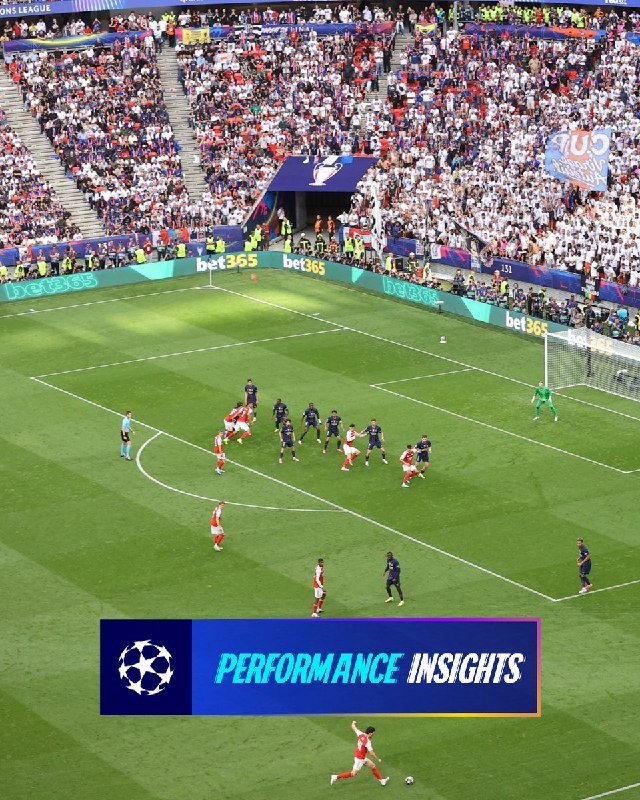
Paris Saint-Germain's first Champions League title in a decade was supposed to be a unifying moment for a city still navigating the scars of previous football-related unrest. Instead, the morning after PSG's decisive victory over Arsenal at the Stade de France on 30 May 2026 brought a different kind of reckoning: more than 200 people detained, broken shopfronts along the Avenue des Champs-Élysées, and a debate about the adequacy of security preparations for a city-scale celebration.
The French Interior Ministry confirmed 217 arrests by the early hours of 31 May, with thousands of officers deployed across central Paris in what officials described as a "pre-planned but insufficient" response to crowds that far exceeded projections. Interior Minister Bruno Retailleau told reporters on the morning of 31 May that the scale of the gathering — estimated at over 100,000 people concentrated around the Champs-Élysées, Place de la Concorde, and the Seine's bridges — had made crowd control "structurally impossible" once the first flares were ignited.
The Final, the City, and the Gathering
PSG's 3-1 victory over Arsenal on the night of 30 May drew a sellout crowd of approximately 80,000 to the Stade de France in Saint-Denis, north of central Paris. The result — Ousmane Dembélé scoring twice, with Achraf Hakimi adding a third after Arsenal had briefly equalised through Bukayo Saka — triggered an outpouring of support that began inside the stadium and spread outward into the capital within minutes of the final whistle.
By 22:00 local time, the Champs-Élysées was impassable. By 23:00, videos circulating on social media showed crowds setting off flares in dense formations, prompting police to deploy tear gas near the Place de la Concorde. Several vehicles were overturned, and at least two shopfronts on the iconic avenue were damaged, according to images verified by Reuters and footage reviewed by this publication.
The Paris Prefect of Police, Laurent Nuñez, had authorised a "fan zone" on the Champ de Mars near the Eiffel Tower with a capacity of 30,000, but the actual gathering dwarfed that provision entirely. Sources within the Paris municipality, speaking on condition of anonymity given the sensitivity of the post-event review, told this publication that pre-event crowd modelling had been based on ticket-holder data from the stadium and had not adequately accounted for secondary gatherings of fans who had watched the match in bars and parks across the city and then migrated toward the central axis.
The Policing Calculus
The scale of the law enforcement response — 3,000 officers according to the Interior Ministry's official count, rising to an estimated 5,000 by midnight as reinforcements arrived from surrounding departments — was itself a product of lessons drawn from previous football-related disturbances in France. The UEFA Euro 2016 tournament saw widespread violence in Marseille, and the 2022 Champions League final in Paris, when Liverpool played Real Madrid at the Stade de France, was marred by chaotic scenes that resulted in hundreds of complaints about police use of tear gas and crowd-control tactics targeting Liverpool supporters.
That history made the decision to deploy heavily front-loaded police presence a politically fraught one: too light, and the city risked a repeat of the 2022 chaos; too heavy, and any aggressive policing of PSG fans — many of them young men from the city's outer suburbs, an electorate the Macron government has been keen not to alienate — could provoke the very confrontation officials were trying to prevent.
The balance, by most assessments, was not achieved. Retailleau acknowledged on 31 May that the deployment had been "calibrated for a controlled celebration, not for a mass event of this nature." The head of the Paris police union, who's publicly stated that officers were "overwhelmed and under-equipped" for the crowd density, told BFMTV that the post-event debrief would need to address whether the fan zone's location and capacity had inadvertently concentrated the crowd rather than dispersing it.
A Pattern Beyond Paris
Football-related unrest following major finals is not unique to Paris, but the structural conditions that produced the 30 May disturbances reflect something broader about the relationship between European club football, urban space, and state capacity. The Champions League final is among the most commercially significant sporting events globally; PSG's qualification for the final — against an Arsenal side that had not reached this stage of the competition since 2009 — guaranteed a significant concentration of English supporters in Paris as well as a domestic French audience that had every intention of marking the occasion in public space.
Cities hosting finals routinely underestimate the secondary crowd effect, the pull of a final into surrounding public space even when official fan zones are provided. Research into post-match gatherings across European capitals suggests that the actual public attendance typically exceeds official fan zone capacity by a factor of three to five when the participating clubs draw from large domestic fan bases. Paris on 30 May appears to have conformed to that pattern.
The question now moving through the French political system is whether future finals should be treated as requiring military-grade crowd management rather than police-grade crowd control — a distinction that carries significant budget and operational implications, and that touches on fundamental questions about who has legitimate access to central urban space when a football club wins a trophy.
The Week Ahead
PSG's victory, secured through a performance that coach Luis Enrique described as "the culmination of five years of collective work," will be celebrated again on 5 June when the squad is scheduled to parade through central Paris. The Préfecture de Police has said it is in discussions with the club and the city about how to manage a second mass gathering without the violence seen on 30 May.
For the French government, the immediate concern is reputational. France is scheduled to host the Rugby World Cup in 2027 and has positioned itself as a reliable anchor of large-event security for major international bodies. The scenes on the Champs-Élysées, broadcast across global news networks within hours, complicate that positioning.
The more structural question — whether European cities have the planning and deployment capacity to manage the intersection of commercial sporting events, social media-coordinated gatherings, and urban infrastructure not designed for crowds of this density — will not be resolved by a police debrief alone.
This publication's coverage of the PSG-Arsenal final drew primarily on BBC World Telegram dispatches and Reuters imagery verified on the night of 30 May. Wire framing focused on the arrests and police response; this piece centres the crowd dynamics and urban management failure as the structural story.
Wire provenance
This editorial synthesis draws on the following public wire/social posts:
- https://t.me/BBCWorldoffl/2341
- https://t.me/BBCWorldoffl/2339