Sgt. Michael Tyukin, 21, Killed by Explosive Drone in Southern Lebanon
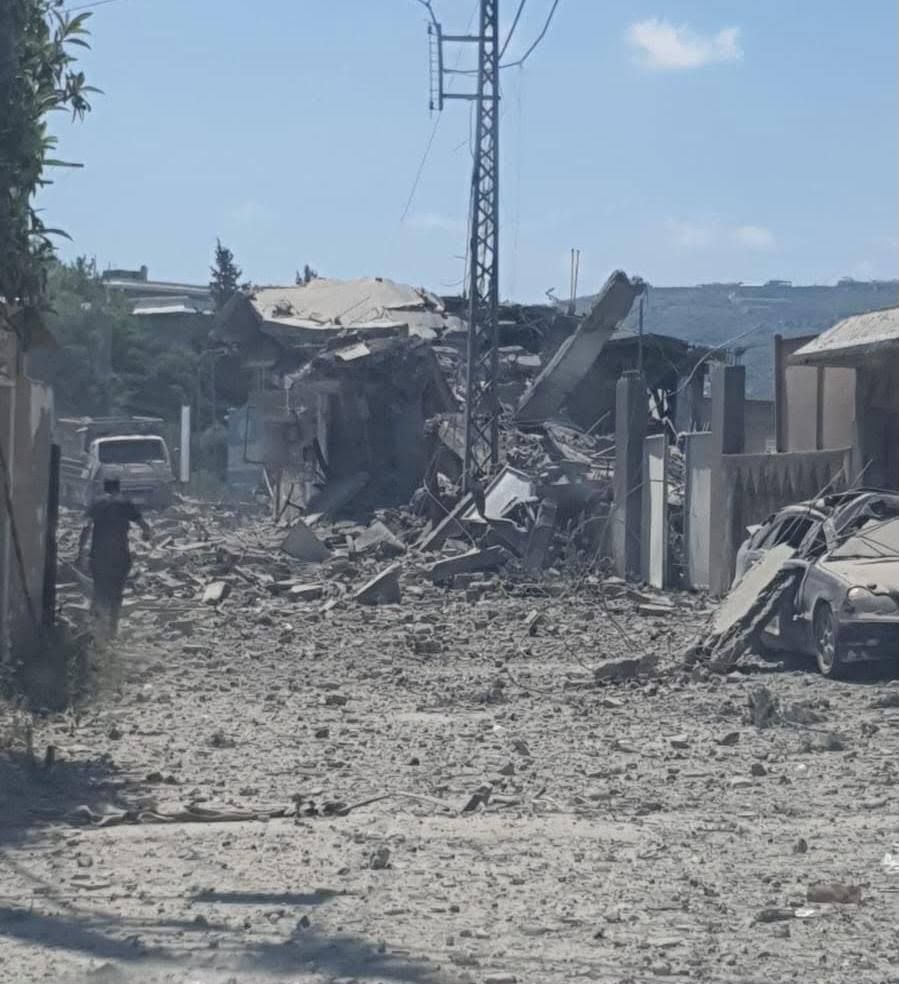
Sgt. Michael Tyukin was twenty-one years old. He was from Ashkelon, a city on the Israeli coastal plain that has absorbed a steady drumbeat of rocket fire since October 7, 2023. He served in the Givati Reconnaissance Unit — the 846th battalion, part of the Givati Brigade — an elite formation tasked with forward observation, intelligence gathering, and direct action in some of the most contested terrain along the Lebanon border. On the morning of May 31, 2026, according to an announcement from the IDF Spokesperson Unit, he was killed by an explosive drone deployed by hostile forces operating in southern Lebanon. His death was the fourth IDF fatality announced in a forty-eight-hour period, part of a grinding escalation that has seen the border zone become an increasingly lethal arena for both ground forces and unmanned systems.
What distinguishes this death — beyond the personal weight borne by his family in Ashkelon — is the method. The drone strike that killed Tyukin reflects a tactical evolution that has reshaped the geometry of the Israel–Lebanon conflict since February 2026, when the ceasefire arrangement brokered in January formally collapsed. Where early phases of the war relied heavily on artillery barrages and tank-platoon movements, the current engagement is increasingly defined by aerial surveillance, loitering munitions, and the precise targeting of individual soldiers in patrol formation. For a reconnaissance unit operating close to the technical boundary of Lebanese territory, exposure to that threat is structural rather than incidental — the unit's mission requires it to move forward, which in turn requires it to be visible.
The IDF has not publicly disclosed the specific drone type or the attribution of the strike. Initial reports circulated through open-source intelligence channels attributed the attack to a Hezbollah-aligned formation, though the Lebanese militant group has not issued a confirmed statement. The IDF's announcement described the incident as occurring "in southern Lebanon" without further geographic precision. Military analysts tracking the conflict note that both Hezbollah and allied Palestinian Kataeb factions operating from Lebanese soil have deployed Iranian-origin attack drones — including the Mohajer series — with increasing frequency since the January ceasefire broke down. Those systems offer a combination of standoff range, loiter time, and warhead size that makes individual soldiers in open terrain particularly vulnerable. A twenty-one-year-old on forward observation, by definition, fits that profile.
It is worth noting the structural conditions that produced this moment. The ceasefire negotiated in January 2026 held for approximately six weeks before collapsing under the weight of competing interpretations — Israel insisted on the right to strike emerging threats preemptively; Hezbollah and its allies argued that the agreement permitted only defensive posture. Neither side's interpretation was unreasonable given the document's ambiguous language. What followed was a slow-motion reversion to the pre-ceasefire dynamics: Israeli overflights, artillery exchanges, drone intrusions, and a gradual rebuilding of the targeting tempo that had characterized the preceding months. The Givati reconnaissance soldiers operating along the border on May 31 were operating in a context shaped by that diplomatic failure — not separate from it.
The death of a twenty-one-year-old sergeant raises predictable questions about the adequacy of protective measures, the rules of engagement governing forward observation posts, and the broader strategic calculus that keeps young soldiers in positions where a drone can find them. These are legitimate questions that go unanswered in the immediate IDF statement. Military officials have pointed to the difficulty of intercepting low-altitude, slow-moving munitions that linger over an area before descending on a target — a problem not unique to this conflict but acutely present in it. The IDF has deployed EW (electronic warfare) systems and short-range air defence to protect forward units, but the threat has outpaced the countermeasures in several documented engagements. Tyukin's death fits that pattern. The IDF has not announced an investigation into the specific incident as of publication time.
The loss of a soldier from Ashkelon also carries a demographic and social weight that deserves acknowledgment. Ashkelon's population of roughly 150,000 includes a substantial proportion of families with long military-service traditions. The city has produced a disproportionate share of the IDF's ground-combat casualties relative to its size — a function of both its proximity to Gaza and the socioeconomic patterns that concentrate conscription into combat units among certain communities. This is not a factor that appears in official announcements, but it is real, and it shapes how the city absorbs news like the death of a twenty-one-year-old Givati reconnaissance soldier. His name will be added to a roll that Ashkelon has been adding to for eighteen months.
Sgt. Michael Tyukin is survived by family in Ashkelon. The IDF Spokesperson Unit confirmed his death and announced that his next of kin had been notified. No further personal details were available at time of publication. The strike that killed him occurred during a period when the IDF has maintained a sustained forward presence in southern Lebanon, with the stated objective of dismantling the offensive infrastructure that Hezbollah and allied groups have rebuilt since the January ceasefire arrangement was signed. That campaign continues; his death is a line item in it.
This publication covered the announcement of Sgt. Tyukin's death as reported by the IDF Spokesperson Unit on May 31, 2026. Wire coverage of the incident was limited to the IDF statement and open-source attribution of the strike to hostile drone deployment. No independent confirmation of the drone type or responsible faction was available at time of publication. Monexus will update this report as further verified information becomes available.
Wire provenance
This editorial synthesis draws on the following public wire/social posts:
- https://t.me/englishabuali/72337
- https://t.me/englishabuali/72336
- https://t.me/osintlive/89123