The House Always Wins Online: Sports Betting's Promotional Arms Race and the Regulatory Gap Below It
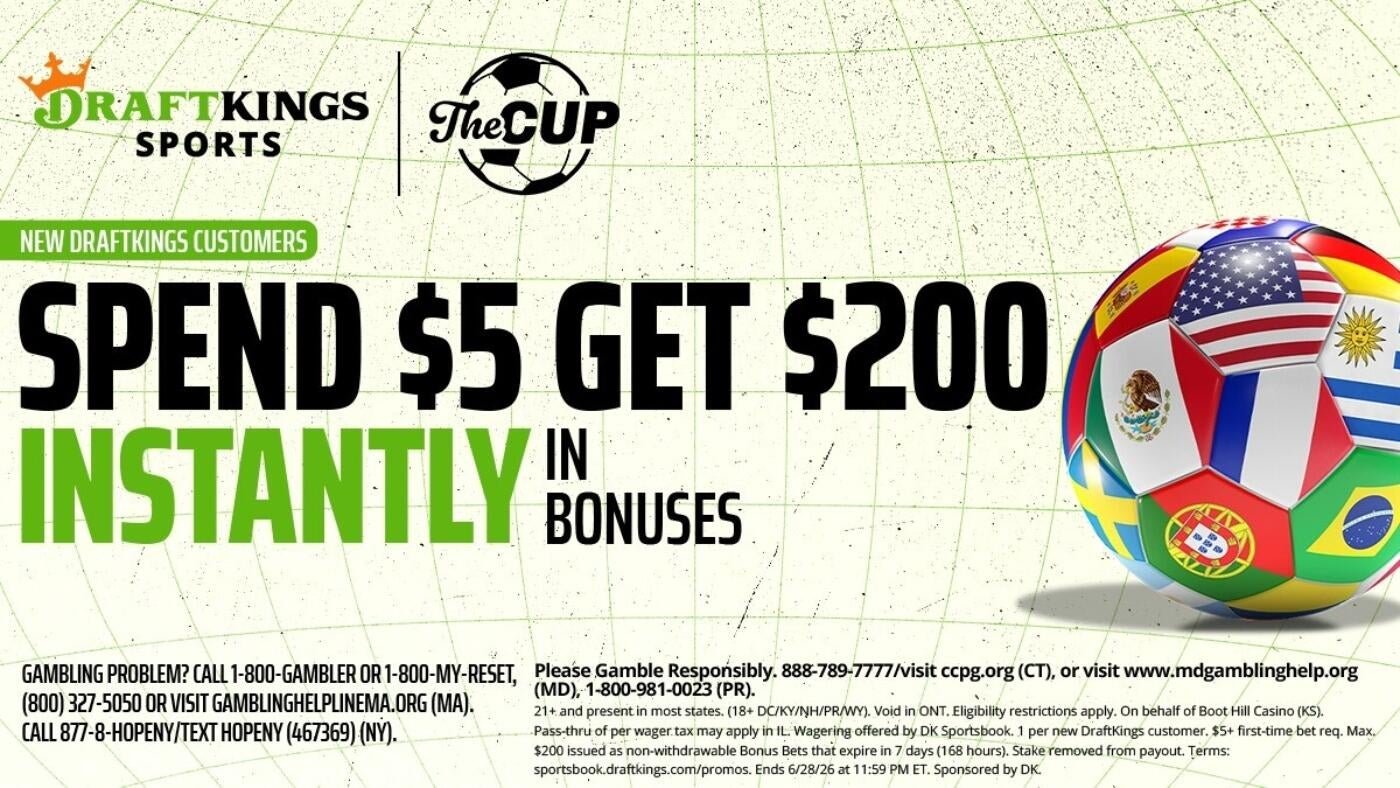
The promotional emails land in inboxes every morning. On Sunday, 31 May 2026, DraftKings pushed a $100 in bonus bets offer tied to the Phillies-Dodgers and Cardinals-Cubs matchups — stake $5, receive the bonus instantly, according to a CBS Sports Headlines wire item published at 14:22 UTC. The same offer, slightly retimed, appeared again at 19:30 UTC. Across an average NFL Sunday, a bettor following such offers from multiple operators could claim several hundred dollars in incentive credits without placing a single winning wager.
This is the entry-level reality of legal online sports betting in the United States in 2026: an industry that has grown from a legal grey area in 2018 to a multi-billion-dollar market in over 35 states, sustained in part by promotional spending that, by most independent estimates, now exceeds $1 billion annually across the sector. The offers are real. The regulatory framework designed to govern them is considerably less so.
The Promotional Economy
Sign-up bonuses — matched deposits, risk-free bets, odds boosts tied to specific games — are not incidental to the sportsbook business model. They are central to it. Customer acquisition in a market with low switching costs requires constant incentives. DraftKings, the Boston-based operator that merged with SBTech in 2020 and went public the same year, has consistently ranked among the top two online sportsbook operators by handle in every regulated state where it operates. Its nearest competitor, Penn Entertainment's ESPN Bet platform, and the Flutter Entertainment-owned FanDuel, compete directly for the same user base.
The offers themselves follow a consistent logic: front-load value to create a habit, then rely on house edge — built into every market's odds — to recover the investment over time. A bettor who receives $100 in free bets and successfully withdraws $70 after rollover requirements does not, in the aggregate, represent a loss for the platform. The mathematics of vig, or the built-in margin in every betting line, ensures that over a large enough sample size, the house retains its edge.
Market Concentration and the Question of Competition
The most underappreciated structural fact about legal U.S. sports betting is how concentrated it has become. Despite licensing regimes in most states that allow multiple operators, the market has functionally consolidated around two dominant platforms: DraftKings and FanDuel together account for an estimated 70 to 80 percent of online sportsbook revenue nationally, according to industry tracking from multiple research firms. Smaller operators — BetMGM, Caesars, PointsBet, Betway — exist, but struggle to match the promotional budgets and brand recognition of the duopoly.
This concentration raises a structural question that regulators in several states have begun to acknowledge explicitly: whether promotional spending by dominant operators constitutes a barrier to entry that effectively forecloses competition. The counter-argument, advanced by the platforms themselves and by some state gaming commissions, is that competition is the mechanism that generates the promotional offers in the first place — that consumers benefit from a marketplace where operators must bid for their custom. The evidence for this claim is mixed. Retention rates at DraftKings and FanDuel are substantially higher than at smaller platforms, a pattern that suggests promotional acquisition without equivalent retention investment by smaller operators creates an asymmetric marketplace.
The Regulatory Patchwork
Sports betting legalization in the United States has proceeded state by state, and the regulatory quality of that patchwork is highly variable. New Jersey, Pennsylvania, and Colorado are generally regarded as having more mature regulatory frameworks — with active advertising standards, mandatory responsible gambling toolkits, and relatively robust problem-gambling funding set-asides. Other states that legalized in the rush following the 2018 Murphy v. NCAA decision, which struck down the federal professional and amateur sports protection act, entered the market with gaming commissions that had limited technical capacity to govern digital platforms at scale.
Advertising standards are the most conspicuous gap. DraftKings, FanDuel, and ESPN Bet all operate under voluntary advertising guidelines established through the American Gaming Association, the industry's main trade group. These guidelines include prohibitions on marketing to underage audiences and require responsible gambling messaging in certain ad formats. However, enforcement is internal, and the line between aggressive promotional messaging and marketing that targets vulnerable users is drawn by the operators themselves.
Several state legislatures, including those in Massachusetts, Ohio, and Maryland, have considered — and in some cases passed — advertising-specific regulations in recent years, including requirements that sportsbooks disclose the terms of promotional offers with greater specificity and restrictions on so-called " inducement" advertising near problem gambling messaging. The record of implementation is inconsistent.
The Harm Gap
Problem gambling affects an estimated 2 to 3 percent of U.S. adults at any given time, according to prevalence studies conducted by the National Council on Problem Gambling and state gaming commissions. That figure translates to roughly 6 to 8 million people, a population whose gambling behavior is, by definition, resistant to the market signals that discipline normal consumer choices. For this group, promotional offers are not competition — they are a vector of harm.
The industry's response has been a combination of self-exclusion tools — platforms that allow users to permanently ban themselves — and funding for treatment programs through the NCPG and state-specific problem gambling funds. DraftKings publishes responsible gambling resources and participates in the AGA's responsible gambling code of conduct. The adequacy of these measures is disputed. Critics, including a number of academic researchers and state-level public health advocates, argue that self-exclusion systems are inconsistently enforced across platforms and that the industry's voluntary contributions to treatment funding represent a fraction of the externalized costs of gambling disorder.
What remains genuinely uncertain — and is not resolved by the available data — is whether the expansion of legal sports betting has increased problem gambling prevalence at the population level, or whether it has primarily shifted gambling activity from illegal markets to regulated ones. The evidence is contested. State-specific pre- and post-legalization studies show mixed results, and the national picture is complicated by the simultaneous growth of online casino products, which carry different risk profiles than sports betting alone.
What Comes Next
More states are expected to legalize online sports betting in the next two to three years, with Georgia, Missouri, and Minnesota frequently cited as near-term candidates. As the market matures in early-mover states, the pressure for federal-level standards — rather than the current patchwork — is expected to grow. Several members of Congress have introduced legislation addressing sports betting on a federal level, though none have advanced to a floor vote.
The promotional offers are not going away. The market dynamics that produce them — low switching costs, high customer acquisition costs, a house-edge business model that funds acquisition spending — are structural features of the industry, not features that any single state regulatory intervention can eliminate. The question for regulators, public health advocates, and consumers is whether the framework governing that promotional economy will evolve at the same pace as the market itself — and the evidence from 2026 suggests it is not yet doing so.
This article was filed from wire reports covering sportsbook promotional activity on 31 May 2026. Monexus covers the business and regulation of online gambling as part of its sports desk, with particular attention to consumer protection and market structure.
Wire provenance
This editorial synthesis draws on the following public wire/social posts:
- https://t.me/CBSSportsHeadlines
- https://t.me/CBSSportsHeadlines
- https://en.wikipedia.org/wiki/Sports_betting_in_the_United_States