Spurs Advance Past Thunder As Julian Champagnie Joins Curry, Thompson In NBA History Books
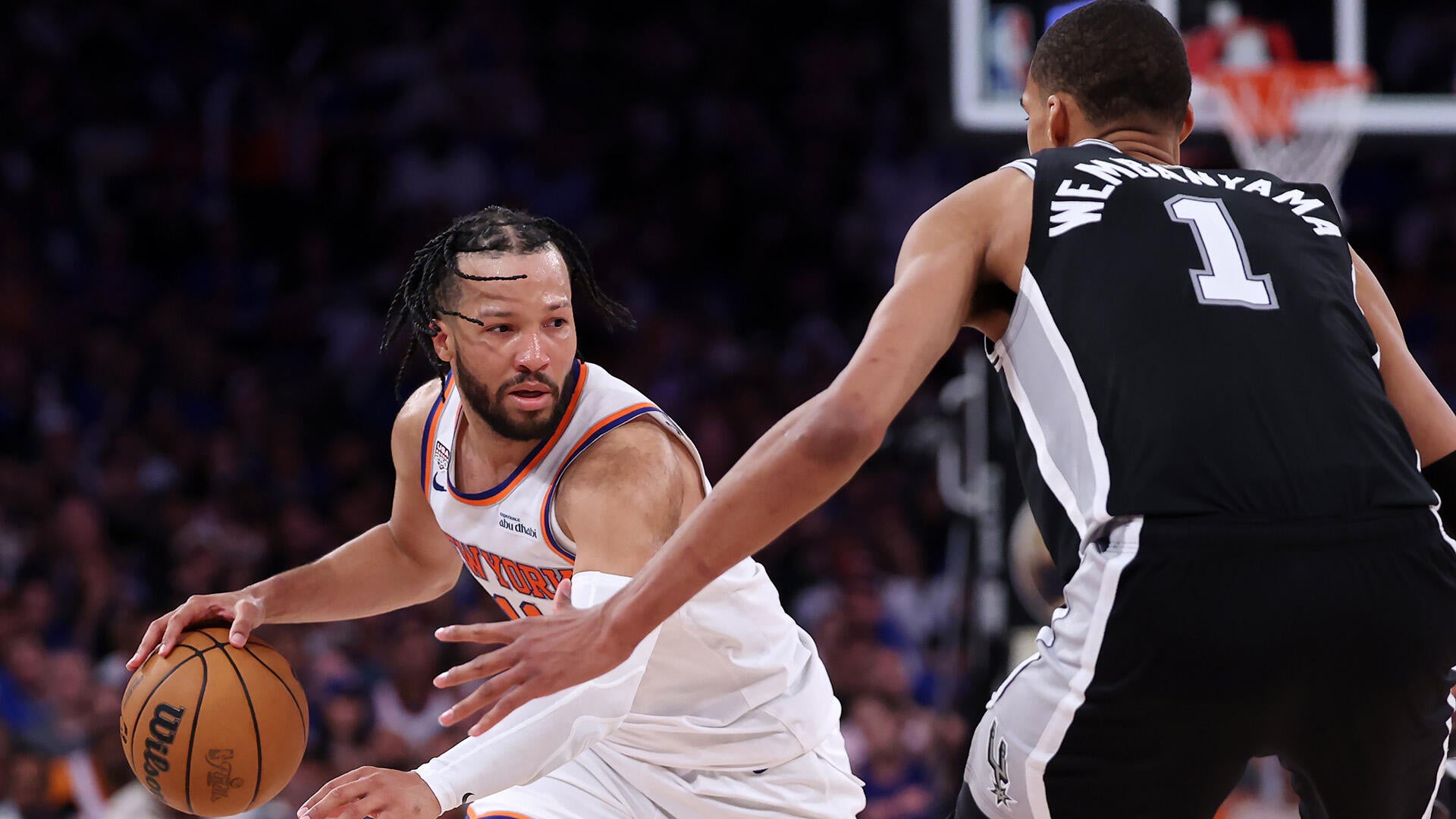
Julian Champagnie delivered the performance of his professional career when the Spurs needed it most. On Saturday, May 31, 2026, the San Antonio forward poured in twenty points in Game 7 against the Oklahoma City Thunder, connecting on six of his ten three-point attempts, and the Spurs departed Oklahoma City with a series victory and a place in the Western Conference Finals.
The box score tells part of the story. The context elevates it considerably. Champagnie became only the third player in NBA history to knock down six or more three-pointers in a Conference Final Game 7, joining Stephen Curry — who achieved the feat twice — and Klay Thompson, who did so in the 2016 Western Conference Finals against the Oklahoma City Thunder. The symmetry is not lost on those who track the league's record books. Thompson's performance eight years ago came against the same franchise now facing elimination at the hands of a twenty-four-year-old playing his first meaningful postseason minutes at the sport's highest level.
A Night That Redefined A Season
The Spurs entered the 2025-26 campaign with modest expectations. After two seasons of rebuilding following the departures of veterans who anchored the franchise's most recent run of contention, the front office made deliberate choices to develop young talent and accumulate draft capital. Champagnie, signed to a two-way contract before the 2024 season, was not part of any grand redesign. He was a depth player who had shown flashes of shooting ability in limited minutes. The Thunder series changed that calculus entirely.
Across the seven-game set, Champagnie's role expanded with each contest. Head coach Mitch Johnson, in his second season at the helm, leaned into the matchup advantages that Champagnie's shooting created against a Thunder defense constructed to protect the rim. Oklahoma City's scheme left gaps on the perimeter, and Champagnie punished them with a regularity that shifted how the Thunder's coaching staff approached every subsequent possession.
"There's no better feeling," Champagnie said following the clinching victory, according to reporting from NBALive on May 31. "We came here and we knew it would be tough. We executed when it mattered."
The raw efficiency numbers from Game 7 are striking: six made three-pointers on ten attempts, a sixty percent conversion rate from distance against a defense that finished the regular season ranked fourth in three-point percentage allowed. Champagnie's contributions extended beyond the scoring column. He grabbed four rebounds, recorded two steals, and logged the second-highest plus-minus figure of any Spurs player in the contest. The performance was comprehensive in a way that stat lines rarely capture.
Historical Company And What It Means
The NBA's record of players to make six or more threes in a Conference Final Game 7 has been, until recently, a very short list. Curry appears twice — the 2016 series against the Thunder and the 2019 Finals against Milwaukee — and Thompson appeared once, in that 2016 thriller that many analysts still cite as the high-water mark of the Warriors' dynasty. Champagnie's name now appears alongside theirs, and the comparison is not merely statistical.
Thompson's 2016 performance came in a game where he recorded eleven three-pointers, a record that still stands for a Conference Final Game 7. Curry's entries involved similar circumstances: elimination stakes, elite opposition, and a level of defensive attention that theoretically should have suppressed production. The pattern is consistent: when the stakes crystallize and the margin for error disappears, shooting talent at the highest tier asserts itself regardless of the quality of opposition. Champagnie's version of that pattern arrived eight years after Thompson's, in a different context, against a franchise that had invested heavily in defensive versatility and rim protection.
What distinguishes Champagnie's entry into this company is the relative obscurity of his career arc leading to it. Curry and Thompson were drafted high, developed within championship-caliber systems, and arrived in their defining moments with institutional support structures in place. Champagnie's path involved G League minutes, short-term contracts, and the kind of peripheral existence that characterizes the careers of most NBA players who never achieve sustained recognition. The franchise that gave him an opportunity — the Spurs, whose developmental track record is the most respected in the league — credited the organization's system rather than any individual attribute.
What This Victory Signals For San Antonio
The Spurs' advancement to the Western Conference Finals carries implications beyond this season. The franchise has not reached this round since 2019, when a core anchored by LaMarcus Aldridge and DeMar DeRozan fell to the Denver Nuggets in seven games. The current roster bears little resemblance to that one. Victor Wembanyama, the French phenom selected first overall in the 2023 draft, has transformed the franchise's competitive timeline, and the supporting cast assembled around him over the past two seasons has developed faster than most projections anticipated.
Champagnie's emergence adds a dimension that the Spurs' planning documents could not have fully anticipated. A shooting threat capable of spacing the floor at the level he demonstrated in Games 5 through 7 creates defensive problems for every remaining Western Conference opponent. Golden State, Denver, and Minnesota — the other contenders who survived the first two rounds — all construct their defenses around limiting efficient shots at the rim. The Warriors in particular have struggled against shoot-first forwards who can create offense without requiring the ball to flow through their hands. If the Spurs reach the Finals, that matchup question becomes central to the series narrative.
The broader organizational signal is harder to quantify but no less significant. San Antonio's front office made a series of under-the-radar decisions over the past eighteen months — the signing of Champagnie, the trade for a first-round pick that became a productive rotation player, the retention of a veteran point guard who accepted a below-market contract to remain in a development-focused environment. The Game 7 victory is the visible reward for decisions made when the spotlight was absent.
The Road Ahead And What Remains Unresolved
The Thunder's exit from the playoffs comes with unfinished business for a franchise that entered the season as a consensus top-three title contender. Oklahoma City's core — built around a high-usage point guard, an all-around forward with Defensive Player of the Year credentials, and a collection of shooters acquired at considerable cost — failed to advance past the second round for the third consecutive season. The coaching staff faces questions about adjustment capability; the front office confronts questions about roster balance; and the roster's primary star confronts questions about performance in elimination games that will not disappear with time.
For the Spurs, the schedule now pivots to a Conference Finals matchup with the Denver Nuggets beginning June 5. San Antonio's rotation will need to adjust to a different style of opposition — Denver's physicality and post-centric offense present challenges distinct from the Thunder's pace-and-space approach. Whether Champagnie's shooting translates at the same rate against a defense built around a former Defensive Player of the Year remains the central tactical question for the series.
What the evening in Oklahoma City confirmed is that the Spurs' developmental pipeline has produced a player capable of elite performance at the highest stakes. The sample size is small — one series, seven games — and the broader regular season data suggests variance is inherent to his profile. But history, in the NBA as in most sports, is written by those who perform when the stakes are highest. On May 31, 2026, Julian Champagnie inserted his name into a record book that contains two of the greatest shooters the game has produced. The Spurs will try to make that company mean something more.
Desk note: Wire services led with the historical shooting comparison, anchoring the story to Curry and Thompson's precedent. This article foregrounded the franchise trajectory and the organizational context — the Spurs' deliberate rebuild, the developmental model, the strategic implications of having another shooter at this level — rather than treating the record as a standalone spectacle. The framing reflects the view that one-game miracles are less interesting than the systems that make them possible.
Wire provenance
This editorial synthesis draws on the following public wire/social posts:
- https://t.me/NBALive/5821
- https://t.me/NBALive/5819