Supreme Leader Dead, Region Braces as Iran Nuclear Talks Collapse
Iran's supreme leader is dead following a US-Israel strike, sending shockwaves through a region already grappling with expanded Israeli operations in Lebanon and the collapse of diplomatic negotiations over Tehran's nuclear programme.
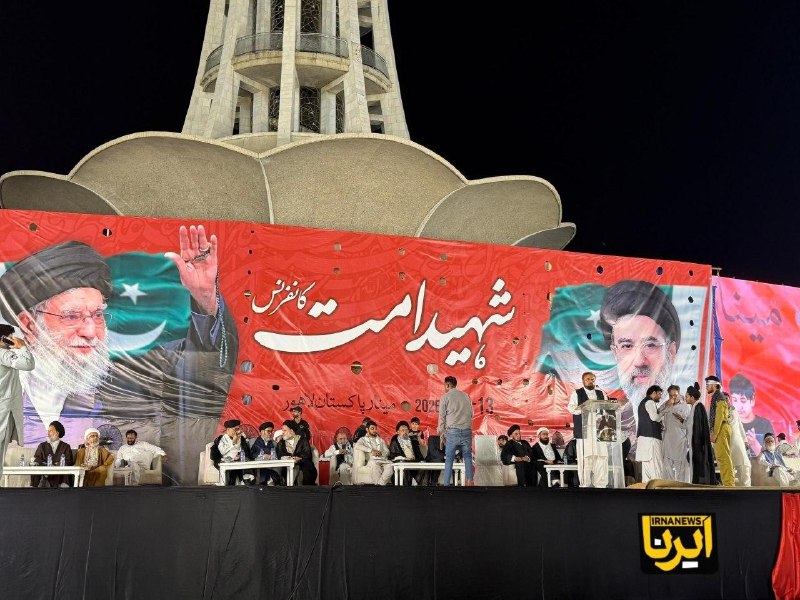
The killing of Iran's supreme leader in a joint US-Israel strike on 31 May 2026 has sent shockwaves across the Middle East, occurring hours after talks between Washington and Tehran collapsed and as Israel broadened its military campaign inside Lebanon. The elimination of the Islamic Republic's most senior figure caps weeks of rising tension over Iran's nuclear programme and comes amid an escalating exchange of drone and rocket fire between Israel and Hezbollah along the Lebanon border.
The strike marks the most significant direct action against Iranian leadership since the revolution of 1979. It follows repeated US warnings that military consequences would follow if Iran rejected a peace-plan framework that would have required Tehran to surrender its enriched uranium stock. Iran refused those terms, according to reporting from 30 May, and subsequently removed the nuclear issue from ongoing negotiations. The killing of the supreme leader leaves Iran's political succession unclear and its military posture uncertain at a moment of maximum regional stress.
The immediate diplomatic architecture has crumbled. Washington had presented Tehran with a proposal that required irreversible nuclear concessions; Iran rejected the uranium-surrender condition and struck the nuclear dossier from the negotiating agenda, per sources cited by 31 May. The US response, delivered before the strike, was explicit: military action would follow if Iran refused the peace-plan conditions. That warning, issued on 30 May, now reads as a countdown concluded.
The Lebanon Dimension
Israel's campaign inside Lebanon has simultaneously widened. On 31 May, Lebanon's government accused Israel of pursuing a scorched-earth military policy as Israeli forces pressed deeper into Lebanese territory. Hezbollah drone attacks, which have grown in frequency and sophistication, prompted Israeli officials to begin openly discussing the possibility of a full military conquest of Lebanon rather than the limited operations previously contemplated.
The escalation along the Lebanon border predates the Iran strike by weeks, but the two crises have become mutually reinforcing. Israel's northern communities have endured sustained rocket and drone fire since October 2023, and the expanded Hezbollah arsenal has shifted the strategic calculus inside Tel Aviv. The seventh Israeli strike recorded in May alone underscores the pace of operations — a tempo that regional observers describe as incompatible with a contained border conflict.
The killing of Iran's supreme leader complicates the Lebanon calculus in ways that remain unfolding. Tehran has long provided material support to Hezbollah, and the chain of command within the Lebanon axis — and whether it now fractures, recalibrates, or doubles down — is among the most consequential open questions in the region.
What the Talks Revealed About the Diplomatic Dead-End
The collapse of the Iran nuclear talks was not sudden. For months, Washington sought an agreement that would freeze Iran's enrichment activity in exchange for sanctions relief — a framework that successive Iranian governments have historically treated as a test of sovereignty. Iran's decision to remove the nuclear question from the agenda entirely, reported on 31 May, was a signal that Tehran saw no political room to concede.
The US warning, issued 24 hours before the strike, was unusually direct by diplomatic standards. That Iran subsequently refused the uranium-surrender terms — and then lost its supreme leader before any formal succession could be arranged — leaves the Islamic Republic in a moment of acute institutional fragility. Whether the caretaker leadership can negotiate, resist, or retaliate coherently is not yet established in the available reporting.
Structural Context: Who Owns the Narrative Right Now
The immediate information environment around this story has been shaped almost entirely by official statements and state-adjacent sources, a dynamic that observers of regional coverage have long noted. Israeli military briefings, US government communications, and Iranian state media will each frame these events differently — and they are already doing so. The killing of a head of state, carried out by two foreign militaries, is an act that will be read very differently in Tehran than in Tel Aviv, Washington, or across the Gulf.
The concert cancellation that also surfaced on 31 May — five of nine scheduled artists pulling out of a planned series, citing politics and security concerns — is a small data point, but not an insignificant one. Cultural soft power has long operated as a temperature gauge for political anxiety in the Gulf and Levant; when performers begin self-censoring, the underlying currents are running strong.
Stakes and What Comes Next
The immediate stakes are military. A successor to Iran's supreme leader must consolidate power quickly or risk a leadership vacuum at the worst possible moment. Iran's regional proxies — Hezbollah, but also networks in Iraq, Syria, and Yemen — are watching for signals about whether Tehran will escalate, and in what form. The United States and Israel have demonstrated a willingness to strike at the highest level of the Iranian state. Whether that establishes deterrence or invites retaliation depends on calculations not yet visible from the outside.
The nuclear question has not been resolved by the killing of Tehran's supreme leader. Enriched uranium remains in Iranian facilities; the inspections regime remains incomplete; and the talks architecture has been destroyed rather than replaced. The region now faces a scenario where the diplomatic off-ramp has been closed and the military trajectory is accelerating on multiple fronts simultaneously.
This desk covered the strikes on Lebanon as the primary developing story for much of the morning before the supreme leader's killing was confirmed by afternoon wires. The sequencing — Lebanon first, Iran second — reflects the flow of wire traffic, not a judgment about relative importance.
Wire provenance
This editorial synthesis draws on the following public wire/social posts:
- https://t.me/CryptoBriefing/2026-05-31T11:00
- https://t.me/CryptoBriefing/2026-05-31T00:29
- https://t.me/CryptoBriefing/2026-05-31T14:01
- https://t.me/CryptoBriefing/2026-05-30T16:37
- https://t.me/CryptoBriefing/2026-05-31T06:44
- https://t.me/CryptoBriefing/2026-05-31T00:34