The Invisible Casualty: Why 133 Medics Die Quietly
Israeli evacuation orders and the deaths of 133 medical workers in Lebanon over three months have generated minimal coverage in Western media — a pattern that raises uncomfortable questions about whose suffering defines the international news cycle.
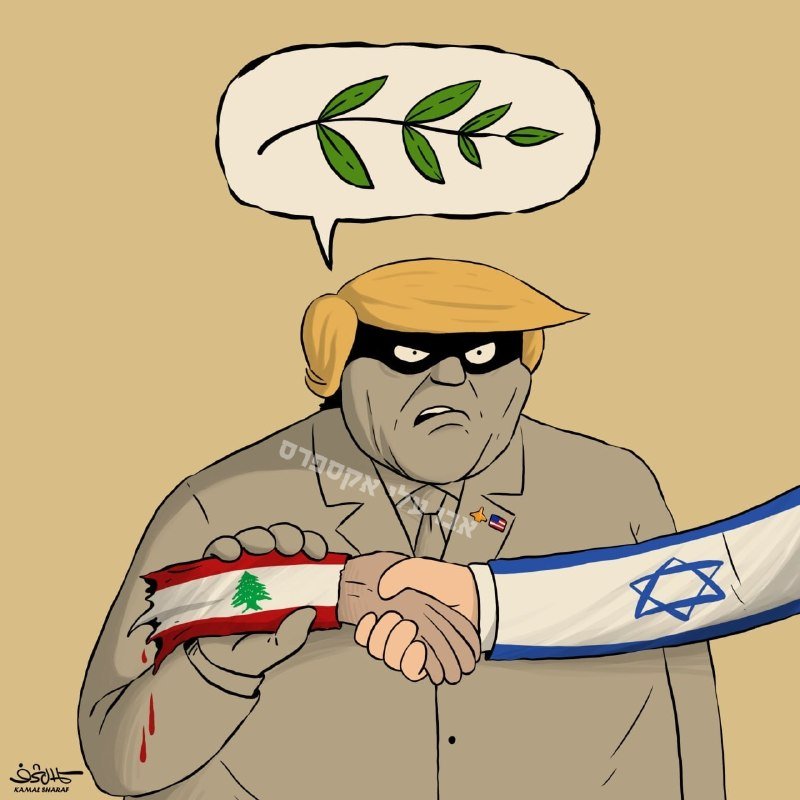
On 31 May 2026, the Israeli military issued an evacuation warning to residents of Zahrani, a town in southern Lebanon near the Litani River. Hours earlier, Iranian state-linked accounts reported that 133 medical workers had been killed in Lebanon over the preceding three months. The two events arrived in the same news cycle, and the pattern they form is instructive.
The evacuation order received some coverage from regional wire services. The death toll among medics — if the figures are accurate — received far less. In the Western information space that sets the agenda for most English-language outlets, the Zahrani warning registered as a tactical military development. The killing of 133 health workers registered as almost nothing.
This is not an isolated observation. It is a structural feature of how conflict reporting operates.
The Number That Should Not Be Quiet
The figure of 133 medics killed in three months, as reported by Tasnim News on 31 May, is large enough to warrant sustained attention on its own terms. Healthcare workers operating in conflict zones enjoy protected status under international humanitarian law. Their targeting — whatever the justification offered — is a first-order violation of the laws of armed conflict. UN agencies have documented attacks on medical infrastructure in multiple ongoing conflicts. The number, if corroborated, places Lebanon alongside theatres where such casualties have generated significant international pressure.
The sources do not provide independent corroboration of the figure. Iranian state-linked outlets have an identifiable editorial position on the Israel–Lebanon conflict. That position does not make the figure invented; it makes attribution essential. What it does not do is make the figure disappear by labelling it propaganda. The deaths of medical workers — documented or alleged — deserve investigation, not dismissal.
Compare the treatment with coverage of comparable events in other conflict theatres. When health workers are killed or hospitals struck in Ukraine, the coverage is extensive and the documentation rigorous. When similar allegations arise in contexts that do not align with the dominant Western framing of a conflict, the documentation gap is real, and the consequences are real.
The Coverage Architecture
The disparity is not accidental. Western conflict coverage operates through a defined information architecture: primarily Reuters, the Associated Press, the BBC, and AFP as wire providers; IDF spokesperson statements and Israeli government briefings as primary sources for military actions; and a smaller set of Arabic-language regional outlets whose translations reach English-language desks selectively. This architecture is efficient. It is also selective.
Events in southern Lebanon fall into a category that gets less pipeline investment. Arabic-language reporting from outlets based in Beirut or Tehran requires translation, verification against English-language sources, and editorial judgment about whether the frame is credible. That judgment is not neutral — it reflects the institutional priorities of newsrooms that cover the Middle East with asymmetric resources.
The Israeli military's evacuation warnings receive direct reporting because they are issued through channels that feed the wire services. The consequences of those warnings — displacement, civilian casualties, infrastructure damage — are harder to document in real time and easier to frame as secondary to the tactical story. The result is a systematic tilt in what the public record contains.
The Structural Consequence
International humanitarian law depends on documentation to function. Violations that go unrecorded are violations that go unpunished. The principle of medical neutrality holds only when its breach produces consequences — diplomatic pressure, legal proceedings, institutional censure. When the breach occurs in a context that generates little coverage, the mechanism does not operate.
The 133 medics reportedly killed in Lebanon over three months are not a statistic. They are a measure of the reach of the accountability mechanisms that international humanitarian law depends upon. If those mechanisms function differently depending on whose territory is affected and whose casualties are being counted, then the law's universality is compromised in practice, even if not in theory.
The Zahrani evacuation warning and the reported toll among medical workers are not separate stories. They are two moments in the same conflict, generating radically different levels of attention. The disparity is not about the value of the people involved — no credible person argues that Lebanese lives matter less than others. It is about the architecture of attention that determines which violations become visible and which become background noise.
What is required is not more advocacy for one side over another. It is a more consistent application of the documentation standards that already exist — standards that the international community claims to uphold. Whether that consistency is forthcoming depends on whether the gap itself is ever treated as the story it plainly is.
Monexus covers the Middle East through Western and regional wire sources, with explicit attribution when Iranian or Lebanese state-linked outlets provide the primary documentation of events under international scrutiny.
Wire provenance
This editorial synthesis draws on the following public wire/social posts:
- https://t.me/tasnimnews_en
- https://x.com/s_m_marandi/status/1925847399049494928