Three Years On, Israel's Northern Front Remains Unresolved
Israeli ground operations and precision airstrikes have failed to neutralise Hezbollah's capability along the northern border after nearly three years of sustained conflict, according to multiple reports citing the Jerusalem Post.
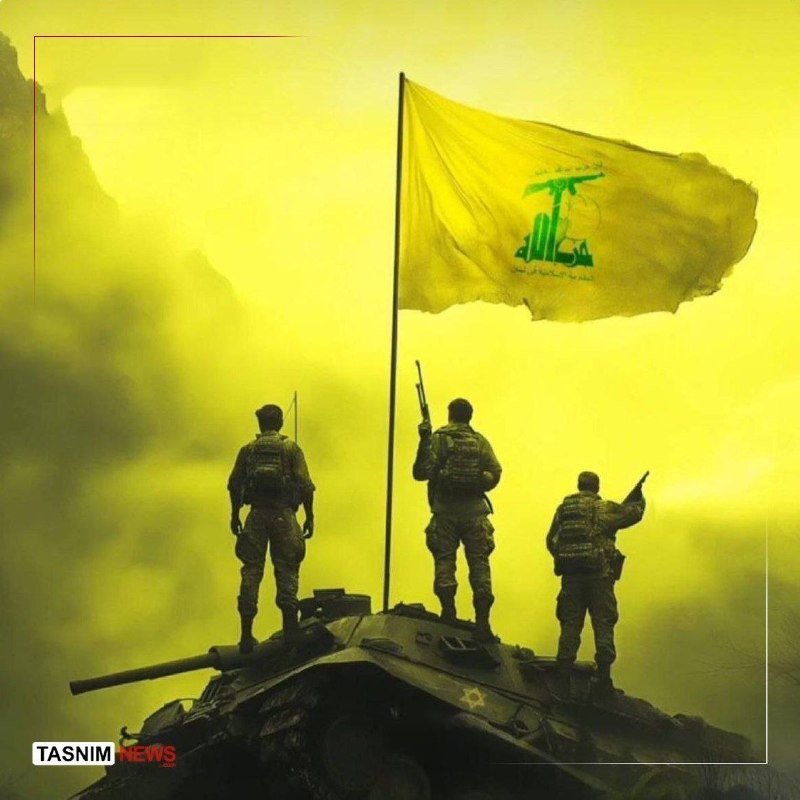
Israeli officials set out to neutralise Hezbollah. Nearly three years later, the organisation remains armed, active, and capable of keeping northern Israel under fire. That is the blunt assessment emerging from multiple reports published in recent hours, all citing the same source: the Jerusalem Post.
According to those reports, limited ground operations along the border and a campaign of precision aerial targeting have failed to achieve the stated objective of defeating and disarming the Shia political-military movement. Israeli officials have spoken repeatedly of that goal since hostilities escalated; the sources suggest it has not been met.
The assessment is significant not because it reveals something new, but because it arrives from a domestic Israeli outlet whose editorial line is not sympathetic to Hezbollah. The Jerusalem Post's framing is rooted in what the newspaper calls a failure of stated policy — a rare public acknowledgment that the military tools deployed have not produced the strategic outcome that officials promised.
What the operations targeted
Israeli strategy in the north has followed a pattern legible from the broader conflict: ground incursions intended to push Hezbollah forces further from the border, combined with targeted strikes designed to degrade command infrastructure, weapons caches, and leadership figures. The aim, as articulated by Israeli spokespeople, was to create a buffer zone and substantially reduce the threat posed by short-range rockets, anti-tank guided missiles, and the surveillance apparatus Hezbollah maintains along the frontier with northern Israel.
Reporting from the Jerusalem Post — transmitted via al-Alam Arabic and the English-language Tasnim News service — indicates that these operations have not succeeded in eliminating that capability. Hezbollah has retained enough of its military infrastructure to continue projecting force into Israeli territory. Whether through attrition of Israeli positions, continued rocket fire, or simply the persistence of its presence within range of the border, the group has not been neutralised.
The reports do not provide independent verification of current Hezbollah capability levels or the precise status of specific units. What they convey is the framing from within the Israeli press corps: that after three years, the mission remains incomplete.
The gap between rhetoric and result
Israeli officials have made public statements about defeating and disarming Hezbollah on multiple occasions. Those statements, reported by both al-Alam and Tasnim citing the Jerusalem Post, now sit uncomfortably against a situation in which the group retains its military posture. The dissonance between official declarations and operational reality is the subtext of the current reporting.
Hezbollah itself has not provided public updates on its own losses or current capabilities through official channels. Iranian state-adjacent media, including Tasnim and al-Alam, have transmitted the Jerusalem Post reporting without independent corroboration of their own — framing it as significant precisely because it comes from a Western-aligned outlet rather than a regional one. For those outlets, the Jerusalem Post reporting serves as a kind of third-party validation: an Israeli newspaper acknowledging what Hezbollah's regional allies have long argued, that the group's military position has survived the pressure applied against it.
Structural dynamics: a war without a terminal state
The pattern here — sustained military campaign, declared objective, persistent failure to achieve it — fits a broader dynamic in the region where conventional force has proved insufficient to produce durable strategic outcomes. Ground operations and precision strikes can degrade specific capabilities, eliminate individual commanders, and destroy materiel. They are less effective at dismantling an organisational structure that has rebuilt, adapted, and maintained combat effectiveness across multiple years of conflict.
Hezbollah's resilience reflects several things working in its favour: a deep social and political base in southern Lebanon, a supply chain that has survived interdiction efforts, and the strategic incentive to maintain a posture that keeps northern Israel under continuous pressure. For a group whose founding mandate was resistance to Israeli military presence, maintaining the capability to strike across the border is not a secondary objective — it is the core mission.
The absence of a political track compounds the military challenge. Wars without defined end-states tend to settle into attrition, and attrition tends to favour actors with lower overhead costs and stronger local legitimacy. Hezbollah, in this light, is not failing to win; it may simply be succeeding at not losing.
The stakes ahead
For Israel, the unresolved northern front creates a strategic constraint that shapes everything from population displacement to force allocation. Northern Israel has been depopulated of its civilian residents for years; the longer the situation persists, the more it becomes a permanent feature of the conflict rather than a temporary disruption. That has political and economic consequences that accumulate regardless of whether the military situation is actively deteriorating.
For Hezbollah, survival is itself a form of success — but only up to a point. The group has absorbed significant losses and faces a Lebanese state that is itself under severe economic and political stress. The question is not whether Hezbollah can survive, but whether it can convert survival into leverage in any future negotiation over the shape of the border arrangement.
For the broader region, an unresolved northern front keeps open the question of escalation. Neither side has signalled appetite for the kind of full-scale operation that would be required to decisively alter the military balance. Neither has signals an appetite for accepting the current situation as permanent. The result is a conflict that persists — not at peak intensity, but at sufficient pressure to ensure that no one forgets the stakes.
This publication's approach: the wire led with the Jerusalem Post's candid assessment — a domestic Israeli paper acknowledging that stated policy objectives have not been met. Iranian state-adjacent outlets amplified the same reporting because it serves their framing. Both framings are legitimate; the story is not the amplification, but the gap between what officials said would happen and what actually happened.
Wire provenance
This editorial synthesis draws on the following public wire/social posts:
- https://t.me/alalamarabic/583345
- https://t.me/alalamarabic/583343
- https://t.me/tasnimnews_en/429108
- https://t.me/JahanTasnim/298711
- https://t.me/tasnimnews_en/429106