Three Years In, Israel's Northern Front Is a Strategic Dead End
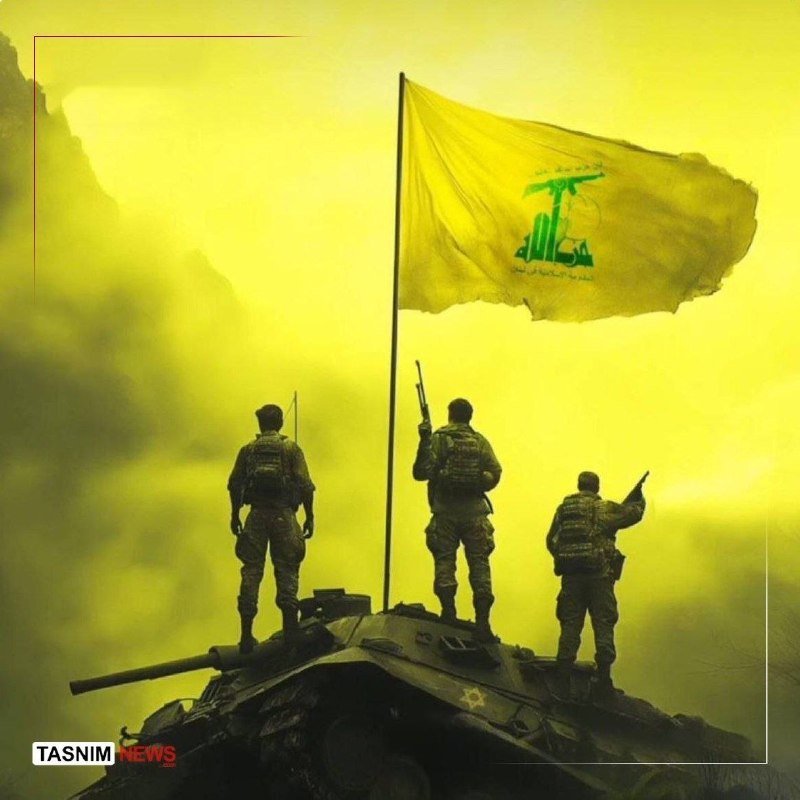
The sirens sounded again. On the morning of 31 May 2026, Israel's Home Front Command activated warning alerts across multiple towns in the north of occupied Palestine, citing the risk of Hezbollah missile fire. The IDF simultaneously issued an order for forces in the sector to maintain heightened readiness — what one Israeli military commentator described as preparation for a potential "surprise attack." The same day, the army acknowledged the death of another soldier in exchanges along the border. By any measure, this is a routine sequence of events in a conflict that has now persisted, without resolution, for approximately three years.
The problem is that routine has become the defining characteristic of a war that was sold as exceptional. When the exchanges with Hezbollah escalated in October 2023, framing from Jerusalem presented the campaign as a focused, time-bounded effort to permanently alter the security calculus along the northern border. The stated objective was unambiguous: push Hezbollah forces north of the Litani River, eliminate the threat of cross-border rocket and missile fire, and allow residents displaced from northern communities to return home. Three years on, none of those conditions have been met. The siren alerts ringing out on 31 May are not evidence of renewed intensity — they are evidence of stasis, of a front that has calcified into something neither peace nor decisive victory.
The Arithmetic of Three Years
Hezbollah's persistence on the northern front is not a secret. The Jerusalem Post noted in a recent assessment that after approximately three years of what it called "war," Hezbollah remains under fire but retains its operational posture — forces still positioned in southern Lebanon, command-and-control structures still functioning, rocket capabilities still sufficient to trigger mass civilian evacuation alerts inside Israel. The IDF has conducted extensive strikes across Lebanon. Israeli intelligence has eliminated senior Hezbollah commanders, including figures who had survived decades of prior conflict. None of it has produced the decisive displacement the war's architects described as the minimum acceptable outcome.
This is not a narrative failure — it is a factual one. The roughly 100,000 Israeli civilians who remain unable to return to communities in the north of the country are not suffering from a communication gap. They understand the threat assessment. The question is whether the government that promised to remove that threat has delivered, and the answer the evidence provides is that it has not.
The Temporary War That Wouldn't End
Israeli political and military leadership has, at various points, signaled that a ground operation into Lebanon would be the mechanism for achieving the northern objectives. Such an operation was repeatedly deferred — sometimes on tactical grounds, sometimes on strategic ones, sometimes because the simultaneous campaign in Gaza absorbed the resources such a move would require. Each deferral normalized the status quo a little further. A front that was supposed to be temporary became the permanent backdrop of a regional conflict that has now outlasted multiple diplomatic initiatives, multiple rounds of ceasefire negotiations, and multiple stated deadlines.
The irony is that the northern front was supposed to be the more tractable problem. Hezbollah is a sophisticated adversary, but it is not Hamas in Gaza — it operates across a defined geographical corridor, its infrastructure is more visible, and its political context in Lebanon, while fragile, is at least legible to Western analysts. Yet the IDF has been unable or unwilling to commit the resources required to dislodge it, and the political leadership has been unable or unwilling to declare the campaign a failure and negotiate from a position of acknowledged reality. Instead, the war continues in a form that generates casualties — one more soldier dead on 31 May, according to the army's own acknowledgment — without advancing the stated goals.
What "Full Alert" Actually Means
The phrasing used in Israeli military communications — "full alert" against the possibility of surprise attacks — deserves scrutiny. Full alert implies readiness to respond to an adversary's initiative. In practice, it describes a situation in which the defending side has not achieved the conditions that would make surprise attacks unnecessary. If Hezbollah's rocket and missile arsenal had been degraded to the point where northern communities were safe for repopulation, there would be no need for mass casualty alerts. If the force that was supposed to be permanently displaced had been permanently displaced, the IDF would not be ordering its troops to stand ready for incoming fire.
The alerts on 31 May are, in this sense, an honest admission — not from the political echelon, but from the operational one. The army is telling the public exactly what the situation is: the threat is live, the forces designed to neutralize it have not neutralized it, and the only available response is to warn civilians and keep soldiers in position. That is not a success metric from any conflict-management framework.
The Stakes Ahead
The forward view is not encouraging. Hezbollah's position has not been weakened to the point where a negotiated settlement would reflect Israeli objectives — which means either the conflict continues indefinitely at its current friction-point level, or a ground operation is eventually authorized at a moment of political convenience rather than strategic opportunity, which carries a substantially higher cost. Israeli military analysts have noted that the longer the front persists without resolution, the more Hezbollah's command structures adapt, the more resupply routes stabilize, and the more the cost of eventual action increases.
There is also a regional dimension. The northern front exists within a context that includes the Gaza campaign, Iranian regional positioning, and the broader contest over influence along the Levantine arc. A conflict that cannot be won decisively and cannot be ended without accepting a diplomatic humiliation becomes a resource drain on a government already managing multiple simultaneous pressures. The sirens that sounded on 31 May are a small sound in a large pattern — but they are a real one, and they are still sounding.
Three years is a long time to maintain a posture of temporary operations. At some point, the temporary becomes the permanent, and the permanent becomes the failure that nobody in power is willing to name.
This publication's coverage of the northern front has consistently emphasized the gap between stated objectives and operational outcomes — a framing that differs from wire-service reporting, which tends to treat each day's alerts and strikes as discrete events rather than as evidence of systemic stagnation.
Wire provenance
This editorial synthesis draws on the following public wire/social posts:
- https://t.me/JahanTasnim/31441
- https://t.me/JahanTasnim/31439
- https://t.me/JahanTasnim/31427
- https://t.me/JahanTasnim/31421