Three Years On, Israel Has Not Broken Hezbollah's Grip on Northern Border
Israeli officials have repeatedly declared the dismantling of Hezbollah's military infrastructure a core war objective. Nearly three years into the current phase of hostilities, the group's forces remain embedded in southern Lebanon, raising difficult questions about the limits of air power and the durability of asymmetric defence.
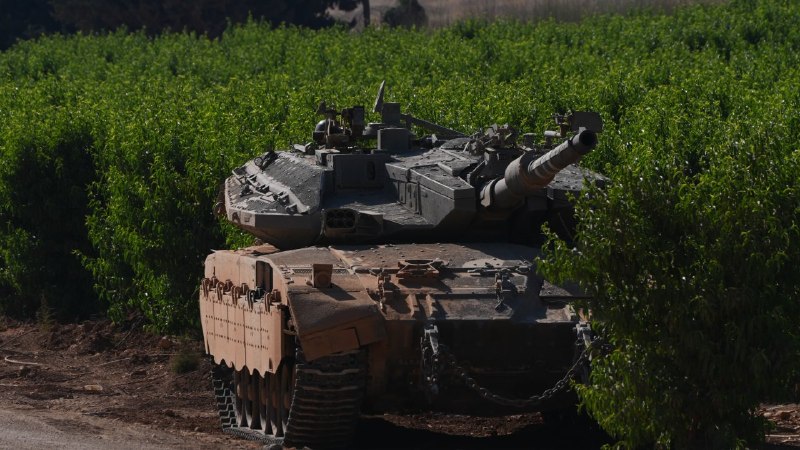
Israeli officials have for three years described the neutralisation of Hezbollah's military threat as a foundational war aim. On the ground, the assessment is more complicated. The group retains its positions in southern Lebanon, its command structures intact, and its rocket arsenal replenished — not to the levels of October 2023, but sufficient, Israeli military analysts acknowledge, to pose a sustained deterrent challenge. The gap between stated objective and operational reality has become one of the defining features of the northern frontier.
The Jerusalem Post reported on 31 May 2026 that Israeli officials have repeatedly spoken publicly about defeating and disarming Hezbollah, yet the organisation continues to operate armed and active along the border. That reporting, carried by Iranian state-adjacent channels including Tasnim and Al Alam, reflects a tension that Western military analysts have also noted: the declared goals and the measurable outcomes have not converged.
The Operational Picture
Israel launched its northern campaign in tandem with operations in Gaza, initially framing the two theatres as complementary. The逻辑 was straightforward: eliminate Hamas, then redirect full attention to the Hezbollah problem. That sequencing has not played out as planned. The Gaza phase has extended well beyond initial estimates, and Hezbollah has used the intervening period to consolidate rather than retreat.
Cross-border strikes have continued on a near-daily basis. Israeli forces have conducted targeted killings of Hezbollah commanders, struck weapons storage sites, and degraded supply routes — contributions that are real and measurable. But the group's bottom-up structure, its distributed leadership model, and its deep integration into the Lebanese civilian landscape in areas south of the Litani River have proven resistant to the kind of decisive decapitation that Israeli strategy prefers.
Hezbollah's official position, conveyed through periodic statements from its media office, is that it remains committed to what it calls the "support front" for Gaza and that its forces will not withdraw until a ceasefire is agreed in the southern Palestinian territory. That linkage — between the Lebanese and Gazan fronts — has given the group a structural reason to stay engaged regardless of battlefield losses.
The Limits of Air Supremacy
Israel possesses overwhelming air superiority along its northern border. Its intelligence apparatus — a layered combination of signals collection, human sources inside Lebanon, and satellite surveillance — is widely regarded as among the most capable in the world. Those advantages have produced a significant body of tactical successes.
What they have not produced is strategic paralysis of the adversary. Military observers who track the conflict note that Hezbollah's resilience is not a function of superior firepower but of adaptive organisation. When a field commander is eliminated, cell structures activate under secondary leadership. When a storage site is destroyed, supply lines reroute. The group has absorbed losses that would have functionally disabled a conventional military and continued operating.
This dynamic is not new. Israel's 2006 Lebanon war produced similar observations from the Winograd Commission, which documented a failure to translate intelligence advantages into decisive territorial outcomes. The current phase has, in the view of several former Israeli defence officials who have spoken publicly in recent months, exposed the same structural problem at a larger scale.
What the Disarmament Threshold Actually Requires
Complete disarmament of Hezbollah would require, by any realistic measure, one of two things: a negotiated political settlement in which Beirut agrees to extend state authority over all armed groups — a process that has failed repeatedly since 2005 — or a ground invasion of sufficient scale to physically occupy southern Lebanon and conduct the kind of area-clearing operations that disarmament entails.
Israeli cabinet members have discussed both options at various points. Neither has commanded sufficient consensus to execute. A ground invasion would carry immediate military costs — Hezbollah's tunnel network and anti-armour capabilities have been significantly expanded since 2006 — and would generate regional escalation risks that Tel Aviv has thus far been unwilling to absorb. A negotiated approach requires Lebanese political buy-in, which is mediated through a political class that has historically balanced between Iranian-aligned and Saudi-aligned factions without clear direction.
The result is a managed stalemate: sufficient Israeli firepower to prevent Hezbollah from conducting offensive operations at scale, insufficient to eliminate the threat entirely. Israeli residents of the north have lived under evacuation advisories for three years. Communities remain largely empty. The economic and social cost of that displacement — now approaching a full generation of children who have grown up in temporary housing — is a domestic political liability that successive Israeli governments have struggled to address without a durable security resolution.
Regional Context and Diplomatic Arithmetic
Hezbollah's continued presence is also a function of the broader regional calculation. The group receives materiel, financing, and strategic guidance from Tehran — a relationship that has persisted despite maximum-pressure sanctions campaigns and targeted operations against Iranian supply corridors in Syria. Iran's regional posture, analysts assess, treats Hezbollah as a critical pillar of its forward deterrence architecture. The group's utility to Tehran lies not only in its military capability but in its demonstrated willingness to deploy that capability under conditions of high risk.
On the Israeli side, the calculation includes the United States. American diplomatic support remains the bedrock of Israel's regional posture, and Washington has shown increasing interest in a diplomatic off-ramp that would link a Gaza ceasefire to a northern de-escalation framework. Whether such a linkage is achievable — Hezbollah has refused to negotiate through intermediaries it does not recognise as neutral — is an open question. The Trump administration's approach to the Iran file has introduced new variables into that equation, but the contours of any eventual deal remain undefined.
What is clear is that neither side appears willing to absorb the costs of full-scale re-invasion, and neither has found a diplomatic pathway that satisfies its stated minimum requirements. The result is a conflict that has become, in the language of military analysts, a "competition below the threshold of major war" — a condition that, over three years, has proved neither decisive nor stable.
The northern border is not quieter. It is not, by any reading of the evidence, about to be resolved. What it is, as of late May 2026, is a managed problem that both sides have decided — for now — to manage rather than solve.
Monexus covered this story through the lens of military operational reality rather than diplomatic optimism, focusing on what has not changed on the ground rather than what officials say in press conferences.
Wire provenance
This editorial synthesis draws on the following public wire/social posts:
- https://t.me/tasnimnews_en/52478
- https://t.me/alalamarabic/78945
- https://t.me/JahanTasnim/41230
- https://en.wikipedia.org/wiki/2006_Lebanon_War
- https://en.wikipedia.org/wiki/Hezbollah
- https://en.wikipedia.org/wiki/Hezbollah%E2%80%93Israel_conflict_(2023%E2%80%93present)