Trump's Hormuz Gambit Reveals the Hollow Core of US Iran Policy
Contradictory signals from Washington on who controls the Strait of Hormuz expose a US Iran strategy built on leverage that may no longer exist.
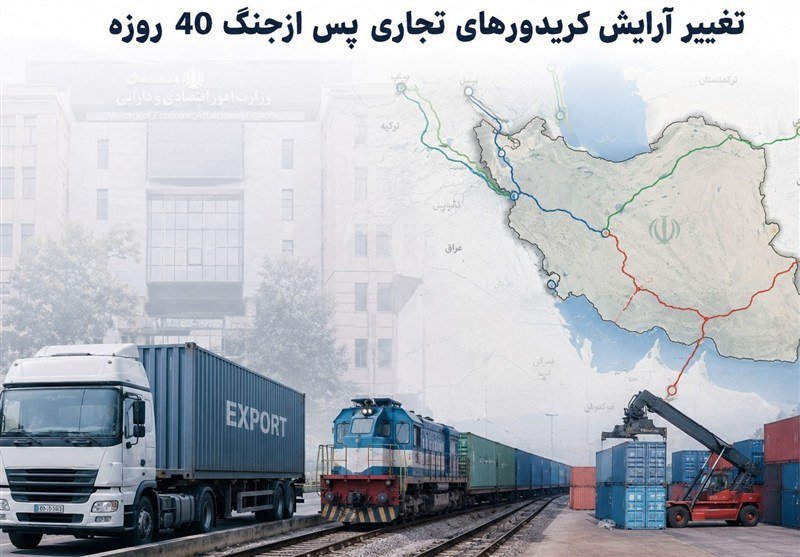
The Strait of Hormuz is twenty-one miles wide at its narrowest. Roughly a fifth of the world's oil passes through it. On any given day, that makes it one of the most consequential pieces of geography on earth. On 30 May 2026, it also became a Rorschach test for what the United States is actually prepared to do about Iran.
Within hours of each other, the Pentagon declared that American forces maintained control of the waterway, while Iranian state-adjacent media reported that Tehran had reasserted its own dominance over the chokepoint. A naval mine was discovered in or near the strait, raising the prospect of deliberate sabotage. Iranian officials warned that foreign military ships in the area could become targets. The dissonance was not incidental — it reflected a deeper incoherence at the heart of Washington's approach to Tehran.
The Contradictory Signal
Donald Trump, speaking to Fox News in an interview broadcast on 31 May, outlined what his administration described as the framework for a peace deal with Iran. The terms, as the White House presented them, were straightforward: Iran would commit to never acquiring nuclear weapons, and in exchange, the Strait of Hormuz would open fully to international shipping. Trump characteristically framed the arrangement in transactional terms, suggesting the deal was close to finalisation.
The problem is that the premise — that America is in a position to open or close the strait by executive fiat — is contested at best. US Defense Secretary Pete Hegseth stated on 30 May that American forces maintained control of the waterway. Iranian outlets, citing the same period, reported that Iran had advanced its own operational control and reasserted sovereignty over the passage. Neither claim can be fully corroborated from open sources, which is precisely the point. The strait's actual status is ambiguous, and Washington's framing treats ambiguity as something it can resolve through assertion.
This is not a new problem in US-Iran relations. The architecture of maximum pressure — sanctions, military posturing, diplomatic isolation — was designed on the assumption that Iran would eventually capitulate to American leverage. What the current moment reveals is that the leverage was always more conditional than its architects admitted.
A Deal Built on False Premises
If the deal Trump described is genuine, it is being negotiated on terms that flatter American self-image rather than reflect operational reality. Tehran has shown no indication that it will abandon its nuclear programme simply because Washington demands it in exchange for strait access. Iran's position, consistently expressed through official channels, is that its nuclear activities are entirely peaceful and non-negotiable. Whether one finds that position credible, it is the position Tehran holds — and any durable agreement will need to account for it, not simply override it.
The Hormuz card is real. Iran has the geographic advantage, the mine-laying capability, and the political motivation to make life difficult for anyone who tries to force the waterway without its acquiescence. The mine discovered on 30 May — whether deliberately placed or a remnant from earlier tensions — is a reminder that the strait is not a problem the United States can solve with a carrier group and a statement from the Pentagon.
Meanwhile, the oil markets have noticed. Reports on 30 May noted that the ongoing closure threat was already affecting global oil supply chains, with prices under pressure as traders priced in geopolitical risk premiums. Europe, Asia, and every economy that depends on Gulf energy exports has a stake in what happens next. None of them can afford to wait while Washington and Tehran negotiate over their heads.
The Structural Problem
What we are watching is not simply a diplomatic negotiation. It is a test of whether the post-1979 US approach to Iran — built on containment, sanctions, and the periodic threat of force — retains any strategic coherence. That approach assumed American military superiority was permanent and Iranian resilience was finite. Neither assumption has held.
Iran has survived four decades of sanctions, developed advanced missile programmes, expanded its regional influence through proxy networks, and advanced its nuclear capabilities to the point where they cannot be dismantled through air strikes without catastrophic consequences. The United States, for its part, has discovered that its navy cannot guarantee freedom of navigation in a waterway where a determined adversary can impose costs at manageable expense.
This does not mean Iran holds all the cards. The Islamic Republic is economically fragile, politically divided, and genuinely isolated in ways that constrain its options. But it does mean that the old playbook — apply pressure until they blink — is no longer producing results. What Washington calls a peace deal may turn out to be nothing more than a mutual suspension of hostilities while both sides reassess.
The Stakes and What Comes Next
If the current talks collapse, or if the mine incidents escalate into a kinetic confrontation, the consequences extend well beyond the bilateral relationship. A significant disruption to Hormuz shipping would immediately affect global oil prices, with cascading effects on inflation, energy policy, and political stability across import-dependent nations. European economies already struggling with post-pandemic consolidation would face renewed pressure. Asian buyers — South Korea, Japan, India — would be forced to recalculate their strategic relationships with both Washington and Tehran.
A successful deal, by contrast, would represent something genuinely new: a recognition that the maximum-pressure era has ended not with an Iranian surrender but with a negotiated rearrangement. Whether such an arrangement can be sustained — given domestic political pressures on both sides, the Israeli government's well-documented opposition to any nuclear accommodation, and the role of regional actors like Saudi Arabia and the UAE — remains deeply uncertain.
The Telegram dispatches from Iranian state-adjacent outlets are, as always, inflected by the interests of their authors. The Pentagon statements serve a domestic audience as much as they describe operational facts. Somewhere in that gap between political performance and strategic reality, the truth about who controls the Strait of Hormuz will eventually assert itself. The question is whether Washington is prepared to accept that reality on terms that do not flatter its own sense of supremacy.
Monexus covered this cluster from the Iran-regime angle, foregrounding the mine discovery and targeting warnings that the general wire services treated as secondary context to the diplomacy. The negotiating framework received less prominence here than in the mainstream trade coverage, which treated Trump's framing at face value.
Wire provenance
This editorial synthesis draws on the following public wire/social posts:
- https://t.me/CryptoBriefing/2026-05-30/1221
- https://t.me/CryptoBriefing/2026-05-30/1507
- https://t.me/CryptoBriefing/2026-05-30/1541
- https://t.me/LiveMint
- https://t.me/JahanTasnim