Trump's Iran Deal Rewrite and the Taiwan Gambit: One Diplomatic Logic, Two Flashpoints
President Trump's decision to amend a near-complete Iran nuclear agreement at the last moment exposes a consistent diplomatic posture: transactional, unpredictable, and aimed at extracting maximum leverage before any deal is signed.
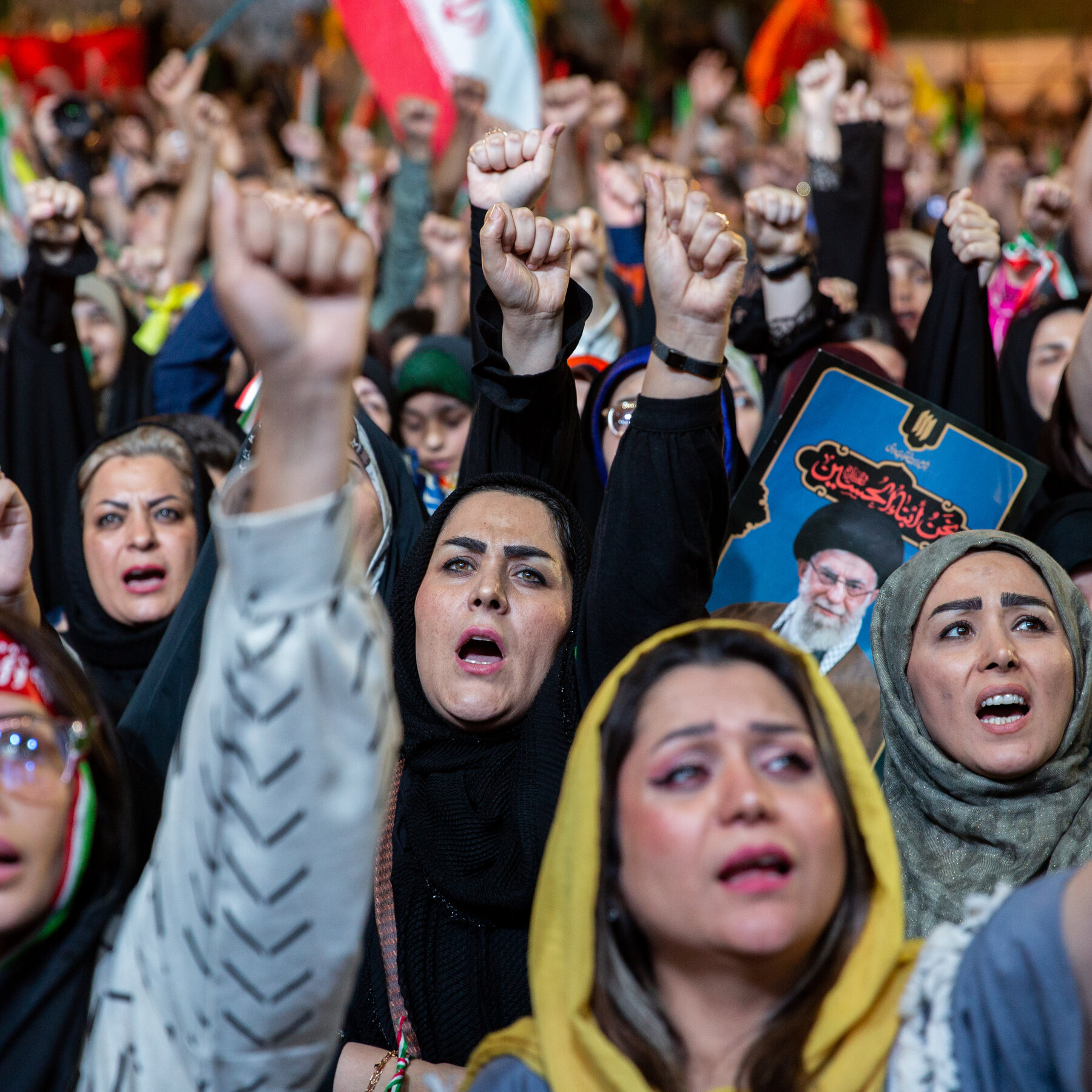
For several weeks in May 2026, American and Iranian negotiators appeared to be converging on a framework that neither side would have publicly acknowledged a year earlier. Then, on 31 May, the process hit a familiar wall. According to reporting by Axios, President Donald Trump amended the draft agreement his own negotiating team had already agreed upon, inserting stronger verification provisions and demanding additional concessions before any deal could be announced. CNN confirmed the same day that Trump had requested changes despite both sides having moved closer to a deal. The announcement unsettled markets, rattled allied governments in the Gulf, and raised a straightforward question: was this a negotiating tactic, a genuine red line, or something closer to a governing philosophy?
The pattern is familiar enough to have acquired its own logic. Trump's approach to Iran sits within a broader diplomatic posture that treats every agreement as a starting point for renegotiation, every concession as evidence of insufficient pressure, and every counterpart as someone who can be moved further with the right combination of public statements and private warnings. Whether the subject is a nuclear agreement with Tehran or Washington's formal stance on Taiwan's status, the same apparatus of leverage — economic threat, diplomatic ambiguity, the implied cost of defection — is applied with little apparent regard for the consistency of the underlying message.
The Iran Track: Convergence and Sudden Revision
The negotiations that produced the draft framework emerged from a period of quiet back-channel contact that officials from both sides have acknowledged in broad terms. The substance of the emerging deal centered on Iran's uranium enrichment program, with the United States seeking caps on enrichment levels and expanded international monitoring in exchange for phased sanctions relief. Iranian officials, for their part, insisted on a verified timeline for the full restoration of sanctions relief that had been suspended under the maximum pressure campaign.
What broke this convergence, according to Axios's reporting on 31 May 2026, was a set of additional demands Trump inserted into the draft text. The specific provisions are not fully public — negotiations of this sensitivity are conducted with deliberate opacity — but the direction of the change was clear: the administration wanted stronger, faster, and more intrusive verification mechanisms than the Iranian side had agreed to, and it wanted them written into the initial framework rather than deferred to a supplementary protocol. Iranian negotiators, who had worked through multiple rounds under the assumption that the verification question had been substantially resolved, were described by sources familiar with the talks as surprised and frustrated.
The timing of the intervention matters. American officials had signaled, through a combination of public statements and private diplomatic communications, that a deal was close. Allied governments in Europe and the Gulf had been briefed. The suggestion that a deal was imminent had a demonstrable effect on oil markets, which had begun pricing in a partial sanctions relief scenario. When the news broke that Trump had reopened the text, crude futures moved sharply higher within hours.
There is a plausible counter-read: that Trump's instincts are, in this case, also a form of realism. The original 2015 Joint Comprehensive Plan of Action collapsed in part because the verification mechanisms were, in the assessment of several successor administrations, insufficient to catch cheating until it was well advanced. If the administration is demanding more robust monitoring as a precondition rather than a future aspiration, that reflects a lesson learned from the earlier agreement's failure. The objection is not to the demand itself but to the moment of its insertion — after months of negotiation, with both sides having made political commitments to their domestic constituencies, and with an election cycle in Iran creating its own internal pressure to deliver.
The Taiwan Dimension: One China, Multiple Audiences
The same week the Iran deal was being revised, Nikkei Asia published an analysis of a separate diplomatic signal with its own internal contradictions. When Trump visited China in mid-May 2026, one of the central questions prepared for the visit by both American and Chinese officials was whether the president would explicitly state that Washington opposes Taiwan independence. The question was not academic. The so-called One China Policy, first formalized under Nixon and Kissinger in the 1972 Shanghai Communiqué, has been the structural foundation of US-China relations for more than five decades. Every administration since has affirmed it. The question was whether Trump would affirm it in terms that matched the consistency of his predecessors, or whether he would introduce ambiguity.
What emerged was characteristically difficult to read. Trump did not, according to the Nikkei Asia analysis, issue a clear statement opposing Taiwan independence in the direct terms that Beijing expected. At the same time, he did not reverse the existing policy framework. The result was a diplomatic non-answer that Beijing interpreted as insufficient and that Taipei read as reassuring without being formally confirmed. The White House, for its part, declined to clarify the public record in the days following the visit.
The structural parallel with the Iran negotiating posture is not perfect, but it is real. In both cases, the administration has been unwilling to commit to a clear, stable, pre-announced position — preferring instead to preserve maximum flexibility for future leverage. With Iran, the ambiguity is deployed as pressure: keep sanctions in place longer, extract more concessions, demonstrate that the threat of escalation remains live. With Taiwan, the ambiguity functions differently: it serves as a signal to Beijing that Washington is not locked into a position, while simultaneously reassuring Taipei that nothing has formally changed. The goal, in both cases, appears to be keeping counterparties uncertain about American intentions in order to extract better terms or, failing that, to maintain a position of relative advantage.
Structural Frame: The Leverage Logic and Its Costs
The problem with this approach, and it is a problem that analysts both inside and outside government have identified with increasing candor, is that the leverage logic has a compounding effect on trust. Agreements require trust not because diplomats are naive but because verification is never perfect and because every deal contains provisions that depend on the good faith of both parties in the periods between inspections, reports, and formal reviews. When one party to a negotiation is understood to be capable of reversing its commitments at the last moment — or to be systematically unwilling to foreclose that option — the other party adjusts its own position accordingly. It invests less, hedges more, and prepares for the renegotiation it now expects.
This dynamic is well documented in the academic literature on international negotiations, though the practical consequences are more immediately observable in the diplomatic record than in any formal model. The Trump administration's approach to the Iran nuclear question has, over the course of its various terms, produced both the maximum pressure campaign of 2018-2021 and the current round of negotiation. The pressure campaign produced significant economic distress in Iran but did not produce a new deal on terms more favorable than what was on the table in 2018. The current negotiations have produced a draft framework that, before the 31 May amendments, both sides had accepted in principle. The lesson, if one is being drawn, is that the pressure generates concessions up to a point and then produces a form of diplomatic hardening that makes agreement harder, not easier.
The Taiwan case operates on a slightly different structural logic but with a convergent outcome. The One China Policy has survived as a stable foundation for US-China relations precisely because it was, in the language of diplomatic practice, a settled question. Both sides knew where the other stood. Ambiguity about that foundation does not, in the short term, produce a crisis — but it degrades the reliability of the broader diplomatic relationship in ways that accumulate. Beijing, having experienced the consequences of an American administration that withdrew from negotiated frameworks without notice, has every incentive to accelerate its own preparations for a relationship in which the United States cannot be counted on to maintain consistent positions. The result is not a stronger negotiating position for Washington but a more rapid transition toward a world in which American commitments are discounted in advance.
Precedent: What the Record Shows
The pattern is not without precedent in American diplomatic history. The Nixon administration's 1972 opening to China was itself a form of diplomatic surprise — not in the sense of being unannounced, but in the sense of representing a rapid reversal of a decades-long consensus without the formal consultation of allies that might have been expected. The result was a strategic gain for the United States in the short term and a lasting structural shift in the global balance. But Nixon had a specific geopolitical objective — neutralizing the Soviet-Chinese split — and the opening was executed in service of that objective rather than as a demonstration of negotiating prowess for its own sake.
The current administration's posture appears to treat the demonstration of leverage as an end in itself. The Iran deal is not being reopened because a specific, identifiable flaw in the draft framework requires correction. It is being reopened because the president, as a matter of operating style, does not close a negotiation without extracting an additional concession — even when the extraction risks the deal itself. The Taiwan ambiguity is not being managed toward a defined objective. It is being preserved because closing the question would foreclose a future option, and foreclosing options is experienced as a loss of power.
This is a coherent worldview, but it is one with specific and identifiable costs. The allies who have been briefed on the Iran negotiations and who now see the process restarted by a last-minute presidential intervention will draw their own conclusions about American reliability. The Chinese leadership, watching the Taiwan ambiguity persist after the May visit, will accelerate their own planning for a relationship in which American commitments are provisional. The Iranian negotiators, having committed politically to a deal they believed was close, will return to their domestic constituencies with evidence that the maximum pressure instinct has not been extinguished — and will adjust their own positions accordingly.
Stakes: Who Wins If the Pattern Holds
The honest answer is that no one wins cleanly if the pattern holds. Iran gets a deal eventually, but a worse one than might have been available in May 2026, because the political moment for a comprehensive agreement is time-limited and the domestic pressures on both governments are real. China gets a more unpredictable American counterpart, which in the short term creates opportunity for diplomatic gamesmanship but in the medium term accelerates the drive toward a world order in which American economic and security guarantees are less reliable. American allies in the Gulf and in East Asia get a reminder that the United States will pursue its own interests with little regard for the cost that allied governments bear as a result.
The counterargument — that American interests are best served by extracting maximum value from every negotiation, regardless of the cost to trust — has a certain internal logic. But it applies that logic in an environment where the counterparties are not passive. They respond. They hedge. They build their own capacity to absorb pressure rather than capitulate to it. The Iran sanctions campaign produced a more economically resilient Iranian government, not a capitulated one. A Taiwan policy built on deliberate ambiguity produces a more militarily prepared Beijing, not a more compliant one.
What remains genuinely uncertain is whether the administration has a theory of the case for what happens next — whether the extraction of additional concessions from Iran, and the maintenance of Taiwan ambiguity, are instruments toward a defined strategic end or whether they are, in themselves, the end. The sources do not specify what Trump told his own negotiating team about the rationale for the amendments, or what outcome he is calculating. What the record shows is a pattern: convergence is followed by intervention, agreement is followed by renegotiation, and commitment is followed by reservation. The pattern has a logic. Whether it has a strategy is a different question, and one the available evidence does not resolve.
This publication covered the 31 May Iran development alongside Nikkei Asia's reporting on the Taiwan question as parallel expressions of a single diplomatic posture. The wire framing treated each as a discrete story; the structural logic connecting them is the subject of this analysis.
Wire provenance
This editorial synthesis draws on the following public wire/social posts:
- https://t.me/megatron_ron
- https://t.me/wfwitness
- https://t.me/NikkeiAsia
- https://t.me/nikkeiasia
- https://www.state.gov/u-s-relations-with-china/