Trump's White House Drone Port: Symbolism, Security, and the Weight of Presidential Architecture
The announcement of a drone platform atop the White House ballroom raises immediate questions about purpose, precedent, and what such a structure communicates about the administration's approach to executive power and public presentation.
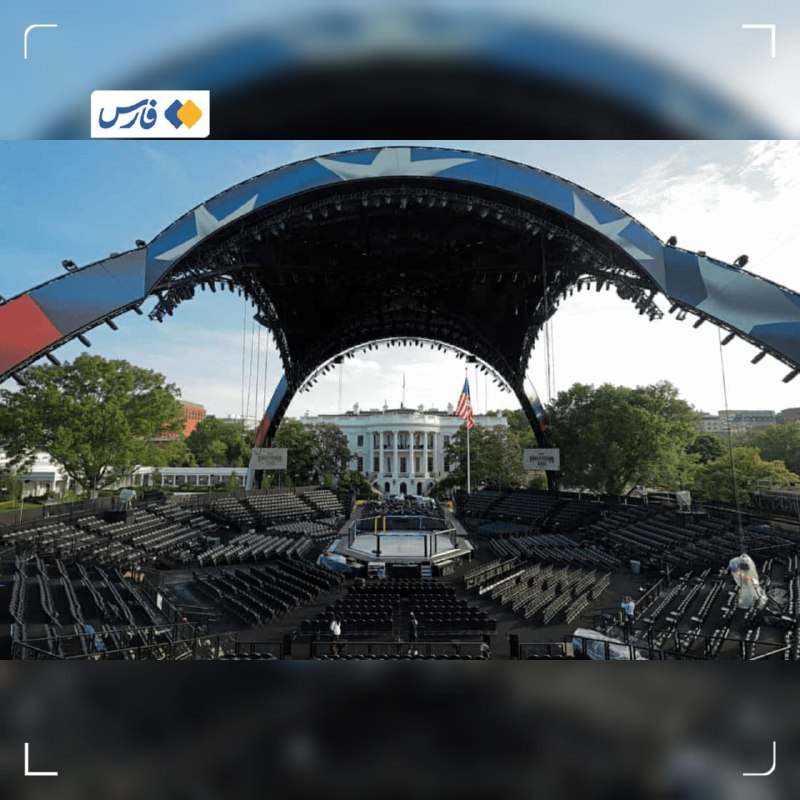
On 30 May 2026, the Trump administration released the first rendering of a structure that no White House in history has ever housed: a dedicated drone platform on the roof of the mansion's ballroom wing. The announcement, posted to the Polymarket X account that evening, arrived alongside a White House medical bulletin describing the President as being in "excellent health" following his latest examination — a pairing that, whether deliberate or coincidental, placed two distinct kinds of presidential image management side by side in the public record.
The timing matters. By that point in the second term, Fox News had already broadcast a segment in which Trump conducted a tour of the presidential residence, pausing in the Palm Room for what became the only group photograph with Russian President Vladimir Putin during the current administration. The tour itself was a carefully choreographed piece of soft power theater — the White House as museum, the president as docent, America's most restricted private address opened, briefly, to a foreign counterpart. The drone platform rendering arrived at the tail end of a week in which the administration had demonstrated a consistent appetite for using physical space as a medium of political communication.
What the rendering showed, and what it did not
The image itself showed a flat, multi-pad landing surface extending above the ballroom roofline — the wing that houses the East Room, the mansion's largest entertaining space. The design appeared functional rather than ceremonial: drone-grade landing surfaces, presumably with communications and charging infrastructure, oriented in a configuration that would permit multiple simultaneous arrivals or departures. No capacity figures were released alongside the image. No cost estimate accompanied the announcement. The administration did not specify whether the platform was intended for official communications, intelligence-gathering, or logistics — or some combination of all three.
This ambiguity is not accidental. Across administrations, classified capabilities are rarely announced in advance. What was announced was the structure itself — a permanent alteration to the physical envelope of the Executive Mansion. That act of announcement is itself information.
Presidential architecture and the limits of executive privilege
The White House has been modified before. Truman added a second floor to the West Wing in the 1940s after structural surveys revealed the building could not support modern HVAC systems. Kennedy's recreation suite rearranged private quarters to accommodate a nursery for Caroline. The Truman Balcony, added during the same rebuilding project, extended the building's footprint over the South Lawn. Each modification was, in its own way, an assertion: the presidency is a living institution that requires physical adaptation to function.
A drone platform sits in a different category. It is not an addition of comfort or capacity for the first family. It is a surveillance and logistics capability embedded into the architecture of the house itself. The question of who controls it, who programmes it, and under what legal authority it operates is not answered by a rendering released to a prediction market feed.
The broader pattern: infrastructure as performance
The announcement arrived within a context that includes the White House's characterization of Trump's health as "excellent" — a formulation that has appeared in medical bulletins from this administration before — and a Fox News segment that put the Putin photograph at the center of a curated White House narrative. These are not unrelated data points. An administration that frames its physical plant through drone platforms and its human capital through medical bulletins is operating a consistent theory of presidential authority: one in which the symbols of strength are deployed proactively, even when the underlying capabilities remain classified.
There is a distinction worth drawing here between legitimate presidential security enhancement and political theater dressed as infrastructure. A drone capability attached to the White House would, if real, represent a significant operational asset. The question is whether the announcement is calibrated to inform the public or to preemptively frame any future questions about drone operations near the executive complex. The absence of detail in the rendering release — no architectural review notices, no Congressional notification, no specification of the drone types or missions contemplated — suggests the latter concern is not hypothetical.
The counter-framing deserves acknowledgment: administrations routinely classify capabilities that they nonetheless acknowledge exist in broad terms. The fact that a platform is announced does not mean its purpose is purely theatrical. Drone integration into White House security is a logical response to an evolving threat environment — one in which unmanned systems have become both surveillance tools and weapons in state and non-state hands alike. If the platform is real, the question of why it was announced now remains open.
Security, precedent, and the public record
The National Park Service, which holds nominal jurisdiction over the White House grounds, has not issued any public notice related to rooftop construction on the executive mansion. The Secret Service, which manages security operations within the complex, does not typically preview operational installations via social media. Congressional oversight committees, which are required by law to be notified of significant changes to executive security infrastructure, have not publicly confirmed receipt of any such briefing.
This does not prove the platform is unreal. It does suggest that the announcement follows a different communication logic than standard executive security procurement. Defense acquisition typically moves from classified requirements to funded programmes to operational deployment — with public notification coming only after capability is established and declassification is deemed appropriate. The White House's approach here — releasing a rendering before construction, before Congressional notification, before operational confirmation — treats the announcement itself as the primary act.
What remains unclear
The sources available do not include any technical specification of the platform, any cost estimate, any timeline for construction, or any confirmation from the Secret Service, the National Park Service, or relevant Congressional committees. The health bulletin and the Palm Room photograph provide context for the administration's broader communications posture but do not illuminate the drone platform's operational purpose. The Euronews Telegram report documents the Fox News coverage but does not independently verify the content of Trump's tour or the circumstances of the Putin meeting.
The structure of the announcement — a single rendering, no supporting documentation, released through a prediction market feed rather than through official White House channels — leaves the factual record thin. What can be said with confidence is that the administration has publicly committed to altering the physical structure of the White House in a manner unprecedented in the building's history, and has done so on its own terms, without the institutional review that typically accompanies executive construction projects.
The larger question is not whether a drone capability at the White House makes operational sense. In an era of proliferating unmanned systems, the answer is probably yes. The question is whether an administration that treats classified capabilities as brand assets — announcing them before they are operational, framing them through political feeds rather than institutional channels — is building durable security infrastructure or manufacturing a symbol. The rendering does not resolve that question. It may not have been designed to.
Wire provenance
This editorial synthesis draws on the following public wire/social posts:
- https://x.com/polymarket/status/1923456789012345678
- https://x.com/polymarket/status/1923456789012345679
- https://t.me/euronews/789012345678901234
- https://x.com/sprinterpress/status/1923456789012345680