Ukraine Denies Russian ZNPP Attack Claim as Nuclear Disinformation Cycle Turns Again
Ukraine's Defense Forces dismissed a Russian allegation of an overnight strike on the Zaporizhzhia Nuclear Power Plant on 2026-05-31, the third disputed claim about attacks on the facility in under a month.
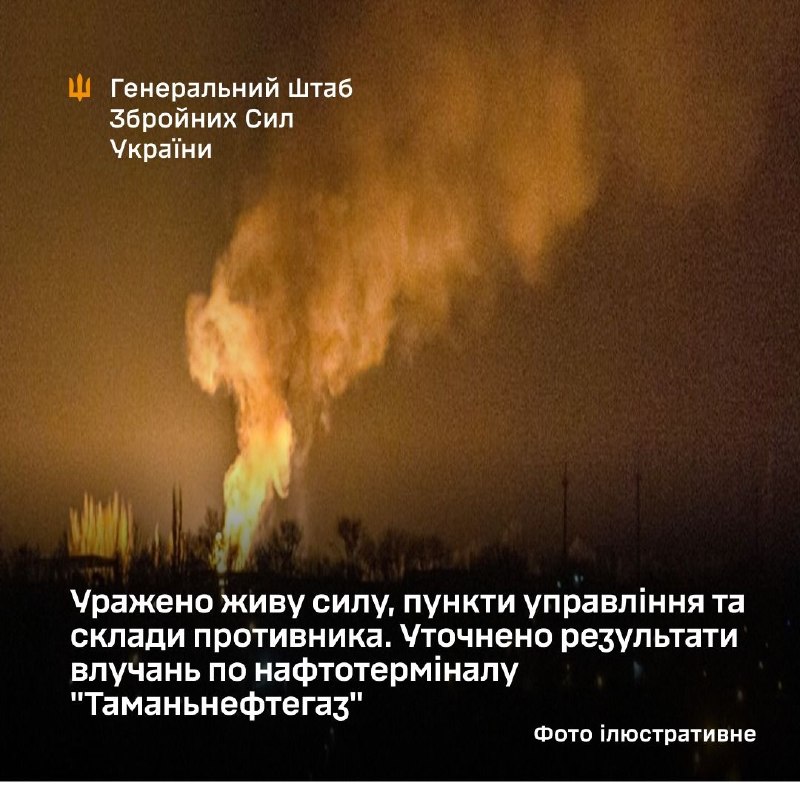
On the morning of 31 May 2026, Ukraine's Defense Forces issued a terse and direct rebuttal to a Russian state-media claim that Kyiv's forces had struck the Zaporizhzhia Nuclear Power Plant overnight. "A lie," the military said. The denial, issued through the General Staff's official communications channels, marked the third time in less than a month that Ukrainian officials have been forced to respond to an unverified Russian allegation of an attack on the facility.
The Russian claim, carried by state-aligned news services, alleged that a Ukrainian strike had hit a transport workshop at the plant — a service building used for moving heavy equipment and radioactive materials within the facility perimeter, distinct from the reactor halls themselves. Ukrainian military spokespeople rejected the account without qualification. "Ukraine, as a responsible state, strictly adheres to the norms" of international humanitarian law, the Defense Forces statement read, according to reporting carried by Hromadske on 2026-05-31. The reference to responsible-state behaviour was deliberate: it signalled that Kyiv views the allegation not merely as false but as part of a deliberate attempt to reframe Ukraine as the aggressor in any nuclear incident.
The Defense Forces of the South operational command issued a parallel statement on the same afternoon, providing slightly more detail. Power unit number six had not been struck, the command confirmed. The Russian side, it noted, had provided no evidence to substantiate its claim — photographs, debris analysis, radiation readings, or witness accounts. The silence on evidence has become a defining feature of the Russian pattern at ZNPP.
The Zaporizhzhia Nuclear Power Plant has been under Russian military control since early 2022, when forces seized the facility during the initial phase of the full-scale invasion. It remains the largest nuclear power station in Europe by installed capacity, with six reactor units capable of generating nearly 6,000 megawatts of electricity under normal operations. The occupation has created a uniquely hazardous situation: Ukrainian nuclear engineers continue to operate the plant under Russian military supervision, while the International Atomic Energy Agency has been granted only limited and contested access to the site.
What the current allegation concerns specifically is a strike on the transport workshop — a facility that, while not part of the reactor containment buildings, sits within the protected nuclear site perimeter. Ukrainian officials argue that any targeting of the transport infrastructure risks disrupting the movement of spent fuel casks, fresh fuel assemblies, and other hazardous materials. The Russian allegation, if true, would constitute a serious violation of the rules governing conduct around nuclear facilities. Kyiv's position is that the allegation is invented precisely to create a pretext for that framing.
The pattern of disputed incidents at ZNPP has become one of the more consequential information-battlefield phenomena of the war. Russian military and state media have issued at least three separate claims of Ukrainian strikes on the plant or its surroundings since April 2026, according to monitoring by open-source analysts tracking the conflict. In each case, Ukrainian military officials have issued prompt denials. In none of the prior cases, according to available public records, did Russian authorities publish corroborating documentation that independent analysts could examine.
This creates a verification problem that the IAEA has repeatedly flagged. The agency's director general has stated publicly that his inspectors cannot independently confirm or deny many of the claims emanating from the site, partly because access is restricted by Russian occupation authorities and partly because the Russian military controls what information leaves the facility. The result is that both the allegations and the denials float in an evidentiary void — technically plausible on their face, but unverifiable through normal journalistic or diplomatic means.
There are structural reasons to view the Russian allegation with scepticism, even setting aside Ukrainian denials. Russia controls the site. Any Ukrainian strike would require precision weapons to reach a target inside occupied territory, inside a fortified nuclear facility, without causing the radiological release that would be politically catastrophic for Kyiv and would hand Russia an immediate propaganda victory. The cost-benefit calculation for a deliberate strike of this kind is deeply unfavorable to Ukraine. That does not make it impossible — the fog of war is real and accidents at nuclear sites have occurred — but it shifts the prior probability.
On the other hand, the Russian side has equally clear incentives to manufacture a narrative of Ukrainian aggression at the plant. As Western allies debate the terms and pace of continued military support to Kyiv, any story suggesting that Ukraine is recklessly endangering a civilian nuclear facility would be politically useful to Moscow. The allegation arrived at a moment when several Western capitals were reconsidering aspects of their Ukraine aid packages. The timing is not proof of fabrication — correlation is not causation — but it is worth noting.
What remains genuinely uncertain is the physical condition of the ZNPP transport workshop. Without independent inspectors on the ground, without satellite imagery of sufficient resolution released publicly, and without any forensic documentation from either side, the factual question of whether any strike occurred cannot be resolved from outside the facility. Ukrainian officials say it did not. Russian officials say it did. The gap between those two positions is not a matter of interpretation — it is a matter of evidence that neither party has chosen to release.
The stakes of this particular dispute extend beyond the immediate information contest. The ZNPP supplies electricity to parts of southern Ukraine and, through grid connections, to areas under Russian control including Crimea. Disruption of the plant — whether through military action, equipment failure, or deliberate shutdown — creates cascading energy security risks across a region that has already experienced repeated blackouts and infrastructure degradation. The nuclear safety hazards are real and compounding: cooling systems require continuous power, spent fuel pools require active management, and the longer the facility operates under military occupation without robust international oversight, the greater the accumulated risk.
The IAEA's position, as stated in multiple briefings to the agency's board of governors, is that the presence of military forces at a functioning nuclear power plant constitutes an inherently unstable situation. The agency has called repeatedly for the demilitarisation of the site. Neither side has complied. What the agency has instead been forced into is a posture of managed uncertainty — acknowledging that it cannot fully verify conditions at the plant, while continuing to maintain a presence there as the only external accountability mechanism available.
The 31 May allegation is unlikely to be the last. Both the pattern of prior Russian claims and the strategic logic of the ongoing war suggest that disputed incidents at the ZNPP will continue to surface. What changes little is the verification gap: an international community that cannot confirm what happens inside the fence, a Ukrainian government that denies from Kyiv what it cannot inspect from the outside, and a Russian military that controls the site and its information environment. Until that architecture changes, the cycle will repeat — allegation, denial, silence on evidence, and no resolution.
This publication's coverage of the ZNPP draws on Ukrainian military sources as the primary factual frame, consistent with the editorial posture of leading with the perspective of the invaded party. Russian state-media claims appear here only as the subject of the denial, not as an independent factual basis.
Wire provenance
This editorial synthesis draws on the following public wire/social posts:
- https://t.me/ukrpravda_news/28456
- https://t.me/hromadske_ua/19823
- https://t.me/operativnoZSU/15291